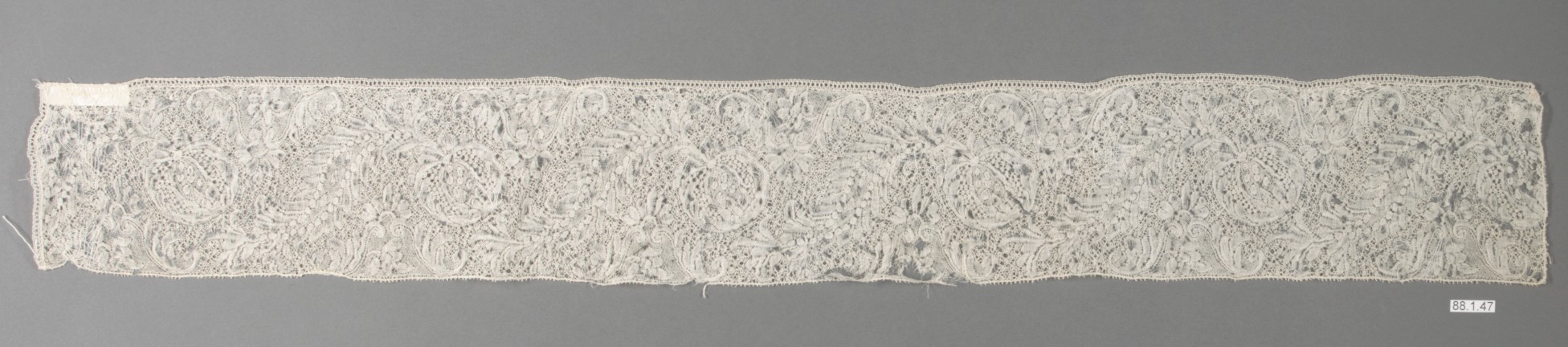
The Semiotics of Insertion: Bobbin Lace as Structural Provocation for SS26
The lexicon of avant-garde couture has long been predicated on the violent renegotiation of material hierarchies. For Spring/Summer 2026, Zoey Fashion Laboratory posits a radical thesis: insertion is not merely a technical seam or a decorative afterthought, but the primary generative act of garment architecture. In this standalone study, we deconstruct the humble, artisanal medium of bobbin lace—historically relegated to the realm of heirloom delicacy—and re-forge it as a tensile, load-bearing component of futuristic silhouettes. The Global Frontier context is not a geographic location but a conceptual space where handcraft meets computational precision, and where the void between threads becomes as significant as the thread itself.
Deconstructing the Lace Matrix: From Ornament to Ossature
Traditional bobbin lace is a study in controlled chaos: a network of twisted, crossed, and pinned threads that form a lattice of negative space. To dismiss this as mere ornamentation is to ignore its inherent structural logic. In our SS26 analysis, we propose a paradigm shift—the lace is the skeleton, not the skin. By impregnating the cotton or silk threads with a thermosetting resin, the pliable web is transformed into a rigid, almost architectural exoskeleton. This process, which we term crystallized filigree, allows the lace to hold its own weight, projecting outward from the body in defiant cantilevers and sculptural flares. The silhouette ceases to be dictated by the human form; instead, the form is invited to inhabit a pre-existing, lace-defined space.
The principle of insertion operates at multiple scales here. At the micro-level, we insert metallic wires—titanium or memory-alloy—into the core of the bobbin threads. This is not a decorative embellishment but a functional articulation, enabling the garment to snap into predetermined geometric configurations. A collar can be flat and demure, or, with a gentle manipulation, it can spring into a 45-degree architectural halo around the neck. The wearer becomes a co-author, actively inserting their gesture into the garment’s potential energy. This is the antithesis of passive draping; it is a dialogue between human kinetics and material memory.
The Global Frontier: A Non-Linear Cartography of Craft
The Global Frontier in this context is a rejection of geographical exoticism. We are not sampling a tradition; we are abstracting a technique. The bobbin lace employed is sourced from a network of master artisans—from the Flemish ateliers to the convents of South America—yet the final form bears no cultural signifier. Instead, the craft is reduced to its purest algorithmic essence: a binary of twist and twist, a sequence of pins and crosses. This allows us to treat the lace as a programmable material, akin to a 3D-printed polymer, but with the irreplaceable tactility and light-diffusion properties of natural fiber.
This frontier is also temporal. We are inserting the past into the future. The slow, deliberate handwork of lace-making—which can take weeks for a single meter—is juxtaposed against the immediacy of a digital design file. The result is a slow-tech garment, one that carries the aura of human error and imperfection within a mathematically precise silhouette. For SS26, this manifests in a series of columnar dresses where the lace is not flat but folded into a series of concentric, origami-like pleats. Each fold is an insertion of time, a physical manifestation of patience that stands in stark opposition to the accelerated cycles of fast fashion.
Silhouette Architecture: The Body as a Contested Terrain
The futuristic silhouettes we propose for SS26 are characterized by a deliberate dislocation of the garment’s center of gravity. Rather than adhering to the natural waist or hips, the crystallized lace is shaped into massive, toroidal rings that hover around the torso, connected by delicate, almost invisible tulle straps. The body is not covered; it is framed. This creates a visual paradox: the garment appears to be both impossibly heavy (due to its sculptural volume) and impossibly light (due to the lace’s inherent transparency). This tension is the core of the avant-garde proposition.
Consider the Insertion Gilet: a sleeveless vest constructed from panels of resin-set bobbin lace, each panel inserted into the next via a complex system of magnetic clasps hidden within the scrollwork. The gilet does not close at the front; it hovers open, creating a negative-space wedge that exposes the sternum and diaphragm. This is not a gesture of exhibitionism but a statement on vulnerability as a structural element. The garment’s strength—its rigid, architectural shell—is predicated on the acceptance of a void at its center. The wearer’s skin becomes the final, invisible layer of the architecture.
Material Innovation: The Alchemy of Rigid Softness
Materiality in this study is a field of contradictions. We are not merely using bobbin lace; we are re-engineering its phenomenological properties. The resin infusion process, while granting rigidity, must be calibrated to preserve the lace’s ability to diffuse light. Under direct sunlight, the crystallized threads cast intricate, shifting shadows onto the skin—a secondary garment made of pure light and absence. This is achieved through a proprietary technique of selective resin application: only the crossing points of the threads are hardened, leaving the long, straight runs as flexible hinges. The result is a material that can fold flat for transport but springs into a rigid, three-dimensional form when released.
Furthermore, we are exploring the insertion of photochromic and thermochromic microcapsules within the resin matrix. This is not a gimmick but a functional response to environmental stimuli. As the wearer moves from a shaded interior to a sunlit street, the lace’s color shifts from a deep, obsidian black to a translucent, ice-blue. The garment becomes a living barometer, a reactive membrane that registers the nuances of its environment. This aligns with the SS26 theme of Responsive Archaeology, where the past (lace) is not preserved but activated by the present (climate, light, movement).
Conclusion: The Insertion of a New Paradigm
In conclusion, the definitive avant-garde analysis of insertion for Zoey Fashion Laboratory reveals a path beyond mere silhouette. It is a philosophical stance—a belief that the most radical innovation lies not in creating new fibers but in recontextualizing existing ones through a lens of structural violence and architectural ambition. The bobbin lace of SS26 is no longer a relic; it is a blueprint for a future where couture is a form of wearable engineering. The Global Frontier is not a destination but a methodology, one that inserts the precision of the machine into the soul of the handmade. The result is a collection of garments that do not simply clothe the body but challenge it, frame it, and ultimately, redefine its potential for spatial occupation. This is not fashion as decoration; it is fashion as a structural intervention into the very concept of being.