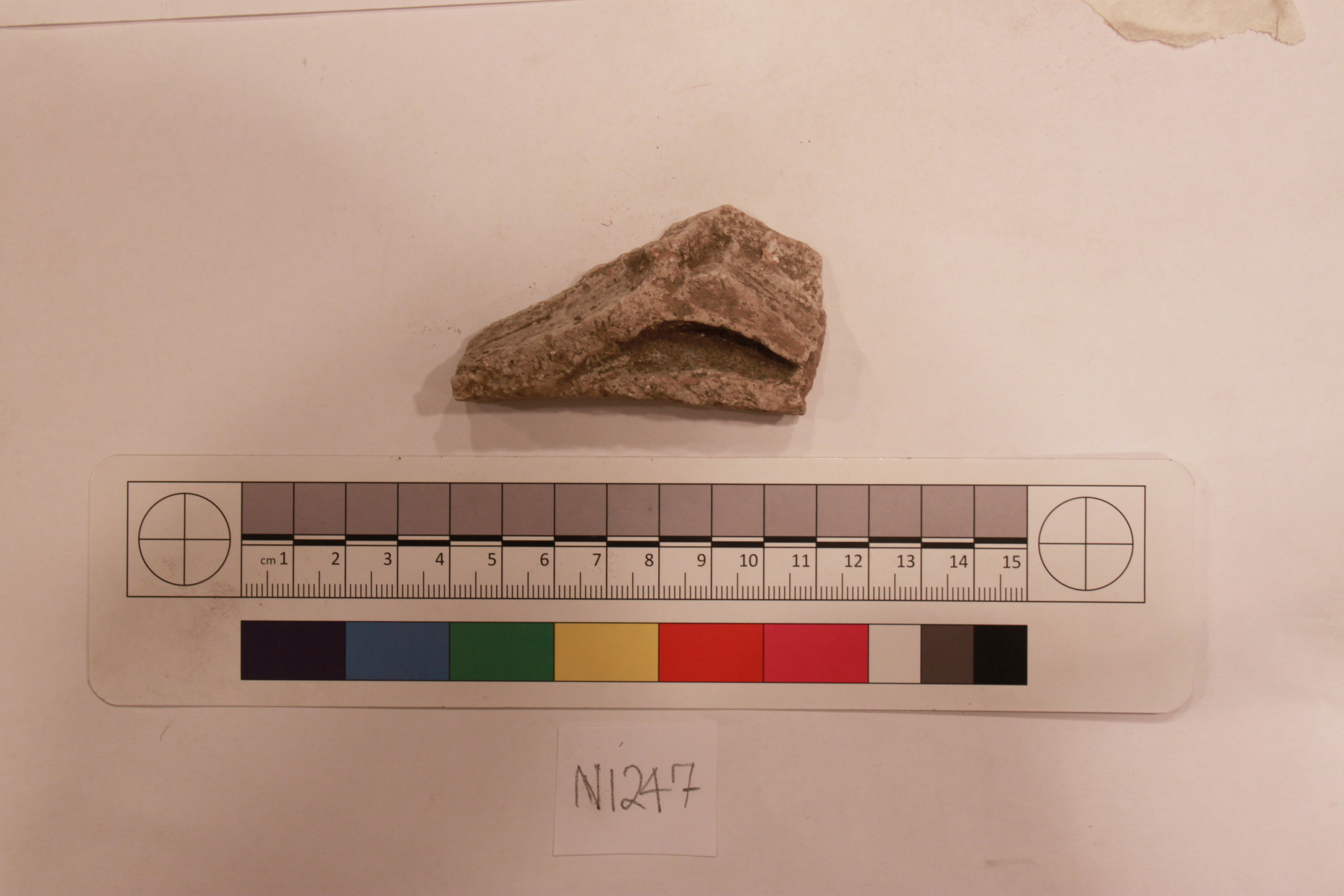
The Stucco Fragment: An Archaeology of the Future
In the relentless churn of seasonal cycles, the avant-garde designer’s role is not merely to predict the future, but to excavate it from the debris of the past. At Zoey Fashion Laboratory, our SS26 investigation begins not with a swatch of technical fabric or a digital render, but with a singular, fractured object: a carved and painted stucco fragment. This is not a nostalgic reference. It is a catalyst. Stripped of its architectural context—be it a Mughal palace, a Mayan frieze, or a Soviet-era facade—the fragment becomes a pure study in material tension, surface decay, and structural integrity. For the Spring/Summer 2026 collection, we propose a radical translation: garments that are not sewn, but excavated; silhouettes that are not draped, but carved.
Deconstructing the Ground: From Wall to Body
The stucco fragment challenges the very premise of textile. Its rigid, brittle nature stands in stark opposition to the fluidity of cloth. Our first directive is to invert this paradigm. We are not mimicking the look of stucco on fabric; we are engineering fabrics that behave like stucco in motion. This requires a departure from conventional pattern cutting. Instead of flat, two-dimensional panels, we employ negative-space draping on the mannequin, building volume through a process of subtraction. We begin with a full, voluminous form—a "block" of organza, bio-plastic film, and recycled metallic mesh—and then carve away material, leaving only the essential structural lines.
The result is a series of fossilized silhouettes. Shoulders are exaggerated into sharp, cantilevered ledges, reminiscent of a cornice’s edge. Hips are wrapped in asymmetrical, shell-like panels that mimic the flaking layers of deteriorating plaster. The body becomes a wall, and the garment, its decorative ruin. This is not about wearing a building; it is about wearing the process of a building’s collapse and reformation. The silhouette for SS26 is therefore aggressively sculptural, yet paradoxically lightweight. We achieve this through a new composite: a lattice of 3D-printed, biodegradable polymer fused with a hand-laid, crushed silk base. The polymer provides the "stucco" rigidity, while the silk allows for a ghostly, fluid under-movement.
Surface as Narrative: The Painted Decay
The painted aspect of the fragment is not a mere aesthetic addition; it is a chronological record. The layers of pigment—some faded, some vibrant—tell a story of time, weather, and human intervention. In our couture analysis, we treat the garment’s surface as a palimpsest. We apply chromatic erosion techniques, where color is not dyed into the fiber but painted onto the constructed form. Using a process of heat-set pigment and abrasive washing, we create gradients that appear bleached by an unforgiving sun or stained by mineral deposits.
This season, the palette is intentionally austere yet volatile: raw lime white, oxidized copper green, and a deep, mineral ochre. These are not clean, consumer-friendly tones. They are the colors of geological time. A jacket, for instance, may present a pristine, chalk-white front panel, only to dissolve into a fractured, pigment-heavy back panel that mimics the loss of a fresco. This is decorative violence—a deliberate, controlled application of disorder. The painted surface is further enhanced by embedded particulate matter: fine silica sand and crushed stone are fused into the fabric’s outer layer, creating a tactile, gritty texture that catches the light like a rough-cast wall. The garment is no longer a passive covering; it is an active, textured artifact.
Structural Innovation: The Articulated Ruin
To wear a "ruin" requires a re-engineering of movement. Traditional tailoring relies on ease and give. Our approach demands articulated rigidity. We have developed a proprietary joint system, inspired by the segmented armor of crustaceans and the crack patterns in dried mud. This system, which we call the Fracture Hinge, allows for sculptural panels to move independently while maintaining their architectural integrity.
Consider the centerpiece of the collection: a floor-length coat constructed from a single, continuous piece of stucco-like textile. The coat is bisected by a series of precise, laser-etched fault lines. As the wearer walks, these lines open and close, revealing flashes of a luminescent, inner lining—a "hidden fresco" of iridescent thread. The coat does not flow; it cracks with each step. This is a powerful metaphor for the modern condition: we are rigid in our convictions, yet forced to adapt to a shifting environment. The innovation lies in the calibration of this fracture. It is engineered to break in a controlled, graceful manner, never compromising the overall form.
Furthermore, we are exploring inverse draping for evening wear. Instead of building a dress from the inside out, we construct a rigid, corset-like shell—the "stucco base"—and then allow swathes of liquid, metallic jersey to pour over it, pooling at the floor like spilled plaster. The juxtaposition is stark: the hard, immovable shell against the fluid, unpredictable drape. It is a dialogue between the permanent and the ephemeral, the carved and the poured.
Conclusion: A New Wardrobe for a Post-Soft World
The Stucco Fragment is not a trend; it is a thesis. For SS26, Zoey Fashion Laboratory rejects the tyranny of the soft, the comfortable, and the disposable. We propose a wardrobe that is archaeological, monumental, and intellectually demanding. Our garments are not worn; they are inhabited. They offer a protective shell against the chaos of the modern world, while simultaneously exposing the beautiful, inevitable fractures within that protection. This is couture as a form of speculative archaeology—unearthing not what was, but what could be. We are not designing clothes for a future that is clean and seamless. We are designing armor for a future that is fractured, textured, and gloriously imperfect. The stucco fragment stands as our muse, a testament to the enduring power of material, time, and the audacity to carve a new silhouette from the ruins of the old. This is the definitive avant-garde statement for a new era.