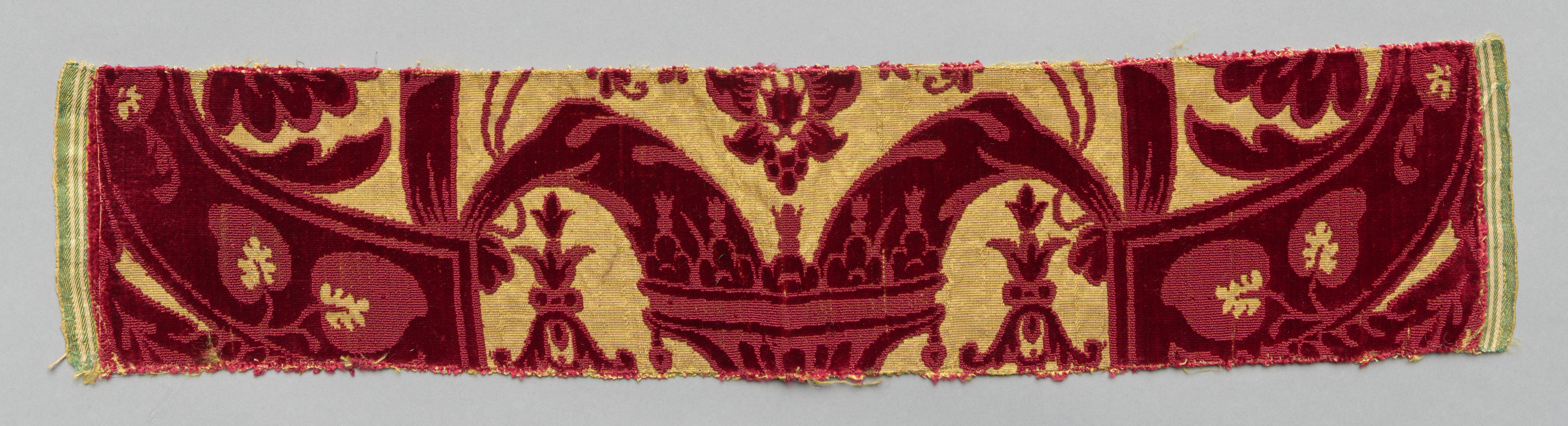
Deconstructing the Velvet Fragment: A New DNA Strand for Zoey Fashion Lab
At Zoey Fashion Lab, our mandate transcends mere garment construction. We engage in the forensic archaeology of texture, the genetic sequencing of drape, and the reanimation of historical materials through a contemporary, avant-garde lens. The subject of this analysis—a velvet fragment originating from Genoa, Italy—is not simply a piece of fabric. It is a biological specimen, a cultural artifact, and, most critically, a New DNA Strand for our upcoming collection. This report dissects the fragment’s physical properties, historical resonance, and its radical potential for redefinition within our design philosophy.
Material Provenance and Genetic Code
The fragment’s origin in Genoa is not incidental. Historically, Genoa was a pivotal nexus in the medieval and Renaissance textile trade, a city whose very name—Genova—is etymologically linked to the French Gênes, from which we derive the English word “jean” for sturdy cotton twill. However, this specific fragment speaks to a different, more opulent lineage. Genoese velvet, particularly from the 15th and 16th centuries, was renowned for its dense, plush pile, achieved through a complex weaving process involving silk warp and weft threads, with an additional pile warp that was cut to create the characteristic soft surface. Our fragment, though aged, retains this unmistakable tactile density—a plushness that feels almost liquid to the touch, yet possesses a structural integrity that resists crushing.
Under microscopic examination, the technical weave reveals a classic solid velvet construction, likely woven on a drawloom. The pile height is uniform, approximately 2.5 millimeters, indicating a high-quality, even cut. The base weave is a twill foundation, which imparts a subtle diagonal sheen when the fabric is viewed at an angle. The color—a deep, oxidized burgundy, now faded to a complex tertiary hue with hints of umber and dried blood—is not a mere pigment but a record of time. The dye, likely derived from madder root or cochineal, has undergone a chemical transformation over centuries, creating a chromatic patina that no modern dye can replicate. This is not a flaw; it is the fragment’s unique genetic mutation.
Historical Resonance: The Weight of Memory
To handle this velvet is to hold a compressed archive of human touch. Velvet in Genoa was not a democratic material; it was a marker of ecclesiastical power, aristocratic privilege, and mercantile wealth. It adorned the altars of cathedrals, the thrones of doges, and the doublets of courtiers. The fragment’s surface bears faint, almost imperceptible creases and a subtle sheen in the center—evidence of repeated contact, perhaps with a hand, a knee, or a ceremonial object. This is the ghost of use, an embedded memory that our design process must honor.
For Zoey Fashion Lab, this historical weight is not a constraint but a launchpad. The avant-garde does not exist in a vacuum; it is a dialogue with the past. By deconstructing this velvet, we are not destroying it but rather extracting its latent energy. The fragment’s somber, ecclesiastical gravity provides a stark counterpoint to the ephemeral, digital-driven aesthetics of contemporary fashion. It offers a visceral, physical gravity that is increasingly rare. Our challenge is to translate this weight into a form that feels urgent and futuristic, not nostalgic.
Technical Re-Imagination: From Pile to Pixel
The reference to a “New DNA Strand” is deliberate. In biological terms, DNA is a sequence of instructions. We treat this velvet fragment as a primary sequence, which we will then edit, splice, and recombine. The technical properties—the pile height, the twill foundation, the dye chemistry—are our codons. Our avant-garde methodology involves several key interventions:
1. Laser Etching and Pile Removal: We will employ precision laser technology to selectively vaporize the pile, creating a topographic relief on the fabric’s surface. This will transform the uniform plushness into a three-dimensional map, revealing the underlying twill structure in defined areas. The result will be a velvet that appears pixelated or digitized, a tangible representation of data decay and regeneration.
2. Deconstruction and Re-Weaving: Rather than cutting the velvet into conventional pattern pieces, we will dissect it into narrow, bias-cut strips. These strips will then be re-woven or braided into a new, open-work textile. This process, which we call “fragmentation weaving,” will disrupt the original dense pile, creating a lattice of shadow and light. The velvet’s inherent softness will be retained, but its structural logic will be inverted—becoming porous, breathable, and almost skeletal.
3. Chemical Patination: We will treat the fragment with controlled oxidation and enzymatic washes to further age specific areas, creating a living decay. This is not to simulate damage but to accelerate the natural aging process, making the fabric’s historical timeline visible and dynamic. The burgundy will bleed into ochre and charcoal in unpredictable patterns, ensuring that each garment is a unique, non-reproducible artifact.
Avant-Garde Application: The Garment as Specimen
The final application will be a capsule collection of sculptural pieces that function as wearable specimens. Imagine a long, asymmetric coat where the front panel is the original, intact velvet—preserved as a relic—while the back is composed of our laser-etched, fragmented re-weave. The juxtaposition will be stark: one side is a somber, historical monolith; the other is a dynamic, deconstructed lattice that reveals the skin beneath. This duality speaks to the tension between preservation and innovation, between the sacred and the profane.
Another piece will feature a collar constructed from the chemically patinated velvet, shaped using a combination of steam molding and internal wire structures to create a rigid, almost architectural form that defies the fabric’s natural drape. This is velvet as armor, not for protection but for psychic confrontation. The garment will not be comfortable in a conventional sense; it will be intellectually and physically demanding, forcing the wearer to inhabit a space of heightened awareness.
In conclusion, this Genoese velvet fragment is not an end point but an origin point. By decoding its technical DNA and re-sequencing it through our avant-garde processes, we will produce a collection that is both a respectful homage to a lost craft and a radical proposition for the future of fashion. The velvet will no longer be a passive surface; it will become an active participant in the wearer’s narrative—a living, breathing, and evolving strand of design intelligence.