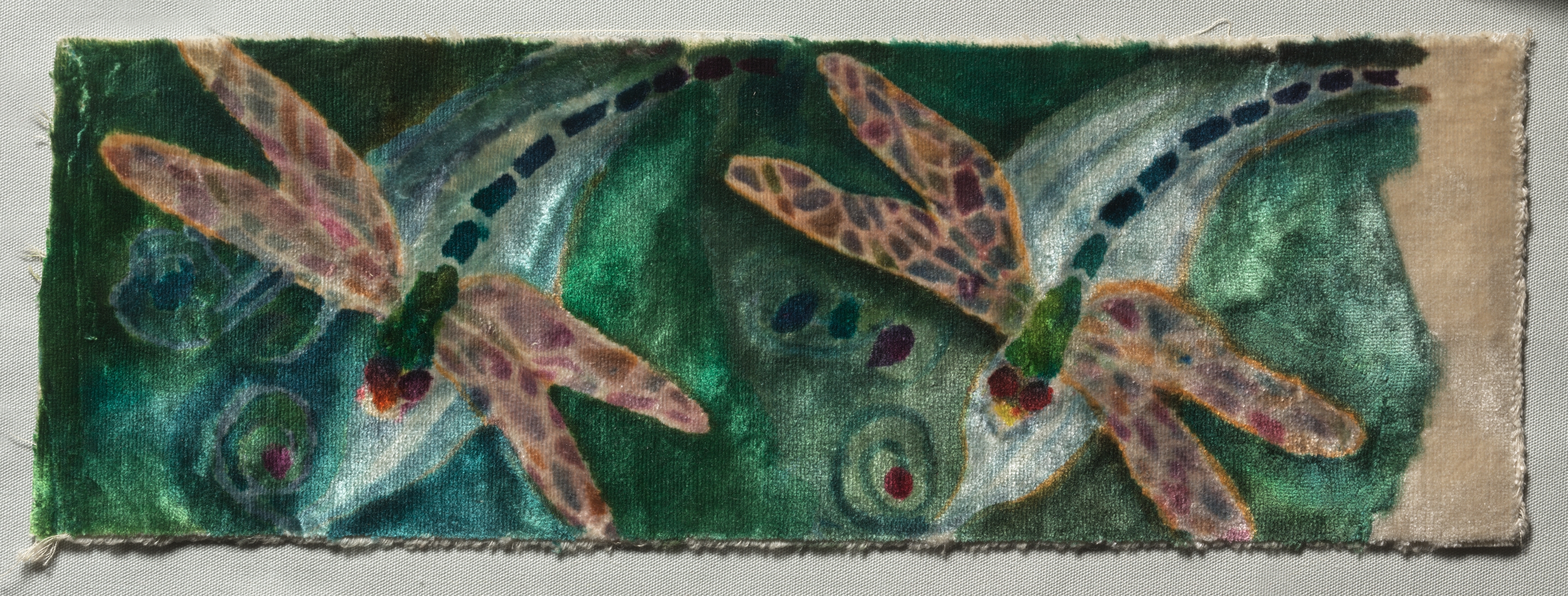
Deconstructing the Stenciled Velvet: A New DNA Strand for Avant-Garde Expression
At Zoey Fashion Lab, our mandate extends beyond the mere cataloging of textiles; we engage in the forensic analysis of material culture, seeking to understand how a fabric’s physical composition informs its philosophical resonance. In this installment of our Deconstructionist Series, we turn our attention to a specimen of singular complexity: a plain silk velvet, stenciled with vegetable dyes, originating from New York. Referenced internally as the “New DNA Strand,” this material is not simply a textile but a proposition—a genetic code for a new form of avant-garde dressing. This analysis will dissect its technical origins, its chromatic alchemy, and its profound stylistic implications.
Technical Provenance: The New York Crucible
The geographical origin of this velvet is not incidental. New York, as a global nexus of art, commerce, and subculture, provides a unique crucible for textile innovation. Unlike the rigid, heritage-driven mills of Europe, New York’s fashion ecosystem thrives on hybridization—the collision of street-level grit with high-art conceptualism. This stenciled velvet is a product of that collision. The base cloth is a plain silk velvet, a substrate of immense luxury and inherent contradiction. Silk provides a luminous, fluid drape, while the velvet’s pile—its dense, cut loops of fiber—absorbs and reflects light with a depth that flat textiles cannot achieve. This creates a surface that is simultaneously soft and architectural, pliable yet possessing a volumetric presence.
The technical process of stenciling onto this pile is a feat of precision. Unlike printing on a flat weave, where dye sits on the surface, stenciling on velvet requires the dye to penetrate the pile without crushing it. The artisan must apply the dye with a controlled, almost painterly touch, allowing the color to wick down the individual silk filaments. The result is a coloration that is not superficial but integral to the fabric’s three-dimensional topography. The use of vegetable dyes further complicates and enriches the process. These are not the uniform, synthetic pigments of mass production. They are organic, living colors that possess a subtle irregularity, a natural variance in tone that resists mechanical perfection. This imperfection is not a flaw but a signature—a testament to the hand of the artisan and the inherent unpredictability of natural materials.
The Chromatic and Tactile Alchemy
The visual impact of this fabric is predicated on a sophisticated interplay between the stencil’s pattern and the velvet’s pile. The stencil acts as a mask, creating a sharp demarcation between the dyed and undyed areas. However, the velvet’s pile diffuses this edge. Light catches the raised, dyed filaments differently than the recessed, undyed ones, creating a chameleonic effect. As the viewer moves, or as the fabric is draped and folded, the pattern appears to shift, shimmer, and even disappear into the shadows. This is not a static print; it is a kinetic experience. The vegetable dyes, with their earthy, slightly muted undertones, prevent the effect from becoming garish. Instead, they lend a sense of organic depth, as if the pattern is growing from within the fabric rather than being imposed upon it.
Tactilely, the fabric offers a dual sensory experience. The smooth, dense pile invites touch, offering a sensation of plush warmth. Yet, the stenciled areas, where the dye has slightly stiffened the silk fibers, create a subtle textural variation. This is a fabric that demands to be felt, not just seen. The contrast between the soft, yielding base and the slightly more rigid, dyed pattern creates a micro-topography that is deeply engaging. It is a textile that rewards close inspection, revealing its complexity only to those who take the time to engage with it on a physical level. This is the antithesis of the digital, screen-based aesthetic that dominates contemporary fashion.
Stylistic Implications: The Avant-Garde as Genetic Mutation
Our internal reference, “New DNA Strand,” is a deliberate metaphor. In biology, a new strand of DNA represents a mutation—a fundamental shift in the genetic code that leads to new expressions. This fabric is precisely that: a mutation in the language of luxury. Traditional velvet is associated with opulence, heritage, and a certain historical weight—think of Renaissance portraits or Victorian drawing rooms. By stenciling it with organic dyes in a contemporary, graphic pattern, we are rewriting its genetic history. We are taking a material steeped in tradition and splicing it with a modern, almost subversive, visual code.
For the avant-garde designer, this fabric is not a passive material but an active collaborator. It dictates a new form of construction. Its volume and light-reactive surface reject the constraints of tailored, two-dimensional garment construction. Instead, it calls for sculptural draping, for bias cuts that allow the pile to fall in different directions, and for designs that play with the fabric’s ability to create shadows and highlights. A simple shift dress becomes a landscape of shifting tones. A voluminous coat becomes a statement on the relationship between body and space. The pattern itself—whatever its specific form—becomes a secondary narrative to the primary story of the fabric’s physical behavior.
Furthermore, the use of vegetable dyes aligns this avant-garde piece with a broader cultural shift towards sustainability and conscious consumption. This is not a disposable fashion item. The dye’s organic nature means the fabric will age gracefully, developing a patina over time that synthetic dyes cannot replicate. This imbues the garment with a sense of longevity and emotional value, countering the industry’s relentless cycle of obsolescence. The avant-garde is often perceived as cold and intellectual, but this fabric introduces a note of earthy, organic warmth. It is a radical proposition: that the future of fashion lies not in further technological alienation, but in a return to material honesty and artisanal process, elevated to a new level of conceptual complexity.
In conclusion, the Stenciled Velvet from New York is a masterclass in material deconstruction and reconstruction. It takes a classic, luxurious base and subverts it through a meticulous, hand-driven process. The result is a fabric that is intellectually stimulating, visually dynamic, and tactilely profound. It is not merely a cloth; it is a new strand of creative DNA, ready to be spliced into the collections of designers who dare to move beyond the conventional. It is, in every sense, a fabric for the future of fashion.