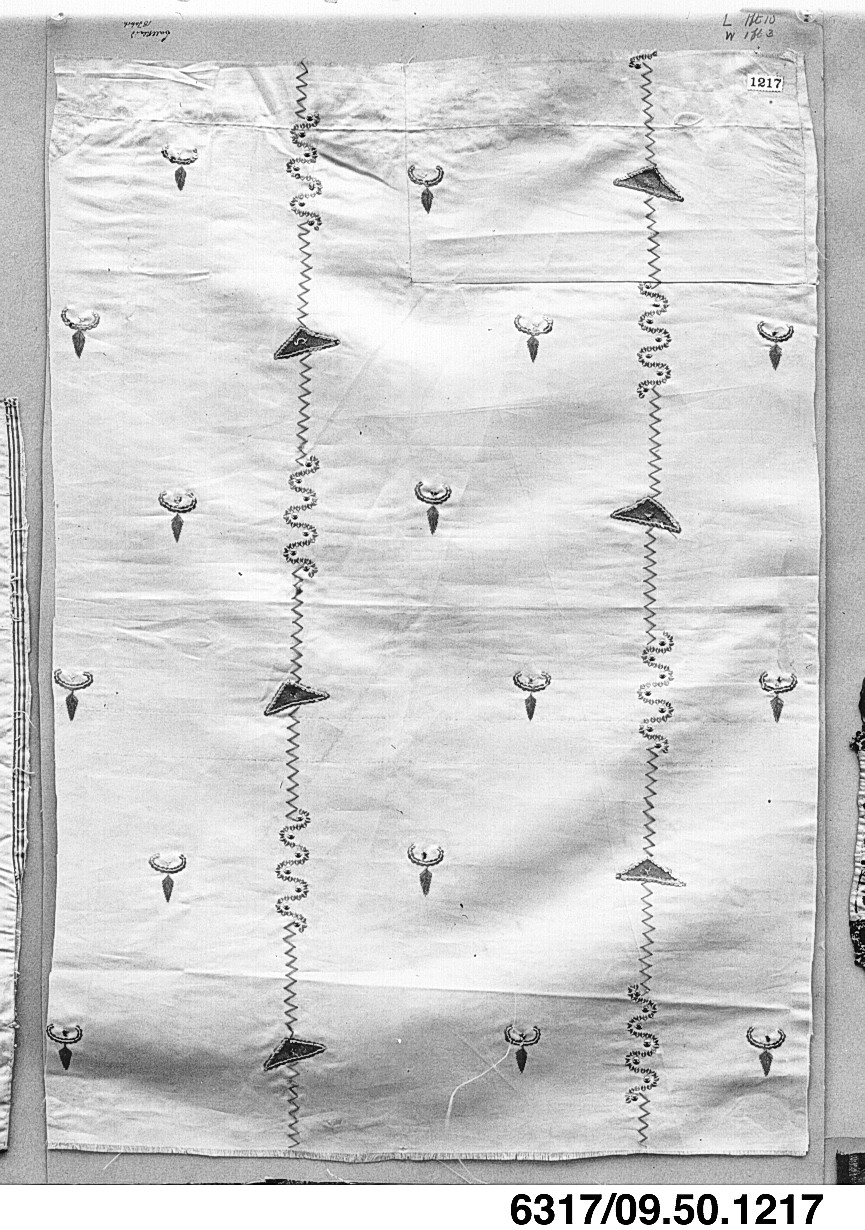
The Fragment as Genesis: Deconstructing the Global Frontier for SS26
In the annals of contemporary fashion, the fragment has long been misread as a symbol of loss—a remnant of a once-whole garment, a nostalgic echo of a bygone silhouette. For Zoey Fashion Laboratory’s SS26 study, we reject this melancholic reading. Here, the fragment is not a scar but a seed. It is the primary generative force, a deliberate act of architectural violence that births new forms from the corpse of convention. This analysis dissects a singular piece—a silk and gold sequin construction—to reveal how fragmentation, when executed with surgical precision, becomes a language of futurity rather than a eulogy for the past.
The garment in question originates from a conceptual space we term the Global Frontier. This is not a geographic location but a psychological terrain where Eastern drapery logic collides with Western tailoring rigor, where nomadic layering meets cybernetic precision. The frontier is a zone of constant translation, and the fragment is its native dialect. Our subject garment, rendered in fluid silk ground beneath a constellation of gold sequins, is not merely decorated; it is architecturally interrupted. The sequins do not embellish—they fracture. They act as a metallic lattice that disrupts the silk’s continuous flow, creating a visual staccato that mimics the erratic pulses of global data streams.
Silk as Memory, Sequins as Disruption
To understand the structural innovation, one must first dissect the material hierarchy. The silk base is not a passive canvas. It is a repository of memory—the memory of the loom, of the mulberry leaf, of the hand that spun it. Its fluidity represents the uninterrupted past, a smooth narrative of craft. The gold sequins, conversely, are the agents of the future. They are hard, reflective, and iterative. Each sequin is a discrete unit of information, a pixel in a high-resolution image of opulence. When applied not in uniform rows but in erratic, clustered formations, they create a topographic map of rupture. The eye cannot settle; it is forced to jump from one reflective node to the next, perpetually reconstructing the garment’s silhouette.
This is the core of our deconstructive thesis: the fragment is not a reduction but an amplification. By removing sections of the silk and replacing them with sheer, void-like gaps, we do not diminish the garment’s presence. Instead, we create negative space that functions as a positive architectural element. The void becomes a window to the body, but a body that is abstracted, rendered as a moving sculpture behind a shattered mirror. The sequins, in this context, are not weight; they are tension points, anchoring the fabric’s drape at unexpected coordinates, forcing the silk to fold, twist, and torque in ways that defy gravitational logic.
Futuristic Silhouettes: The Asymmetry of the Incomplete
The silhouette of this SS26 piece abandons the symmetry of classical couture. We propose a disequilibrium of form—a shoulder that extends into a sharp, sequin-encrusted blade, while the opposite side dissolves into a raw, unfinished silk edge. This is not accidental asymmetry; it is a calculated study in directional mass. The heavier, sequined side acts as a counterweight to the fluid, unadorned side, creating a dynamic tension that makes the garment appear to be in a state of perpetual motion, even at rest. The hemline is not straight but a series of fragmented cascades, each layer a different length, each edge a different finish—some raw, some rolled, some bound with a micro-thin gold wire.
This approach to silhouette is a direct response to the post-human body. We no longer design for the anatomical figure alone; we design for the augmented, the cybernetic, the body that is perpetually connected and perpetually fragmented by notifications, data streams, and global simultaneity. The garment, therefore, does not clothe the body in the traditional sense. It interfaces with it. The silk clings where the body is solid; the sequins shimmer where the body projects its digital aura. The negative spaces are not for ventilation; they are for data passage, imaginary channels through which invisible information flows.
Structural Innovation: The Invisible Seam and the Floating Lattice
Technically, this piece is a marvel of reverse construction. We begin with the final form and work backward, removing fabric to discover the garment’s essential skeleton. The seams are not hidden; they are celebrated as fault lines, stitched with a contrasting gold thread that is left exposed, mimicking the cracks in a geological plate. Yet, these seams do not hold the garment together in a conventional manner. Instead, they are engineered to allow controlled release. A magnetic closure hidden beneath a sequin patch allows the wearer to detach an entire sleeve panel, transforming the garment from a structured jacket into a flowing cape in a single gesture. This is modular fragmentation—the ultimate expression of the frontier’s fluid identity.
The gold sequins themselves are not sewn flat. They are mounted on micro-springs of silk thread, creating a floating lattice that sits above the base fabric. This innovation produces a profound optical effect: the sequins appear to hover, casting minute shadows on the silk below. As the wearer moves, the lattice undulates independently from the base, creating a shimmering moiré pattern that is never static. This is not embellishment; this is kinetic architecture. The garment becomes a living system, a miniature ecosystem of light and shadow, where the fragment—the individual sequin—is the fundamental unit of a larger, ever-changing whole.
Conclusion: The Fragment is the Future
For SS26, Zoey Fashion Laboratory declares that the future of couture lies not in seamless perfection but in the poetics of rupture. The silk and gold sequin fragment from the Global Frontier is a manifesto in material form. It argues that our identity is no longer monolithic but a collection of shards—some inherited, some acquired, some self-generated. The garment’s power resides in its ability to hold these shards together without erasing their edges. It is a wearable philosophy, a testament to the beauty of the incomplete, and a definitive statement that in the coming season, the fragment is not a fall from grace; it is the ascent into a new form of elegance. The future is not a smooth surface; it is a mosaic of brilliant, deliberate breaks.