Deconstructing the Seputangan: A New DNA Strand for Avant-Garde Expression
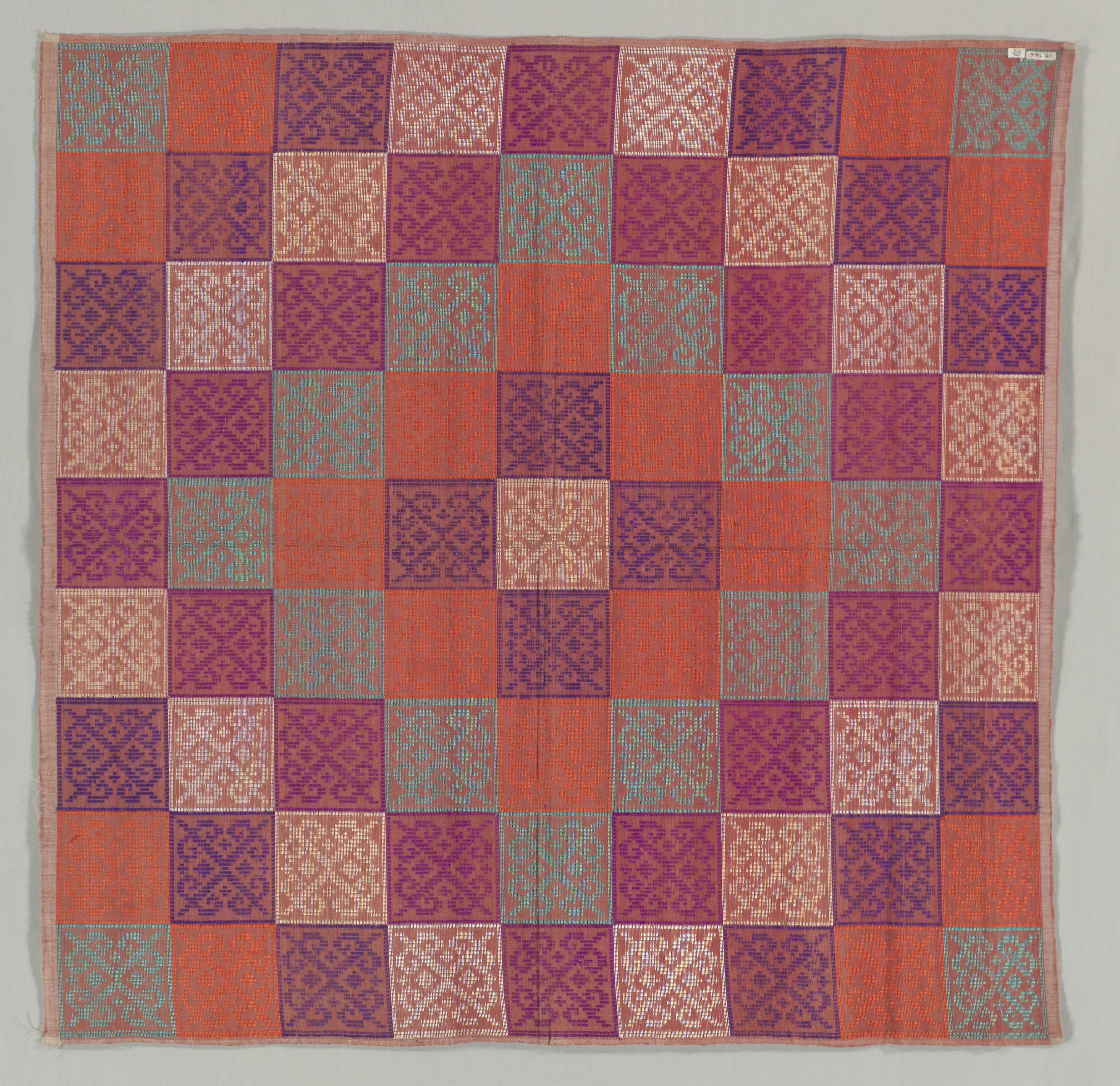
At Zoey Fashion Lab, our mandate extends beyond the mere observation of textiles; we engage in a rigorous process of deconstruction, analysis, and re-synthesis. The subject of this investigation—the Yakan seputangan from the Philippines—presents a compelling paradox. On the surface, it is a traditional headcloth, steeped in the cultural rituals of the Sulu Archipelago. Yet, beneath its geometric precision lies a structural and chromatic complexity that resonates profoundly with contemporary avant-garde design principles. This analysis will dissect the fabric's technical architecture, its cultural DNA, and propose a radical reinterpretation that positions this ancestral craft as a blueprint for futuristic fashion.
Technical Autopsy: The Interplay of Cotton and Silk
The foundational structure of the seputangan is a plain weave, but the designation of "paired weft" immediately elevates it from a rudimentary textile to a sophisticated engineering feat. In a standard plain weave, the weft passes over and under alternating warp threads in a single, simple sequence. The Yakan variation introduces a dyad—two weft threads treated as a single unit. This seemingly minor adjustment has profound consequences. It creates a denser, more substantial hand-feel, lending the cloth a structural integrity that resists the flimsiness often associated with cotton. This paired weft acts as the canvas, a robust and grounded base that speaks to the garment's functional origins as a protective and ceremonial head covering.
However, the true genius of the fabric lies in its supplementary weft of silk. This is not a structural necessity; it is a deliberate act of artistic embellishment. The silk threads, often in vibrant, contrasting hues, are woven in addition to the cotton weft, floating across the surface to create the intricate geometric motifs—the diamond, the hook, the zigzag—that are signature to the Yakan aesthetic. This technique creates a distinct textural dichotomy: the matte, absorbent cotton base versus the lustrous, light-reflective silk. This is not mere decoration; it is a dialogue between two opposing material philosophies. The cotton grounds the design in earthy pragmatism, while the silk introduces an ethereal, almost holographic quality that shifts with every movement of the wearer.
Chromatic and Geometric Codification
The Yakan color palette is a study in controlled chaos. Deep indigos, fiery magentas, and stark blacks are often punctuated by the brilliant yellow and green of the silk supplementary weft. In a traditional context, these colors are symbolic, often denoting rank, clan, or marital status. For the avant-garde designer, however, this palette offers a pre-existing system of non-verbal communication. The abrupt juxtaposition of cool and warm tones, of dark and luminous, creates a visual tension that is inherently modern. It is a form of optical art (Op Art) predating the Western movement by centuries. The geometric patterns, when viewed from a distance, appear to vibrate and pulse—a phenomenon amplified by the paired weft's density and the silk's reflective properties.
This is where the "New DNA Strand" reference becomes critical. The seputangan's design is not a static image; it is a sequence of coded instructions. Each geometric unit is a nucleotide, and the repetition and variation of these units form a genetic sequence that defines the fabric's identity. By decoding this sequence, we can isolate the core elements—the structural pairing, the supplementary contrast, the chromatic tension—and re-sequence them into entirely new configurations. This is not cultural appropriation; it is a respectful extraction of technical and aesthetic principles, a form of genetic engineering applied to fashion.
Avant-Garde Synthesis: From Headcloth to Architectural Silhouette
Translating this analysis into a collection requires a bold departure from the seputangan's original rectangular form. The avant-garde ethos at Zoey Fashion Lab demands that we honor the source material by transforming it, not replicating it. The first step is to liberate the supplementary weft from its role as mere surface ornament. Imagine a garment where the cotton warp and weft form a structural exoskeleton, a stiff, sculptural shell that holds its own shape—a radical departure from the fluid drape of traditional cloth. The silk supplementary weft is then allowed to escape the confines of the weave, emerging as free-floating fringe, tassels, or even unspun silk filaments that trail behind the wearer like a comet's tail.
This technique allows for a deconstruction of the silhouette. A traditional seputangan is folded and tied. Our avant-garde interpretation would deconstruct this act. We can create a jacket where the paired weft is used to create a dense, almost metallic-like rigidity in the shoulders, mimicking the structure of a folded headcloth. The silk supplementary weft is then woven in a gradient, starting dense at the collar and dissipating into a sheer, translucent mesh at the hem. This creates a visual narrative of solidity dissolving into air, a metaphor for the transition from tradition to innovation.
Material Alchemy and Sustainable Futurism
The pairing of cotton and silk also offers a profound commentary on sustainability and luxury. In an era of fast fashion, the seputangan reminds us of the value of slow, deliberate craftsmanship. The cotton provides durability and breathability, while the silk adds a layer of preciousness. For our lab, this suggests a new form of "hybrid luxury." We propose developing a fabric where the cotton is organically grown and the silk is sourced from ethical, small-scale producers. The avant-garde application would be to reverse the hierarchy: instead of a cotton base with silk highlights, we could create a silk base with cotton supplementary wefts, creating a matte, textured pattern on a lustrous ground. This inversion challenges the viewer's perception of value and materiality.
Furthermore, the structural logic of the paired weft can be applied to non-traditional materials. Imagine a version of this weave using recycled metallic fibers for the warp and a bio-degradable polymer for the weft. The result would be a fabric that is simultaneously futuristic and grounded in ancestral logic. The "DNA strand" of the Yakan technique—the principle of pairing and supplementing—becomes a universal design algorithm, applicable to any material system.
Conclusion: A Living Code, Not a Museum Piece
The Yakan seputangan is far more than a historical artifact. It is a living code, a repository of technical and aesthetic intelligence. At Zoey Fashion Lab, our deconstruction reveals that its true value lies not in its original form, but in its underlying principles: the strength of the pair, the luminosity of the supplement, and the tension of chromatic opposites. By treating these principles as a "New DNA Strand," we can splice, mutate, and re-express them in forms that are radically contemporary. The headcloth becomes a bodysuit; the geometric motif becomes a 3D-printed structural panel; the silk fringe becomes a kinetic, interactive element. This is the ultimate act of respect—not to freeze the seputangan in a glass case, but to allow its genetic code to evolve, to mutate, and to thrive in the uncharted territories of avant-garde fashion.