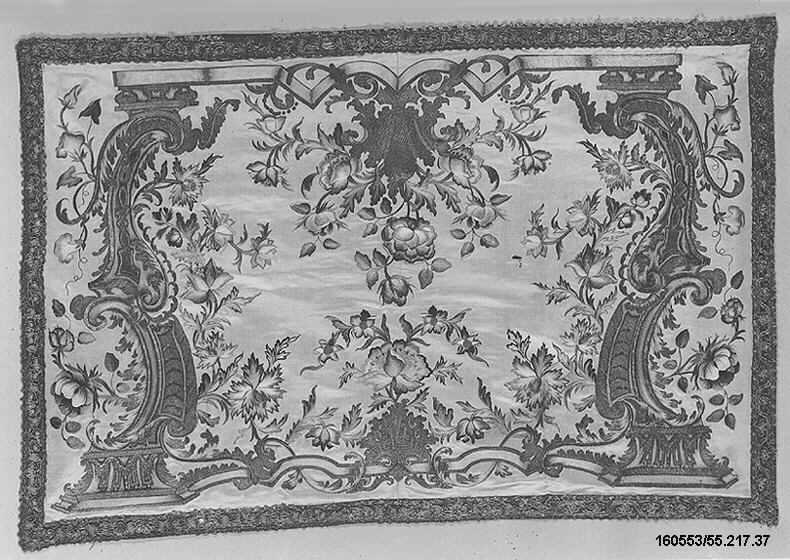
The Panel Deconstructed: A Blueprint for SS26 Structural Autonomy
The panel, in its most reductive form, is a unit of measure—a discreet field of fabric bounded by seams, darts, or negative space. In the hands of Zoey Fashion Laboratory, however, the panel ceases to be a passive component of a garment’s anatomy. It becomes the primary agent of architectural expression, a self-contained universe of tension, release, and sculptural possibility. For Spring/Summer 2026, our investigation isolates the panel from its traditional role as a building block, repositioning it as a standalone study in structural autonomy. The subject is not a dress, a jacket, or a coat. The subject is the panel itself—its geometry, its material memory, and its capacity to generate a silhouette that defies the gravitational logic of conventional tailoring.
This analysis is not a retrospective. It is a manifesto for a future where the garment is subordinate to its constituent parts. We are dismantling the hierarchy of construction to ask a singular, provocative question: What happens when the panel is the whole, and the body is merely a point of suspension? The answer, we propose, lies in a radical re-engineering of material behavior, facilitated by an unexpected alliance: silk and metal thread on silk. This is not a decorative juxtaposition; it is a functional dialectic between fluidity and rigidity, between drape and defiance.
The Material Dialectic: Silk’s Yielding vs. Metal’s Imperative
Silk, in its unadulterated form, is the quintessential symbol of submission. It flows, it pools, it clings—its behavior dictated entirely by the forces applied to it. For SS26, we subvert this narrative by introducing a metallic warp and weft into the silk substrate. This is not a metallic coating or a superficial laminate; it is a structural interlock, where ultra-fine, flexible metal threads are woven at precise intervals to create a composite fabric with a memory. The metal does not overpower the silk; it disciplines it. The resultant material possesses a paradoxical quality: it retains silk’s luxurious hand and lustrous surface, yet it is imbued with a latent stiffness that allows it to hold a crease, project a plane, or cantilever away from the body without internal wiring or boning.
This material innovation is the foundation of our “Global Frontier” context. The panel, constructed from this hybrid textile, becomes a map of territorial expansion. It extends beyond the body’s natural perimeter, creating a silhouette that is less about covering flesh and more about claiming space. The metal thread functions as a cartographic line, tracing the boundaries of this new territory with a precision that pure silk could never achieve. The interplay between the two materials—the soft, absorbent nature of the silk and the reflective, unyielding character of the metal—creates a visual and tactile tension that is the core of our avant-garde proposition.
Silhouette as Argument: The Projected Panel
In traditional couture, the silhouette is a composite of multiple panels, each shaped to follow the body’s contours. Our SS26 study inverts this logic. We present a singular, monumental panel—a trapezoid, a crescent, or a spiral—that is engineered to stand independently. The garment, if it can be called that, is a portable architecture that the wearer inhabits rather than wears. The silhouette is no longer a contour; it is a projection. It thrusts forward from the shoulder, arcs away from the hip, or rises in a controlled sweep from the nape of the neck. This is not a silhouette that describes the human form; it is a silhouette that interrogates it, proposing a new relationship between the body and its environment.
The structural innovation lies in the panel’s internal logic. We employ a series of concealed, articulated seams that function like hinges, allowing the panel to fold, unfold, and lock into position. These are not simple stitch lines; they are mechanical joints that exploit the metal thread’s tensile strength. The result is a garment that can be manipulated by the wearer—a panel that can be raised to create a dramatic, wing-like shoulder, or lowered to form a sweeping, asymmetric hem. This is not passive fashion; it is an interactive sculpture. The wearer becomes a co-creator, adjusting the architectural volume to suit the moment, the light, or the statement they wish to make.
Beyond the Body: The Panel as a Standalone Study
Our “standalone avant-garde study” context is crucial. We are not presenting a collection of dresses. We are presenting a series of discrete panels, each mounted and displayed as an independent object of contemplation. One panel might be a perfect square, folded into a rigid, origami-like relief. Another might be a long, narrow strip that spirals into a cone, creating a dramatic focal point when suspended from the shoulder. A third might be a semi-circle that, when anchored at the sternum, flares out to create a shield-like breastplate. Each panel is a complete thought, a finished argument in the debate about the future of dress.
This approach challenges the very notion of the “collection.” We are not designing garments that happen to be made of panels; we are designing panels that happen to suggest garments. The human body is the absent protagonist, implied by the curvature of the form, the placement of a single, strategic clasp, or the internal volume that the panel creates. This is haute couture as pure concept—a laboratory experiment where the results are not worn but studied. The focus is on the futuristic silhouette as a function of material intelligence, not as a fleeting trend. It is a silhouette that will not be rendered obsolete by the next fashion cycle because it is not a shape; it is a system of construction.
Conclusion: The Panel as a New Frontier
For SS26, Zoey Fashion Laboratory declares that the panel is no longer a means to an end. It is the end itself. By fusing silk’s organic grace with metal’s structural imperative, we have created a material capable of holding a form that is both ethereal and monumental. The resultant silhouettes are not merely futuristic; they are architecturally inevitable. They represent a departure from the body-consciousness that has dominated couture for a century, offering instead a vision of fashion as a form of spatial intervention. The Global Frontier is not a geographical location; it is the space between the fabric and the form, the negative space that the panel creates and defines. We invite you to step into that space, to consider the panel not as a piece of a puzzle, but as the entire picture—a new beginning for the language of dress.