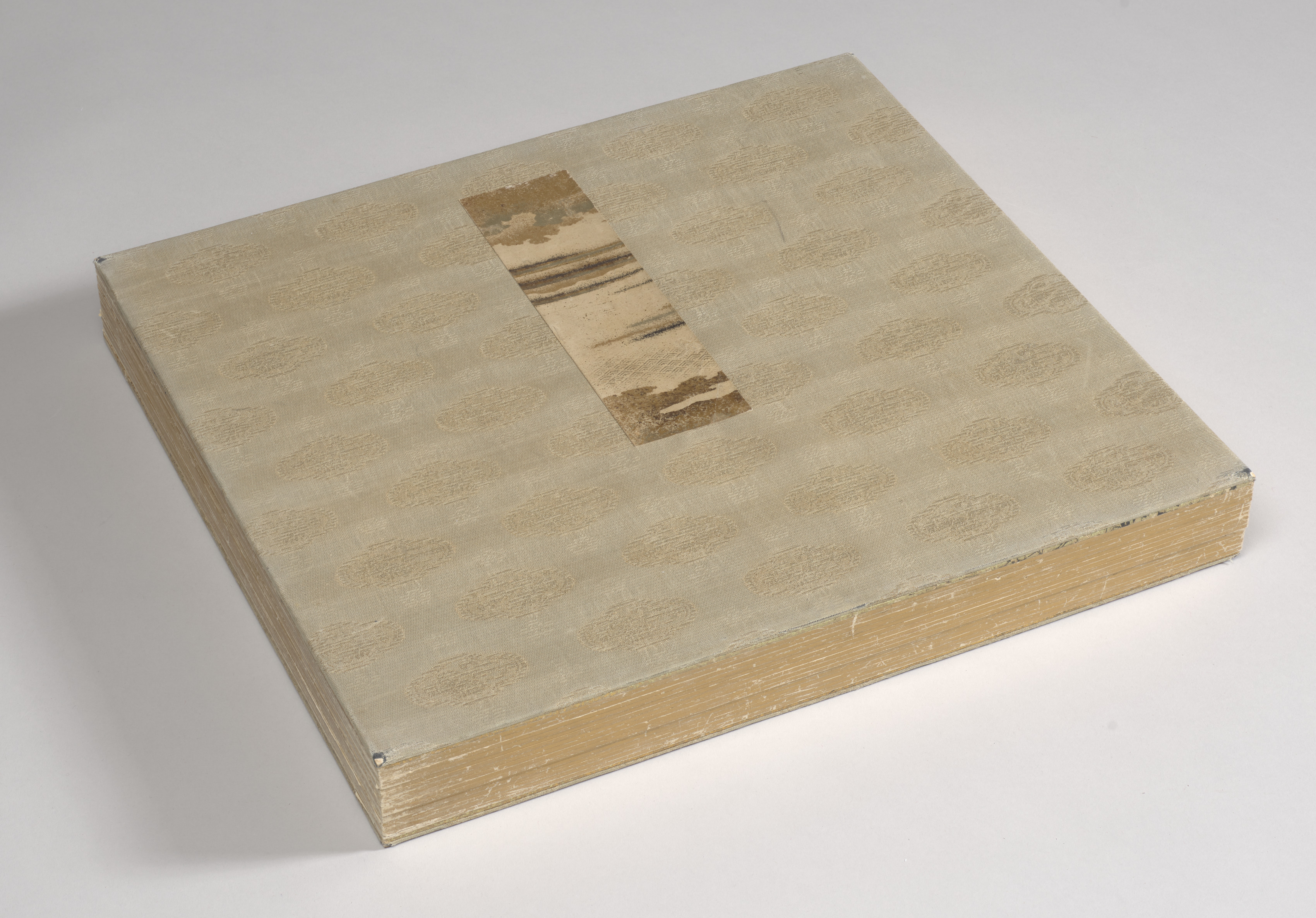
Deconstructing the Tangible Echo: An Avant-Garde Analysis of the Silk Album
At Zoey Fashion Lab, our mandate extends beyond the superficial reading of garments; we excavate the geological strata of material culture. The object under our collective microscope today is not a singular textile, but an Album of Textile Samples, a codified dossier of silk fragments hailing from the crucible of the Tang dynasty (618–907) or the contemporaneous Japanese Nara period (710–794). To the uninitiated, this is a mere collection of historical swatches. To the Chief Fabric Deconstructionist, it is a proto-binary system, a physical algorithm of aesthetic possibility that predates the digital mood board by over a millennium. This analysis will not romanticize the artifact; it will dissect its structural logic, chromatic violence, and ontological instability, framing it as a radical precursor to the avant-garde’s obsession with the fragment, the archive, and the non-linear narrative.
I. The Album as a Disruptive Interface: Beyond the Museum Case
The physical format of the album—a bound sequence of disparate materialities—is the first point of avant-garde resonance. In an era where the "total look" dominates fashion’s commercial output, the album presents a schizophrenic coherence. Each silk square is a sovereign entity, yet bound to its neighbors through the violence of the stitch or the pressure of the mount. This is not a linear story of textile evolution; it is a rhizomatic network of choices. The Tang dynasty was a cosmopolitan superpower, absorbing Sogdian, Persian, and Indian influences through the Silk Road. The Nara period in Japan, conversely, was a period of intense state-sponsored appropriation of Tang culture via the Kentōshi missions. The album, therefore, is not a passive record but an active curatorial intervention, a deliberate juxtaposition of the "self" and the "other" that was already in flux.
For the contemporary designer, this format is a manifesto against the tyranny of the collection. It proposes that innovation lies not in the singular design but in the curatorial juxtaposition of existing codes. The album’s structure—turning a page to reveal a sudden shift from a monochrome damask to a polychrome tie-dye (shibori or jiaoxie)—is a proto-version of the runway’s abrupt tonal shifts. It teaches us that the "shock of the new" is often a re-contextualization of the "shock of the old." We must view this album not as a nostalgic artifact, but as a navigational tool for future fabrication, a manual for breaking the linearity of design time.
II. Chromatic Anarchy and Material Alchemy: The Silk’s Subversive Grammar
Moving beyond the binding, we confront the silk itself. The technical mastery of Tang and Nara weavers is legendary—the warp-faced compound weaves, the lampas structures, the intricate gauzes. However, our avant-garde lens focuses on the subversive potential of the dye and the weave structure. The album’s fragments are not merely colored; they are chemically and physically altered. The use of madder root, indigo, and the precious kermes or lac insects created a chromatic palette that was not just decorative but hierarchical and political. Sumptuary laws dictated who could wear certain colors; the album is thus a record of transgression or a blueprint for power.
Yet, the deconstructionist’s eye seeks the failure of the dye, the uneven absorption, the fading at the edges. These "imperfections" are not flaws; they are the material’s memory. In the avant-garde, we celebrate the wabi-sabi of the Nara aesthetic—the acceptance of transience—but we also see the Tang’s imperial opulence as a form of controlled chaos. The technical brilliance of the weave, the density of the warp and weft, creates a surface that is not flat. It is a topographical map of tension. The light hits the raised pattern of a brocade, creating a shimmer that is almost aggressive. This is not passive decoration; it is a performative surface that demands interaction. The album, when touched, offers a tactile binary: the smoothness of a satin ground against the rough, raised pile of a cut velvet. This haptic contrast is a precursor to the contemporary obsession with tactile dissonance in high fashion—the mixing of neoprene with organza, the pairing of bonded leather with micro-tulle.
Furthermore, the materiality of the silk is a testament to biodegradable technology. The protein structure of the fibroin is a natural polymer, engineered by silkworms. In our era of synthetic microplastics, this album is a radical ecological statement. It demonstrates that high luxury and environmental consciousness are not mutually exclusive. The avant-garde fashion lab must look at this album and see not just a historical fabric, but a proof-of-concept for regenerative material science, a call to return to a bio-based, closed-loop system of production.
III. Archive Resonance and the Ghost of the Future
The provided reference—Archive Resonance: 在人类文明的长河中,器物与绘画不仅是时代技艺的结晶,更是文化碰撞与美学交融的无声见证。十六至十七世纪....—is a critical key to unlocking this album’s true function. The text speaks of "silent witnesses" to "cultural collision and aesthetic fusion." While it references the 16th-17th centuries, it applies perfectly to our Tang/Nara artifact. The album is a silent witness to the most significant cultural transfer in East Asian history: the transmission of Buddhist iconography, courtly dress, and weaving technology from the continent to the archipelago. The album is not just Chinese or Japanese; it is a hybrid entity, a testament to the fact that "purity" in culture is a myth.
From the avant-garde perspective, this "resonance" is the ghost in the machine. The patterns—the hunting scenes, the floral arabesques, the geometric lozenges—are not merely motifs. They are semiotic triggers that carry the DNA of Sasanian Persia, the Hellenistic world, and indigenous East Asian shamanism. When we deconstruct a Tang-era damask, we are not just looking at silk; we are looking at a compressed data file of global trade routes. The avant-garde fashion designer must learn to read this data. The album is a pre-internet database, a physical hyperlink to a network of cultures that were in constant dialogue.
This challenges the contemporary obsession with "originality." The album proves that every design is a remix, a re-contextualization of a pre-existing code. The avant-garde act is not to invent from nothing, but to misuse the archive. We must take the Tang’s symmetrical, imperial compositions and deliberately warp them, slice them, and re-stitch them asymmetrically. We must take the Nara period’s sacred Buddhist motifs and strip them of their religious context, re-presenting them as purely graphic, secular abstractions. The album gives us the permission to do this because it is itself a product of such cultural piracy.
IV. A Blueprint for the Zoey Fashion Lab Praxis
In conclusion, this Album of Textile Samples is not a relic to be preserved under glass. It is a generative engine for the Zoey Fashion Lab. Our praxis will involve the following deconstructive protocols:
1. Pattern Dislocation: We will extract the geometric grids and floral symmetries from the album and subject them to a process of digital glitching and fractal distortion. The goal is to maintain the structural integrity of the weave’s logic while destroying its visual equilibrium, producing a "neo-Tang" aesthetic that feels alien yet familiar.
2. Material Necromancy: We will analyze the dye compounds and weave densities using spectral analysis, not to replicate them, but to identify their "failure points." We will then engineer new bio-fabrics that intentionally mimic the fading, the unevenness, and the textural inconsistencies of the aged silk. This creates a "new vintage" that is inherently sustainable, as it pre-empts the aging process.
3. The Curatorial Cut: The album’s format will be translated into our garment construction. We will design pieces that are explicitly "bound" together, using visible seams and contrasting panels to mimic the album’s page-turning experience. A jacket will have a sleeve of Tang damask and a body of Nara gauze, creating a sartorial conversation across centuries.
Ultimately, this album teaches us that the avant-garde is not about the future, but about a radical re-reading of the past. It is a weapon against the amnesia of fast fashion. It is a material proof that the most innovative designs are those that have the deepest roots. The silk is not dead; it is waiting for us to misread it correctly.