The Lappet Recalibrated: An Avant-Garde Autopsy of Ornamental Architecture for SS26
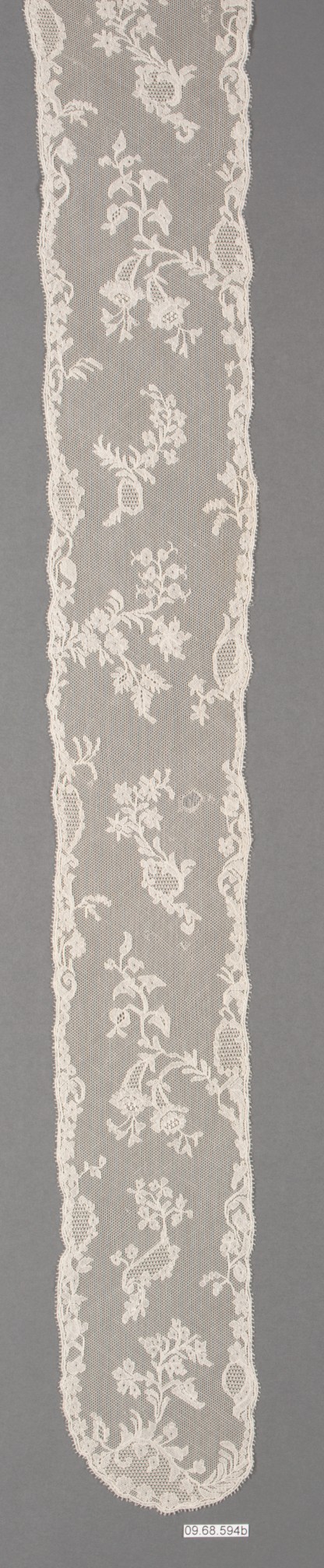
In the lexicon of fashion’s forgotten appendages, the lappet occupies a curious, almost spectral position. Historically a strip of fabric—often lace or linen—hanging from a headdress or a clerical garment, it was an ornament of restraint, a whisper of piety or a flourish of courtly decorum. To the uninitiated, it is a relic. To the Zoey Fashion Laboratory, it is a dormant technology. For Spring/Summer 2026, we are not resurrecting the lappet; we are dissecting it, stripping it of its historical passivity, and re-engineering it as a dynamic prosthetic for the body’s kinetic expression. This is not a tribute. This is a hijacking.
The Global Frontier context demands we abandon the Eurocentric provenance of the lace lappet. Instead, we source our material from the experimental fringes: a bio-filament woven from mycelial root structures and recycled aerospace-grade carbon fiber. This is not fabric; it is a responsive membrane. It possesses a memory—it can be heat-set into rigid, architectural curves that retain their shape, yet it remains supple enough to flutter with a microsecond delay behind the wearer’s movement. The lappet, historically a static drape, becomes a parasitic extension of the wearer’s own biomechanics, a secondary skin that moves after the body, creating a ghosted, strobe-like silhouette.
Deconstructing the Silhouette: From Appendage to Exoskeleton
The traditional lappet hangs. Our SS26 iteration projects. We have inverted the gravitational logic of the garment. Instead of falling from the neck or head, our lappets erupt from the shoulder blade, the hip joint, and the lumbar spine. They are not sewn; they are fused via magnetic articulation points hidden beneath a micro-thin layer of liquid silicone. This allows for a modular wardrobe—a single base garment, a "core chassis," can be reconfigured with a suite of lappet attachments that range from 15-centimeter kinetic fringes to 120-centimeter sweeping blades of carbon composite.
Consider the silhouette. It is no longer a line, but a trajectory. The front of the garment is aggressively minimal—a seamless, high-necked shell that clings to the torso like a second epidermis. All the volume, all the drama, is displaced posteriorly. As the model walks, the lappets do not sway; they snap. They create a series of accelerating arcs that slice the air, leaving a visible trail of aerodynamic disturbance. This is the "Comet Tail" effect. The silhouette is not about mass, but about motion-drag. We are designing the negative space behind the body as aggressively as the garment itself.
Structural Innovation: The Tensegrity Lappet System
To achieve this, we abandoned traditional seam construction. The SS26 lappet is built on a principle of tensegrity—a structural relationship where isolated components in compression (the carbon-fiber ribs) are held in tension by a continuous web of the mycelial filament. The result is a structure that is paradoxically rigid and elastic. When at rest, the lappet holds a sharp, origami-like fold. When the body initiates movement, the tension web releases, causing the structure to unfurl with a controlled, mechanical recoil.
This is not decoration. This is responsive architecture. Each lappet is embedded with a micro-ribbed "muscle" of shape-memory alloy that reacts to body heat and humidity. In a static gallery environment, the lappet remains dormant, a sharp, sculptural shard. On a sun-drenched runway, the heat triggers a gradual, slow-motion unfurling, transforming the shard into a sweeping, wing-like plane. The garment is not worn; it is activated. The wearer becomes a conductor, and the lappets are their orchestra.
Material Dialectics: The Alchemy of the Experimental
The material narrative is equally disruptive. We reject the softness of historical linen. Our experimental material is a study in contradictions: it is cold to the touch yet thermally insulating; it is opaque in its rigid state, yet translucent when stretched to its tensile limit. The mycelial base provides a subtle, organic texture—a faint, irregular veining that mimics the vascular systems of leaves. This is overlaid with a vapor-deposited layer of titanium dioxide, which gives the surface a liquid-metal sheen that shifts from silver to a deep, iridescent gunmetal depending on the angle of light.
This is a deliberate provocation against the "natural" trend. We are not using organic materials to be sustainable; we are using them for their performative properties. The mycelium is not a substitute for leather; it is a superior structural material that can be grown to specific thicknesses and densities, eliminating the waste of cutting. The carbon fiber provides the skeletal strength, while the mycelium provides the organic flexibility. This is a post-natural materiality—a symbiosis of the grown and the manufactured.
Contextualizing the Lappet as a Wearable Instrument
In the context of a standalone avant-garde study, the lappet is no longer an accessory. It is a wearable instrument of spatial disruption. We have designed a series of "choreographic scores" for the garments. In one iteration, the lappets are weighted asymmetrically, causing the wearer to adjust their gait to maintain balance. The garment is not adapting to the body; the body is adapting to the garment. This is a power reversal—the ornament is now the master.
Another iteration features lappets that terminate in fine, brush-like tips of optical fiber. As the wearer moves, these tips trace lines of light in the air, creating a three-dimensional drawing that persists for a fraction of a second in the viewer’s retina. This is not illumination; it is temporal sculpture. The garment is a tool for drawing with time and motion.
For the SS26 collection, we propose the lappet as a manifesto. It is a rejection of the static, the comfortable, and the decorative. It is an embrace of the transitional, the kinetic, and the structural. We are not dressing the body; we are augmenting its capacity to leave a mark on space. The lappet, once a symbol of modesty and restraint, is now a weapon of expressive force. It is the definitive accessory for the body that refuses to stand still.
This is the future of couture: not a garment, but a prosthetic for the spirit of motion. The lappet is dead. Long live the lappet.