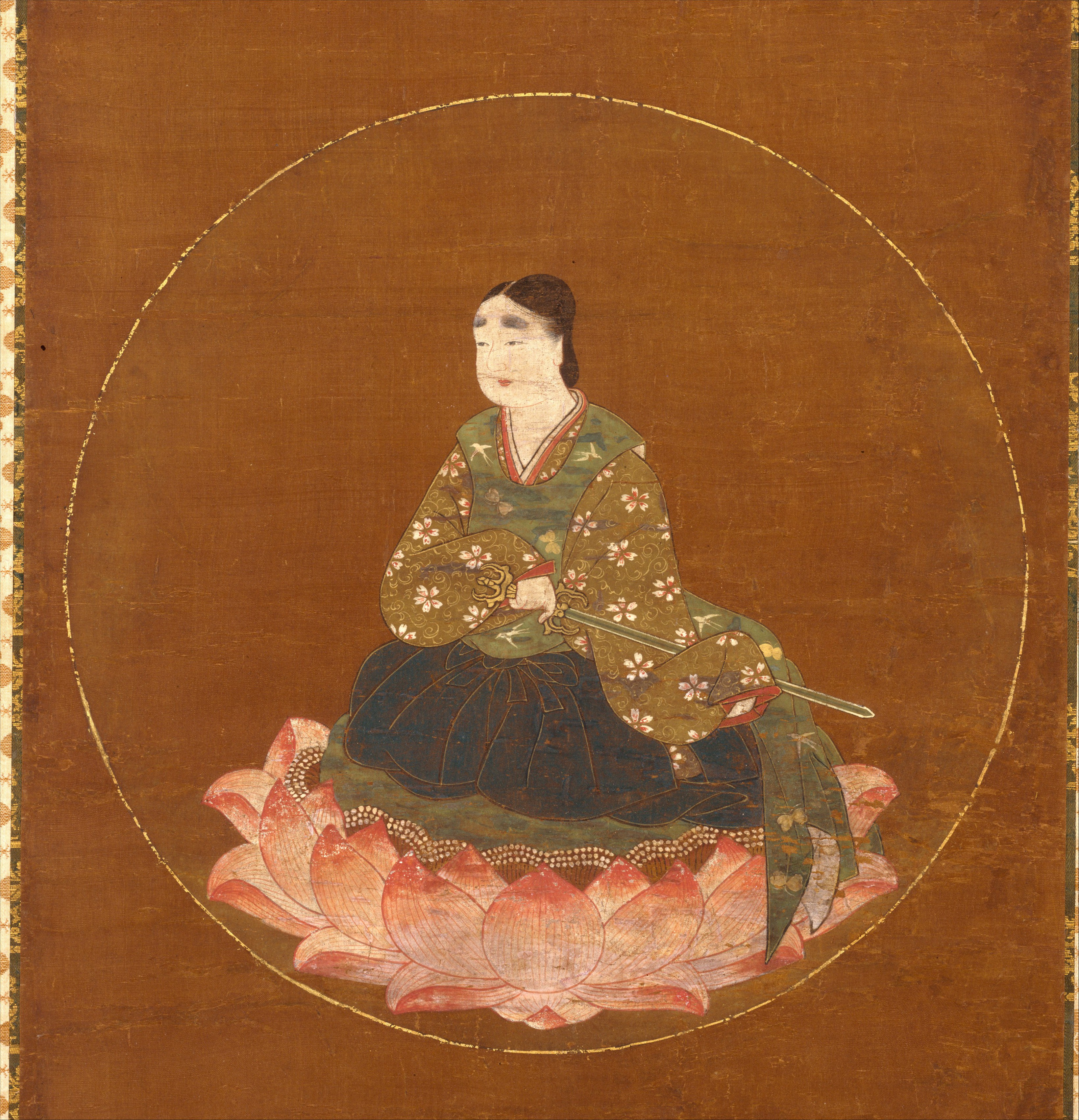
Deconstructing the Sacred Mandala: A Blueprint for SS26 Structural Innovation
The intersection of sacred geometry and avant-garde fashion is not a novel pursuit, yet the potential for radical reinterpretation remains boundless. At Zoey Fashion Laboratory, we do not merely draw inspiration from historical artifacts; we dissect their visual and conceptual DNA to engineer garments that exist in a state of perpetual futurism. The Mandala of Wakamiya of Kasuga Shrine—a hanging scroll rendered in ink, color, gold, and cut gold on silk—offers a profound case study for SS26. This is not a work of static devotion but a dynamic, multi-layered cartography of the cosmos, a visual manifesto of concentric power and centrifugal energy. Our analysis will extract its core principles—layered transparency, radial symmetry, and the tension between the ethereal and the monumental—and translate them into a collection defined by architectural drapery, modular construction, and a redefinition of the human silhouette as a moving shrine.
I. The Scroll as a Wearable Stratum: Layered Transparency and the Illusion of Depth
The original mandala is a masterclass in planar stratification. The artist employed ink and color to establish a narrative ground, then elevated the divine figures and architectural elements with gold and cut gold (kirikane). This creates a physical and optical depth—a hierarchy of surfaces that the eye must traverse. For SS26, we translate this into a radical approach to transparency and opacity. The standard sheer overlay is obsolete. Instead, we propose a system of interchangeable, magnetically-seamed panels that mimic the scroll’s layered composition. A base layer of liquid silk, dyed in the deep indigo and verdant greens of the Kasuga landscape, serves as the “ink” foundation. Over this, we float rigid, laser-cut structures of translucent resin and metallic organza, echoing the cut-gold patterns. The wearer becomes a curator of their own depth, adjusting the panels to reveal or obscure the “narrative” beneath. This is not mere decoration; it is a functional deconstruction of the garment’s surface, allowing for a silhouette that shifts from monastically minimal to opulently complex in a single gesture.
II. Radial Symmetry and the Re-Engineering of the Silhouette
The mandala’s composition is fundamentally radial—a central deity (Wakamiya) surrounded by concentric circles of attendants, shrines, and celestial realms. This geometry demands a departure from the bilateral, body-conforming forms of conventional couture. Our SS26 silhouette is predicated on non-linear, centrifugal volume. We are developing a series of “mandala-shoulder” constructions: garments where the structural support emanates from a central spine (the wearer’s own) and projects outward in asymmetrical, cantilevered arcs. Think of a jacket that is not draped but assembled from radial segments, each piece a distinct “shrine” of fabric, pivoting on a central, articulated joint at the nape of the neck. The result is a silhouette that is simultaneously armor-like and ethereal, expanding and contracting with the wearer’s movement. This is a direct challenge to the static nature of the painted scroll—our garments are kinetic mandalas, meant to be activated by the human form.
III. Material Alchemy: From Ink Wash to Liquid Metal
The material palette for this study is a deliberate fusion of the sacred and the industrial. The scroll’s use of ink suggests a fluid, monochromatic base. We counter this with high-tensile, memory-retaining metallic fibers that can be shaped into permanent, sculptural folds. Consider a gown where the skirt is not cut and sewn, but folded and heat-set into a series of sharp, origami-like planes, their surfaces coated in a micro-thin layer of gold leaf—a direct homage to the kirikane technique. However, this gold is not warm or antique; it is a cold, almost chrome-like finish, reflecting the environment and creating a dialogue between the wearer and their surroundings. The silk itself is treated with a nano-ceramic finish, giving it the weight and drape of liquid stone while retaining a whisper of its original flexibility. This is material alchemy: transforming the traditional into a speculative future fabric that challenges the very notion of what a garment can be.
IV. Structural Innovation: The Garment as Architecture
The most radical departure in this analysis is the treatment of the garment as portable architecture. The mandala’s depiction of the Kasuga Shrine’s corridors and gates is not merely scenic; it is a structural blueprint. We propose a series of “gateway” garments—pieces that frame the body rather than cover it. A prime example is a hybrid cape-train constructed from a lattice of carbon-fiber rods, inspired by the shrine’s vermilion-lacquered pillars. This structure is not hidden beneath fabric but is exposed, serving as the primary silhouette. The fabric—a whisper-thin, double-faced silk—is suspended between these rods, creating a negative space that defines the body’s presence through absence. This is a fundamental shift from pattern-making to component engineering. The garment is no longer a single object but a system of interlocking parts, each individually replaceable and adjustable. This aligns with our SS26 philosophy of “wearable infrastructure”—clothing that is not passive but actively shapes and redefines the space it occupies.
V. The Futuristic Silhouette: A Moving, Living Mandala
In conclusion, the Mandala of Wakamiya is not a relic to be referenced but a theoretical framework for a new kind of dress. For SS26, we are not creating costumes of a feudal past; we are engineering prototypes for a post-physical, hyper-visual future. The silhouette is no longer defined by the bust, waist, and hip, but by radial axes, cantilevered volumes, and the interplay of opaque and translucent strata. The garment becomes a personal cosmos, a shrine to the individual’s own kinetic energy. The gold is not decorative; it is a signal, a reflective surface that captures and re-emits light, making the wearer a beacon. The layers are not for warmth but for narrative modulation, allowing the wearer to control their visual story with the precision of a master scroll painter. This is the definitive avant-garde statement: to take a sacred, static image and transmute it into a living, breathing, moving architecture of the self. The future is not linear; it is concentric, and it is worn.