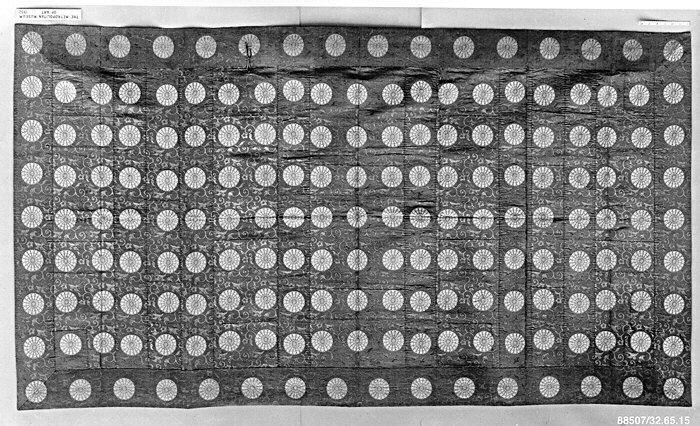
The Sacred Deconstructed: Reimagining the Japanese Priest’s Robe for SS26
In the hallowed corridors of Zoey Fashion Laboratory, we do not merely observe garments; we dissect their metaphysical DNA. The subject of this definitive study—the Japanese priest’s robe, or koromo—presents a paradox of immobility and transcendence. Crafted from lustrous silk and bound by the tensile strength of metallic thread, this vestment is traditionally a symbol of ritual purity and hierarchical stillness. Yet for Spring/Summer 2026, we propose a radical re-architecture: a deconstruction that liberates the robe from its liturgical gravity, propelling it into a speculative future where sacred geometry meets biomechanical fluidity. This is not an homage; it is a hijacking of the divine.
I. Silhouette: The Inverted Vesica Piscis
The conventional priest’s robe relies on a monolithic, A-line column that obscures the human form, creating a vessel for the spirit rather than the body. Our SS26 intervention severs this vertical monolith. We introduce the Inverted Vesica Piscis—a silhouette that flares asymmetrically from the shoulders, then cinches at the mid-thigh via an invisible corsetry of metallic thread, before exploding into a bifurcated train that mimics the split of a lightning strike. The front hem is excised at a severe 45-degree angle, revealing the lower limb, while the rear extends to a floor-sweeping point. This creates a dynamic tension between ascension (the rising shoulder line) and terrestrial drag (the weighted train). The robe no longer hangs; it hovers, as if caught in a perpetual state of levitation just before prayer.
Furthering the futuristic lexicon, we employ negative-space paneling. Strategic laser-cut perforations, inspired by the lattice of temple screens (shoji), are placed along the lateral seams. These openings are not decorative; they function as ventilation channels and structural relief, allowing the silk to billow independently from the body’s movement. The result is a silhouette that oscillates between solid and void, presence and absence—a garment that breathes with the wearer’s spiritual pulse.
II. Material Alchemy: Silk as Liquid Armor
Silk, in its natural state, is a supple, almost liquid fabric—a medium of gentleness. Our laboratory, however, subjects this material to a process of metallic fusion. We do not simply embroider with metallic thread; we weave it into the very warp and weft of the silk, creating a hybrid textile that is simultaneously fluid and armored. The metallic threads—composed of recycled copper and silver alloy—are interlocked in a hexagonal grid, reminiscent of carbon-lattice structures. This imparts a subtle, iridescent shimmer that shifts from gunmetal grey to pale gold under changing light, evoking the auratic glow of a sacred icon.
The tactile experience is deliberately schizophrenic. The exterior is cool, almost clinical, with a faintly ribbed texture that resists touch. The interior, however, retains the raw, unprocessed silk’s buttery softness. This dichotomy—cold exterior, warm interior—mirrors the priest’s role as an intermediary between the celestial and the mortal. For SS26, we further treat the fabric with a hydrophobic nano-coating, causing water to bead and roll off the robe’s surface like mercury. This is not mere function; it is a commentary on purity—a garment that repels contamination, both physical and spiritual, in an era of environmental and moral decay.
III. Structural Innovation: The Kinetic Spine
Where traditional construction relies on flat seams and static draping, our SS26 robe introduces a Kinetic Spine System. Running along the center back, from the neckline to the hem, is a segmented rail of metallic thread, resembling the vertebrae of a serpent. This spine is not rigid; it is articulated with micro-hinges, allowing the robe to bend, twist, and respond to the wearer’s gait. When the priest bows, the spine compresses, and the silk folds into precise, origami-like pleats. When they rise, the spine extends, and the garment snaps back to its full, imposing width. This is a garment that possesses its own biomechanics—a wearable exoskeleton of devotion.
Complementing the spine is the Detachable Halo Collar. Constructed from a single loop of metallic thread, stiffened via electroforming, this collar arcs behind the head, not touching the neck. It functions as a sound reflector, subtly amplifying the wearer’s voice during chants, while visually creating a futuristic nimbus. The collar is magnetically attached, allowing for rapid removal—a nod to the fluidity of spiritual roles in a secular age.
IV. Contextual Futurism: Ritual in a Post-Human Era
The standalone avant-garde study of this robe is not an exercise in nostalgia. It is a critical response to the dissolution of institutional authority. By deconstructing the priest’s robe, we question the very nature of ritual in a digitized, fragmented society. The metallic thread represents the circuit—the data streams that now mediate our spiritual experiences. The silk represents the timeless, organic need for transcendence. The fusion of the two creates a garment that is both a relic and a prophecy.
For SS26, this robe is worn not in a temple, but in the ruins of a data center, or on a solar-paneled rooftop overlooking a megacity. It is a uniform for the new ascetic—one who finds the sacred not in isolation, but in the chaotic intersection of technology and nature. The asymmetry is a deliberate rejection of symmetry’s false order; the kinetic spine is a celebration of adaptive movement over rigid doctrine. This is couture as philosophical praxis.
V. Conclusion: The Garment as Portal
Ultimately, the Zoey Fashion Laboratory’s reinterpretation of the Japanese priest’s robe is a portal—not to the past, but to a future where clothing is no longer a passive covering, but an active participant in the wearer’s existential journey. The silk and metallic thread are not merely materials; they are conductors of intention. The silhouette is not a shape; it is a statement of kinetic potential. In this SS26 study, we have not designed a robe. We have engineered a vessel for the ineffable, a suit of sacred armor for the soul navigating the chaos of tomorrow. The priest’s robe, once a symbol of static tradition, is reborn as a dynamic instrument of avant-garde transcendence. Wear it, and you do not enter a temple—you become one.