Deconstructing the Archive: The Dancer as Proto-Cyborg Silhouette
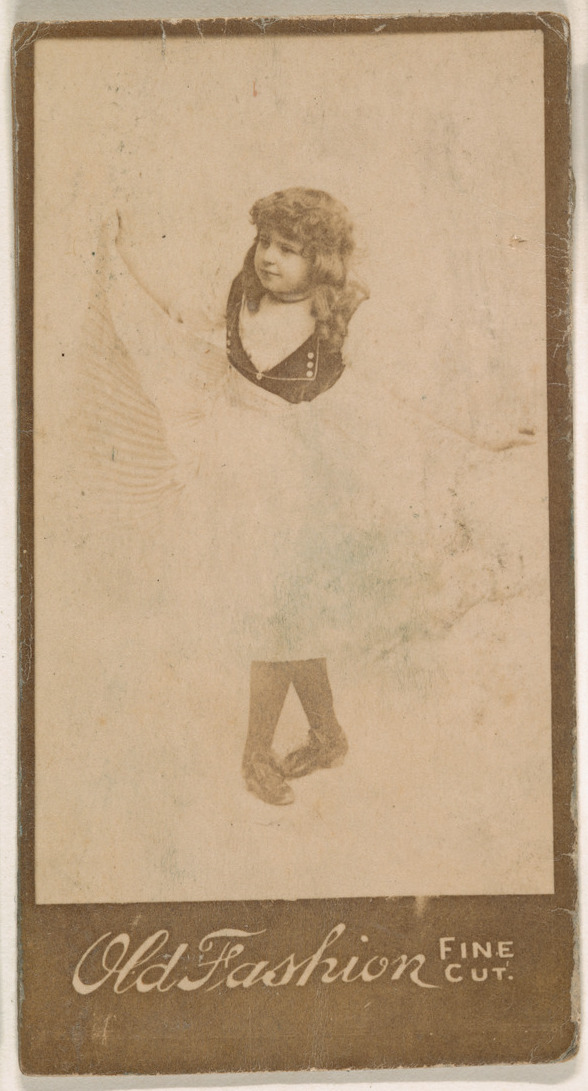
In the relentless pursuit of tomorrow’s form, the fashion laboratory must often excavate the forgotten strata of visual history. The albumen photograph, a relic of the 19th century’s obsession with documentation, presents a startling paradox when viewed through the lens of SS26. The subject—a dancer captured in a moment of performative stillness for the Actresses series—is not merely a historical footnote. Within the silver-gelatin matrix lies a blueprint for radical structural innovation. For Zoey Fashion Laboratory, this image is not a nostalgic souvenir but a diagnostic tool, a means to interrogate the very architecture of movement, stasis, and the gendered theatricality of dress. We dissect this dancer not as a woman of her time, but as a proto-cyborg, a kinetic sculpture whose limbs and drapery prefigure the deconstructive aesthetics we are engineering for the coming season.
From Static Pose to Kinetic Architecture: Re-Reading the Limbs
The dancer’s pose—typically a balletic arabesque or a theatrical flourish—is frozen by the long exposure of the albumen process. This technical limitation becomes our conceptual goldmine. The blurring at the extremities, the slight ghosting of a hand or a slipper, is not a flaw; it is a rendering of temporal displacement. For SS26, we translate this ghosting into literal garment construction. We are developing a series of asymmetric sleeve architectures that utilize a new class of shape-memory alloys and heat-reactive organza. The sleeve, in its static state, hangs in a clean, almost classical line. Upon the wearer’s movement—a raised arm, a sharp turn—the alloy filaments activate, causing the fabric to flare, ripple, and hold a momentary, distorted silhouette. This is not mere ruffling; it is a deliberate, engineered echo of the photograph’s motion blur. The garment becomes a kinetic memory device, capturing a fraction of a second of action and holding it in three-dimensional space, a direct homage to the dancer’s frozen yet dynamic energy.
Furthermore, we must scrutinize the corsetry implied beneath the dancer’s costume. The rigid, conical torso of the era is a readymade metaphor for exoskeletal support. In our SS26 study, we reject the corset’s restrictive connotations but embrace its structural logic. We introduce a new silhouette we term the “Soft Exo-Spine.” This is not a garment that cinches or constrains. Instead, it is a series of interlocking, 3D-printed biopolymer segments that articulate along the vertebral column, visible through sheer, technical mesh. These segments are designed to move in a counter-rhythm to the wearer’s own spine, creating a slight, deliberate lag. The effect is a disconcerting, almost alien grace—a body that seems to be dancing slightly out of sync with its own intent. This is the dancer’s ghost, rendered in a futuristic, carbon-neutral material, a testament to the idea that the past’s most rigid structures can be re-engineered as the future’s most fluid prosthetics.
The Draped Gaze: Translating Fabric into Digital Field Theory
The albumen print’s tonal range—from deep, sepia shadows to stark, white highlights—offers a second, equally potent line of inquiry. The dancer’s voluminous skirts, caught in a static cascade, are not merely cloth. They are a sculptural topology, a map of light and shadow that we can decode and re-encode. We are moving beyond traditional draping techniques into what we call “Field Draping.” This methodology uses algorithmic simulation to model the photograph’s fabric folds as a series of gravitational fields and vector forces. The resulting patterns are not flat; they are generated as three-dimensional data clouds that are then translated into garments using a hybrid of laser-cut leather and woven metallic micro-fiber.
The result is a collection of “Gravitational Gowns” that appear to be perpetually caught in a gentle, unseen wind. The hemlines are not even; they are jagged, data-derived topographies that dip and rise in a chaotic yet mathematically precise manner. The color palette is a direct extraction from the photograph’s chemistry: the deep, burnt umber of the albumen’s silver chloride, the chalky white of the highlights, and a new, iridescent gunmetal we’ve developed to mimic the photograph’s reflective sheen. This is not a costume; it is a wearable artifact that uses the language of the archive to speak to a post-digital reality. The garment does not merely clothe the body; it surrounds it in a field of historical data, re-materialized as a futuristic garment that challenges the very notion of the “natural” drape.
Structural Innovation as Narrative: The Dancer’s Prosthetic Future
Ultimately, this study is a manifesto against the tyranny of the clean line and the static silhouette. The dancer, in her historical context, was a symbol of ephemeral beauty and technical skill. In our laboratory, she is a co-author of a new design language. The futuristic silhouette for SS26 is not about the body’s perfection, but about its potential for augmentation and dialogue with its own past. We are developing a capsule of “Archive-Inflected Bodices” that feature exaggerated, padded shoulders that extend beyond the natural acromion, not to mimic power dressing, but to create a hovering, protective canopy—a direct nod to the photographer’s studio backdrop. These shoulders are articulated with hidden hinges, allowing them to be raised into a wing-like configuration, echoing the dancer’s raised arms, or folded down into a sleek, aerodynamic shell.
This is the essence of our avant-garde methodology: to treat historical garments and images not as relics, but as speculative fictions. The dancer’s costume, with its layers of petticoats and structured basque, is a rich text from which we extract a narrative of resistance and transformation. The albumen photograph, a medium obsessed with capturing the real, becomes the catalyst for our most unreal, fantastical creations. The SS26 collection, therefore, is a tribute to the dancer’s ephemeral presence, re-engineered as a permanent, structural statement. It is a testament to the power of the laboratory to see beyond the surface, to find the cyborg in the classical, and to build a wardrobe for a future that is deeply, and disruptively, aware of its own complex genealogy. The dancer does not simply pose; she initiates a design protocol that will define the next decade of fashion’s most daring experiments.