Technical Analysis: The Velvet Genome
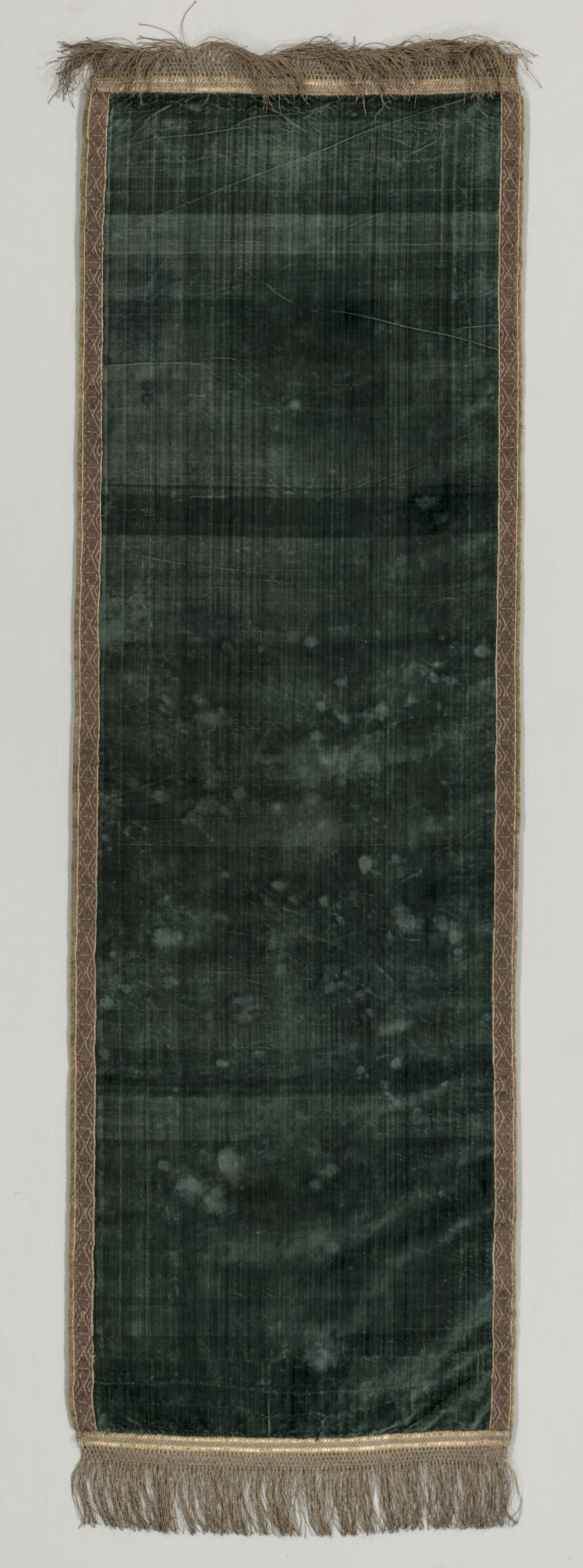
The subject, Length of Velvet, is not merely a textile but a complex, three-dimensional architecture of light and shadow. Its technical specification—silk velvet—represents the pinnacle of this form. The base is a pure silk ground, a strong, fine canvas. The pile, also silk, is created through an additional set of warp threads raised over wires during weaving. Once the wires are extracted, the loops are cut, releasing the iconic, dense, and upright filament forest. This cutting process is critical; its precision determines the uniformity of the pile, which in turn dictates how light is captured and reflected. The DNA of this velvet is dual-stranded: one strand is the physical warp and weft, the other is the luminous path light travels through the silk filaments, bending and absorbing to produce that profound, light-devouring depth. It is this genetic code we will splice and re-sequence.
Historical Deconstruction: The Baroque Code
Originating in 17th-century Italy, this velvet is imprinted with a Baroque operational system. Its initial purpose was not mere coverage but communication—a language of power, divinity, and opulence. In the courts of Florence and Venice, velvet was a kinetic sculpture worn on the body. It communicated through contrast: the crushing depth of its shadows against the brilliant highlights captured on its peaks, mirroring the chiaroscuro of Caravaggio. It was heavy, both in physical weight and symbolic gravity, designed for slow, deliberate movement and grand, static portraits. This historical code is one of maximalist density, controlled luminescence, and hierarchical grandeur. Our task is not to erase this code but to debug it—to isolate its core functions (light manipulation, tactile seduction, symbolic weight) and port them into a new, avant-garde framework.
Avant-Garde Recombinant Strategy: The New DNA Strand
The reference to a New DNA Strand is our core directive. We will not treat the velvet as a finished surface but as raw genetic material. The avant-garde outcome will be achieved through a series of deliberate, molecular-level interventions, recombining the historic code with disruptive modern variables.
Intervention 1: Spatial Re-Mapping (The Un-Pile)
We challenge the fundamental premise of a uniform pile field. Using targeted laser ablation and enzymatic degradation processes, we will de-program sections of the pile at the root. This creates a topographical map on the textile—bald, raw silk plains existing alongside lush, preserved velvet forests. The contrast is no longer just light vs. shadow, but texture vs. smoothness, absorption vs. reflection, memory vs. erasure. This "un-piling" can be algorithmic, following data paths or sound waveforms, transforming the velvet into a literal record of a digital or auditory event. The Baroque density is now punctuated by voids, making space the active element.
Intervention 2: Structural Transmutation (Liquid State)
Velvet's gravity is a legacy parameter. We will introduce a phase-change polymer coating on individual silk filaments. At room temperature, the velvet retains its classic drape. When exposed to specific thermal stimuli (body heat, ambient environment), the polymer softens, allowing the pile to collapse, melt, and reconfigure in real-time. A sleeve might transition from a structured, light-capturing carapace to a fluid, glossy second skin. This introduces a temporal dimension—the garment possesses multiple states, decaying from its formal Baroque inheritance into a liquid, contemporary form throughout wear. It is performance art at the fiber level.
Intervention 3: Chromatic De-Synchronization (Strand Isolation)
Historically, velvet's color was monolithic. We will exploit the dual-strand DNA. The ground weave and the pile will be dyed in dissonant, oppositional color spaces—perhaps a ground in a static, digital blue and the pile in an organic, fugitive plant-based red. As the garment moves and the pile parts, the ground asserts itself, creating chromatic interference. Furthermore, using photochromic or thermochromic dyes on the pile alone, the color becomes an unstable variable, reacting to light and heat independently of the base. The velvet no longer *has* a color; it *performs* a color reaction, breaking the Baroque code of symbolic, fixed hue.
Intervention 4: Hybridization & Contamination
To truly form a new DNA strand, we must introduce foreign genetic material. We will grow the silk pile through a substrate of transparent technical mesh, creating isolated velvet archipelagos floating on a void. We will embed the velvet with fiber-optic filaments that emit light from within the pile, inverting its core function from light-absorber to light-emitter. We will fuse it, via ultrasonic welding, with sheets of recycled rubber or etched metal, creating a composite material where the velvet is but one component in a biomechanical assembly.
Conclusion: The Recombinant Garment
The resulting avant-garde pieces for Zoey Fashion Lab will be volumes in transition. They carry the genetic memory of Italian grandeur—the profound depth, the tactile luxury—but express it through contemporary instability and hybridity. A coat is no longer just a coat; it is a terrain that changes with time and temperature, a color field that reacts to its environment, a surface that narrates its own deconstruction.
We have not destroyed the Length of Velvet. We have reverse-engineered its splendid, 17th-century genome and inserted new base pairs: instability, reactivity, and hybridization. The New DNA Strand is a living, responsive material code. It honors history not through replication, but through intelligent, radical mutation, positioning Zoey Fashion Lab at the nexus of deep craft and definitive future-facing design.