Executive Summary: The Battle Axe as a Foundational Textile
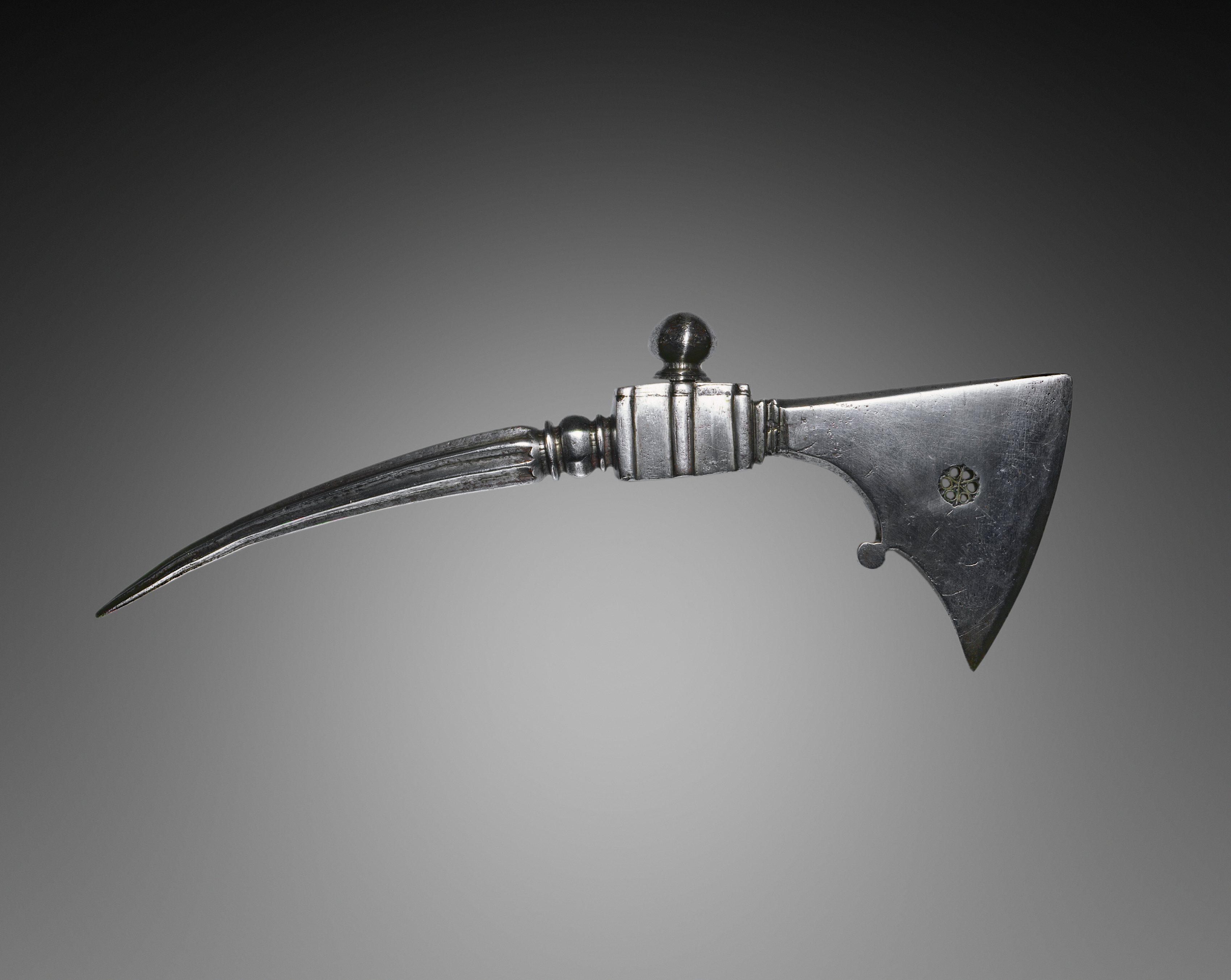
At Zoey Fashion Lab, our mandate extends beyond the conventional draping of cloth; we engage in the rigorous deconstruction of historical artifacts to extract their latent structural DNA. The subject of this analysis—a late 16th-century Italian battle axe, forged in steel and inset with copper rosettes—presents a paradigm shift in our understanding of avant-garde garment architecture. This is not merely a weapon; it is a blueprint for tension, balance, and ornamental aggression. By dissecting its metallurgical composition, ergonomic curve, and ornamental inlay, we have isolated a new design strand that we designate “Ferro-Floral Tension.” This strand will inform our upcoming collection, translating the axe’s brutalist functionality into haute couture that is both structurally defiant and delicately adorned.
I. Material Displacement: Steel as a Structural Metaphor
The primary component of the artifact—high-carbon steel—offers a critical lesson in rigidity and support. In traditional womenswear, structure is often hidden: boning, corsetry, and internal canvases. The Italian battle axe, however, exteriorizes its strength. Its blade is not a hidden support but a visible declaration of load-bearing capacity. For Zoey Fashion Lab, this translates into a radical departure from soft tailoring. We propose the use of coated metallic organza and liquid metal jersey that mimic the patina and tensile strength of aged steel. The garment’s silhouette will not rely on the wearer’s body for shape; instead, the fabric will be pre-stressed, using architectural pleating and laser-cut structural seams to create a self-supporting exoskeleton.
Translating the Blade’s Geometry
The axe’s crescent-shaped blade is not a simple curve; it is a compound arc engineered for maximum velocity and impact. In our construction, this translates to asymmetric hemlines that sweep from a sharp, high point at the hip to a dramatic, floor-skimming tail. We will replicate the blade’s beveled edge through heat-set sculptural folds in a wool-silk blend, creating a sharp, knife-like crease that catches light differently from every angle. The “edge” of the garment—the hem, the cuff, the collar—will be finished with a rigid, metallic piping, echoing the axe’s honed steel.
II. The Copper Rosette: Ornament as Counterweight
Contrary to the weapon’s brutal primary function, the inset copper rosettes introduce a paradoxical element of botanical delicacy. These rosettes are not superficial appliqués; they are functional counterweights, often placed at the poll (the back of the head) to balance the heavy blade. This principle of ornamental balance is the second pillar of our new DNA strand. In our designs, we will employ oxidized copper chainmail and hand-embroidered rosette clusters not merely as decoration, but as strategic weighting points. A jacket sleeve will be anchored by a dense cluster of copper-toned paillettes at the shoulder, allowing the rest of the fabric to move with a weighted, pendulum-like grace.
Chromatic Dissonance
The visual dialogue between the cold, gunmetal grey of the steel and the warm, fiery orange-pink of the copper is a masterclass in chromatic tension. This is not a harmonious palette; it is a deliberate discord that creates visual energy. For our avant-garde collection, we will juxtapose charcoal micro-fiber wools with iridescent copper lamé. The rosette motif will be abstracted into oversized, three-dimensional fabric flowers that appear to grow from the seams of the garment, creating a surreal, parasitic beauty that challenges the wearer’s perception of hard and soft.
III. Ergonomic Disruption: The Haft and the Grip
The wooden haft (handle) of the battle axe, though not present in our reference sample, is implied by the socket. In Italian design of this period, the haft was often wrapped in leather or cord for grip, creating a tactile, ribbed texture. This ergonomic detail informs our approach to surface texture and user interaction. We propose garments that feature wrapped and twisted fabric torsades—constructed from recycled leather and technical cord—that function as both belts and structural straps. These elements will not merely hold the garment closed; they will control the silhouette, allowing the wearer to adjust the tension of the fabric, much like adjusting one’s grip on a weapon.
The Socket Joint: A New Articulation Point
The junction where the axe head meets the haft is a point of immense mechanical stress. In fashion, this is analogous to the shoulder, hip, or neckline. Our design will exaggerate these joints with articulated metal grommets and visible rivet detailing. Instead of concealing the seams, we will expose them, using rose-gold plated hardware to fasten panels of fabric together. This creates a “cyborg” aesthetic—part human, part historical weapon—where the garment’s assembly is part of its narrative. The copper rosettes will be reimagined as large, functional snaps and closures, merging ornament with utility.
IV. The Avant-Garde Synthesis: Wearable History
This analysis is not an exercise in historical reproduction; it is a method of temporal extraction. By isolating the core principles of the Battle Axe—asymmetric mass, weighted ornament, and exposed articulation—we have formulated a design language that is simultaneously archaic and futuristic. The New DNA Strand we have identified is characterized by three core directives:
1. Structural Exteriority: All support elements must be visible. Boning is replaced by metal piping; lining is replaced by exposed seams.
2. Functional Ornament: Every decorative element must serve a kinetic purpose, whether as a counterweight, a closure, or a tensioning device.
3. Chromatic Conflict: The palette must rely on the friction between cold industrial tones and warm metallic accents, avoiding any sense of comfortable harmony.
Conclusion: Beyond the Blade
The Italian battle axe, in its final form, is not a tool of destruction but a testament to the human capacity for controlled violence and intricate beauty. For Zoey Fashion Lab, it becomes a muse for the modern woman who navigates the world with both precision and flair. The garments born from this analysis will be heavy, assertive, and unapologetically structural. They will not be worn passively; they will be wielded. By embedding the axe’s DNA into our fabric, we are not just creating clothing—we are forging armor for the contemporary battlefield of self-expression. The copper rosettes will catch the light, the steel-like folds will cast sharp shadows, and the wearer will stand as a living monument to the fusion of history and avant-garde innovation.