Deconstructing the Sovereign: A Study in Dynastic Metal and Mirror Logic
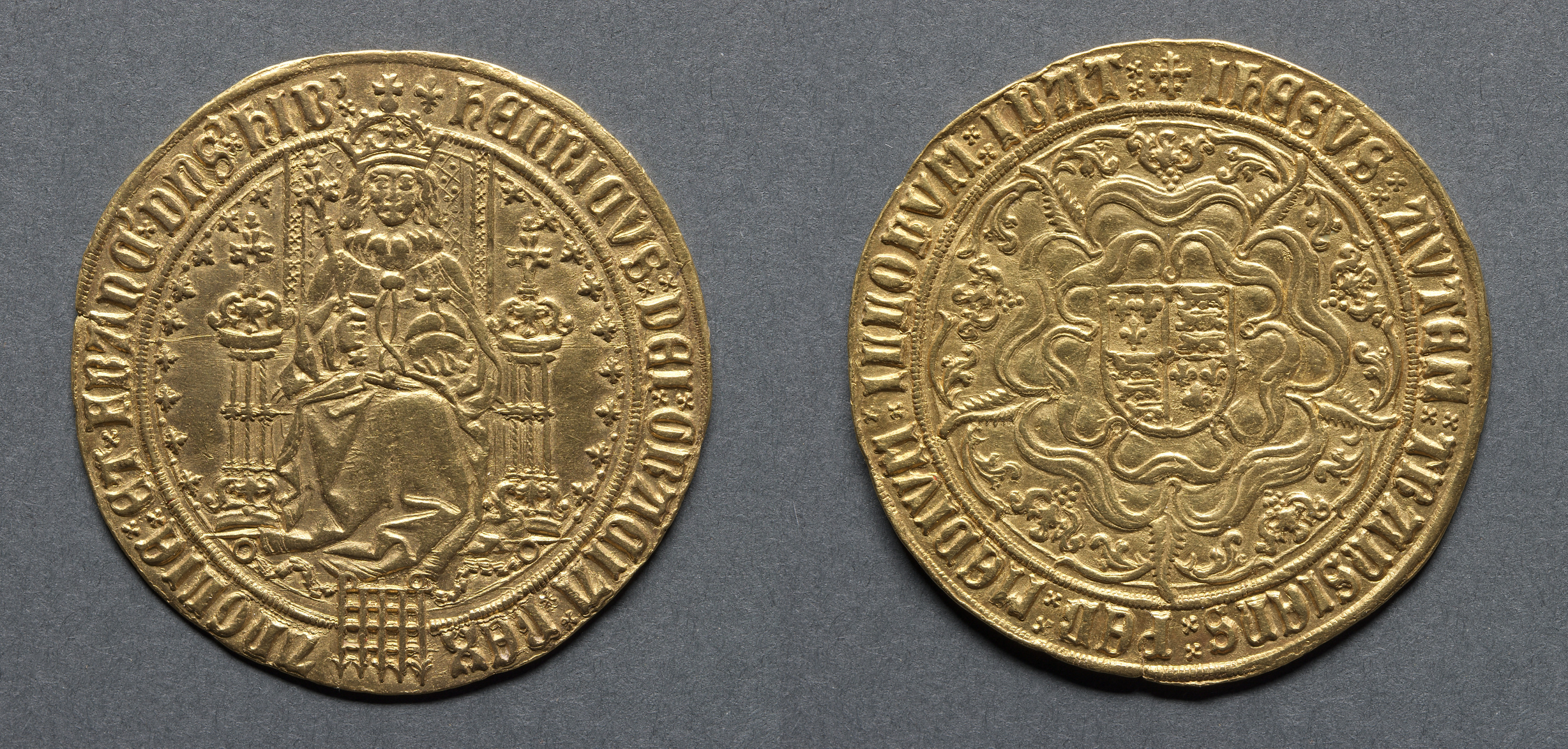
At Zoey Fashion Lab, we do not merely observe historical artifacts; we dissect them for their latent structural codes, their material rhetoric, and their capacity to inform an avant-garde aesthetic. The subject of this analysis—the inaugural English Sovereign of Henry VII (1485-1509)—presents a fascinating paradox. It is simultaneously a declaration of absolute power and a deeply intimate, almost introspective object. Struck in gold, its obverse presents the monarch’s profile, while the reverse displays the Royal Arms nestled within a Tudor Rose. Yet, our reference point, the Mirror with Split-Leaf—one side a polished silver mirror inlaid with golden acanthus, the other a cold sarcophagus lid narrating a life in relief—offers a profound interpretive lens. This coin is not just currency; it is a wearable, portable duality, a proto-avant-garde object that oscillates between surface reflection and buried narrative.
Materiality as Manipulation: The Gold Standard of Power
The choice of gold is the first, most aggressive design decision. In the context of 1485, following the Wars of the Roses, gold was not merely precious; it was a political solvent. Henry VII’s sovereign was a deliberate act of monetary and symbolic recalibration. The weight and purity of the coin were not arbitrary; they were a physical assertion of stability after decades of fractious rule. For the contemporary designer, this translates into a lesson in material authority. We do not use gold to signify wealth; we use it to signify finality. The coin’s surface is a high-frequency emitter of legitimacy. It reflects light not to dazzle, but to blind the observer to any alternative narrative. This is the fashion equivalent of a sharply tailored, unadorned suit in heavyweight silk—a garment that does not whisper, but states its premise with unyielding density.
However, the Mirror with Split-Leaf reference complicates this. The obverse of the sovereign, like the silver mirror, is a polished plane. It invites the viewer to see themselves reflected in the king’s authority. But the mirror is inlaid with gold acanthus—organic, sprawling, and chaotic. This is the key. The sovereign’s obverse is not a sterile profile; it is a controlled eruption of botanical ornament framing the king’s visage. The split-leaf pattern, often associated with the acanthus, suggests growth, division, and the cyclical nature of time. In our deconstruction, we see this as a textural layering technique. The coin does not present a flat image; it presents a relief of interlocking systems—the human (the king) and the organic (the leaf). The avant-garde fashion implication is a fabric that combines a mirrored, liquid-metal finish with raised, sculptural embroidery that mimics the acanthus’s chaotic growth. The garment becomes a surface that is simultaneously reflective and absorptive, forcing the viewer to look twice, to question what is image and what is structure.
The Reverse: Heraldic Architecture as Sarcophagus Relief
Turning the coin is the critical act. The reverse presents the Shield of Arms, but crucially, it is cradled within the Tudor Rose. This is not a simple emblem; it is a narrative compression. The shield is the hard, geometric truth of governance—the cold sarcophagus lid, if you will. It is a rigid, heraldic structure that encodes lineage, territory, and law. The Tudor Rose, however, is the living, breathing overlay—the white rose of York and the red rose of Lancaster fused into a single, hybrid bloom. This is the split-leaf logic applied to dynastic history. The rose is a biological impossibility, a designed fiction that becomes the supreme truth of the realm.
In our analysis, this reverse side is the architectural skeleton of the garment. The shield represents the boning, the corsetry, the rigid infrastructure that holds the human form in a prescribed posture. It is the internal scaffold of power. The Tudor Rose is the outer layer, the printed textile, the embroidered overlay that softens the hard geometry but also contains it. The sarcophagus reference is crucial here: the shield is a memorial to the past, a record of battles fought and claims asserted. Yet, the rose is the living memorial, the perpetual bloom that ensures the past is not dead but reanimated. For an avant-garde collection, this suggests a design where the internal structure is visible—perhaps through strategic cutouts or translucent panels—but always framed by an external, organic pattern that dictates the silhouette’s rhythm. The wearer becomes a walking heraldic device, a living monument.
Surface Tension and Narrative Depth
The genius of the sovereign, and its resonance with the Mirror with Split-Leaf, lies in its tactile hierarchy. The obverse is high-polish, a mirror for the self. The reverse is high-relief, a story for the other. The coin forces a physical interaction—you must turn it over to understand its full message. This is the essence of avant-garde design: the garment must not be fully legible from a single angle. It must demand a choreography of viewing. A coat might have a pristine, mirrored front (the obverse) that reflects the environment, and a heavily textured, embroidered back (the reverse) that tells the story of its construction, its lineage, its provenance.
Furthermore, the gold itself is a mutable medium. It is not inert. It tarnishes, it scratches, it collects the oils of the hand. The coin, over centuries of handling, becomes a record of its own circulation. The mirror surface is marred; the relief is softened. This is the patina of narrative. In our deconstruction, we embrace imperfection as a design feature. We do not seek a sterile, eternal finish. Instead, we design for wear, for creasing, for the subtle degradation that comes from interaction. The garment is a living archive, accruing meaning with each use. The split-leaf pattern, in its organic asymmetry, pre-empts this decay, making the inevitable marks of time part of the design’s intended language.
Conclusion: The Sovereign as a Wearable Paradox
Henry VII’s sovereign is not a relic; it is a design manifesto. It teaches us that true power is not monolithic but dialogical. It requires a front that projects confidence and a back that reveals complexity. The obverse is the performance; the reverse is the truth. The Mirror with Split-Leaf reference allows us to see this coin as a proto-avant-garde object—one that understands the tension between reflection and depth, between the polished surface of immediate perception and the carved, intricate reality of historical and personal narrative. For Zoey Fashion Lab, this translates into a design philosophy that prioritizes structural duality, material honesty, and a narrative that unfolds only through physical engagement. The sovereign is not just gold; it is a compressed, portable universe of political and aesthetic tension, a perfect artifact to guide the future of fashion’s most experimental expressions.