The Bellini Folio: Deconstructing the Cartography of Skin and Structure
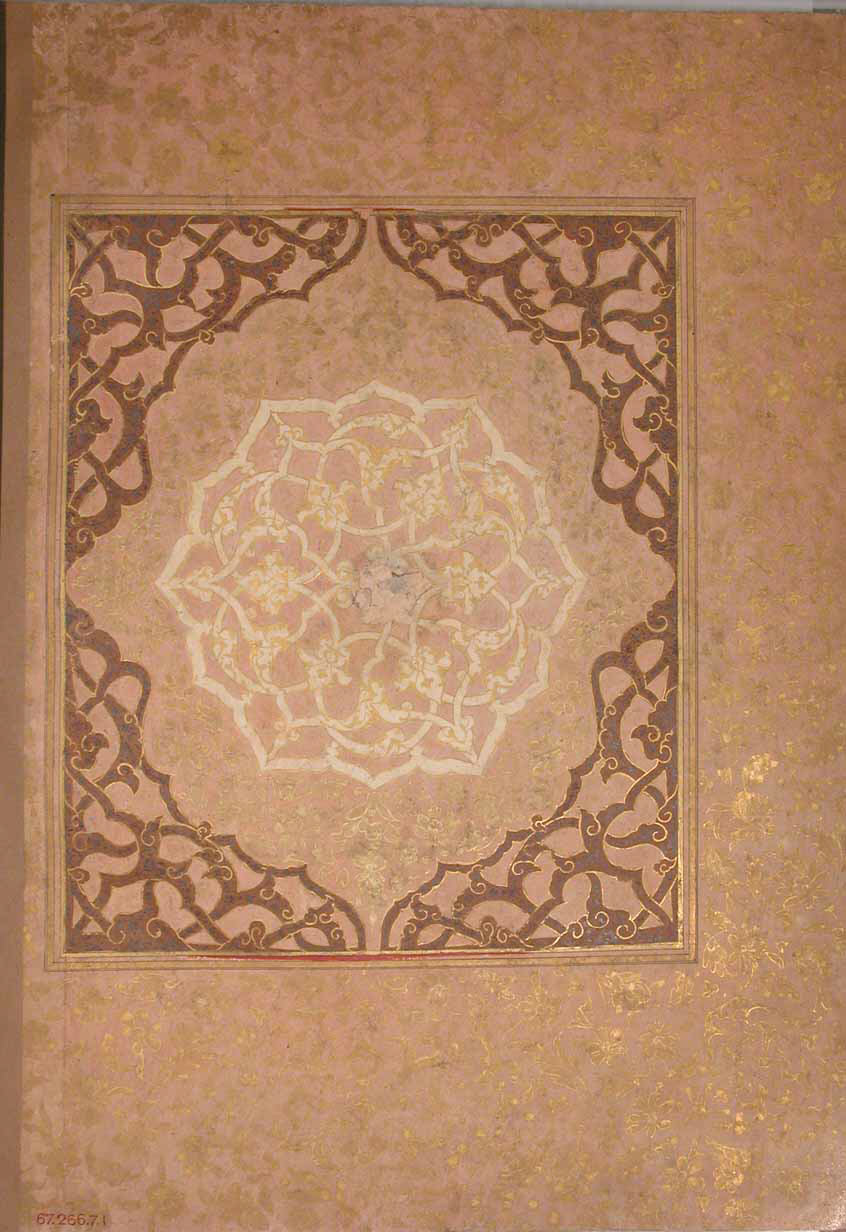
In the rarefied echelons of avant-garde couture, the source material is seldom the textile itself, but the conceptual architecture that precedes the cut. For Zoey Fashion Laboratory’s SS26 investigation, we have extracted a singular artifact—the Folio from the Bellini Album, rendered in opaque watercolor and gold on paper—from its terrestrial provenance and thrust it into a speculative future. This is not a study in historical pastiche. Rather, it is a surgical extraction of latent geometry, a re-reading of the folio’s pigment and gilding as a blueprint for a new epidermal reality. The Global Frontier origin is not a geographical marker but a temporal one: a place where the body is no longer a vessel but a mutable interface, and the garment is its operating system.
The immediate seduction of the folio lies in its material duality—the matte, absorptive quality of the watercolor against the reflective, impermeable strike of gold. For SS26, this dichotomy translates into a radical textile strategy. We are proposing a fabric architecture that oscillates between hyper-porous bio-filaments and liquid-metal latticework. The watercolor’s bleed becomes a metaphor for a garment that dissolves at the edges, not as decay, but as a deliberate act of negative space. The gold, conversely, is not ornamentation; it is structural exoskeleton, a series of rigid, articulated panels that function as load-bearing elements for the silhouette. The garment is no longer sewn; it is bonded, fused, and plated.
Silhouette as Topography: The Non-Linear Contour
We reject the conventional vertical axis of the human form. The Bellini folio’s composition—likely a fragmented botanical or celestial chart—suggests a centrifugal energy. Our SS26 silhouette abandons the shoulder-waist-hip hierarchy in favor of a toroidal volume. Imagine a jacket that does not sit on the shoulders but orbits them, suspended by a carbon-fiber tension system that creates a permanent 8-centimeter gap between fabric and flesh. This is not deconstruction; it is levitational construction. The sleeves are not inserted but extruded, emerging from the torso panel as a single continuous fold, mimicking the watercolor’s organic bleed into the paper’s tooth.
The lower half of the body is treated as a pedestal. Trousers are reimagined as a single, asymmetrical column that wraps the left leg entirely while leaving the right leg exposed to the hip, finished with a train of metallic mesh that mimics the folio’s gilded border. This is not a garment for walking; it is a garment for displacement. Each step creates a ripple in the mesh, a kinetic echo of the watercolor’s wash. The waist is cinched, but not with a belt—with a ring of compressed air, a pneumatic corset integrated into the garment’s internal chassis, visible only as a subtle seam of pressurized silicone.
Structural Innovation: The Gilded Suture
The most critical innovation is our reinterpretation of the seam. In traditional couture, the seam is a point of weakness, a necessary evil. In the Bellini folio, the gold leaf is applied over the watercolor, creating a boundary that is simultaneously a rupture and a reinforcement. We have translated this into the Gilded Suture: a jointing technique where panels are not stitched but welded via ultrasonic resonance, creating a bond stronger than the parent material. The residual energy from the weld is channeled into a thin, electroplated gold filament that traces the junction, not as decoration, but as a conductive pathway for integrated micro-sensors.
These sensors are not for biometric tracking in the conventional sense. They are environmental translators. They read the ambient humidity, temperature, and electromagnetic flux, and respond by altering the opacity of the watercolor-inspired membranes. In a humid room, the garment’s surface becomes more translucent, revealing the internal lattice. In a cold, sterile environment, it becomes opaque, a solid shield of pigment. The gold suture acts as the switchboard, modulating this flow. The garment is no longer a passive covering; it is an active respondent, a second skin that negotiates with the world on the wearer’s behalf.
The Global Frontier Aesthetic: Primitive Futurism
Critically, this is not a sleek, sterile futurism. The Bellini Album’s palette—ochre, umber, faded indigo, and that stark gold—injects a sense of primitive futurism. The silhouettes are brutalist, almost archaeological, as if excavated from a future ruin. We are layering the patina of age onto the newest technical materials. The watercolor’s granulation is mimicked through a process of controlled chemical erosion on recycled metallic yarns. The gold is left unpolished, with a matte, beaten finish that catches light only at specific angles, creating a shifting, restless surface.
This aesthetic demands a new kind of movement. The wearer of the Bellini Folio study does not walk; they deliberate. The garments are heavy with conceptual weight, yet the materials are featherlight. A full ensemble—the toroidal jacket, the asymmetric column, the pneumatic corset—weighs less than 1.2 kilograms. The mass is distributed via a counter-balancing spine that runs along the back, a flexible exoskeleton of titanium and recycled carbon that redistributes gravitational pull, allowing the extreme volumes to be worn without physical strain.
Conclusion: A Garment as a Manifesto
The Folio from the Bellini Album is not a reference; it is a catalyst. For SS26, Zoey Fashion Laboratory has extracted its essence—the tension between the fluid and the fixed, the opaque and the reflective—and translated it into a wearable critique of contemporary fashion’s obsession with the body-con. We are proposing a future where the silhouette is a deliberate distortion, where structure is a form of liberation, and where the garment’s surface is a living, reactive membrane. The gold is not wealth; it is circuitry. The watercolor is not art; it is camouflage for a new species of wearer—one who inhabits the Global Frontier with the precision of an architect and the unpredictability of a storm. This is not clothing. This is inhabitable theory.