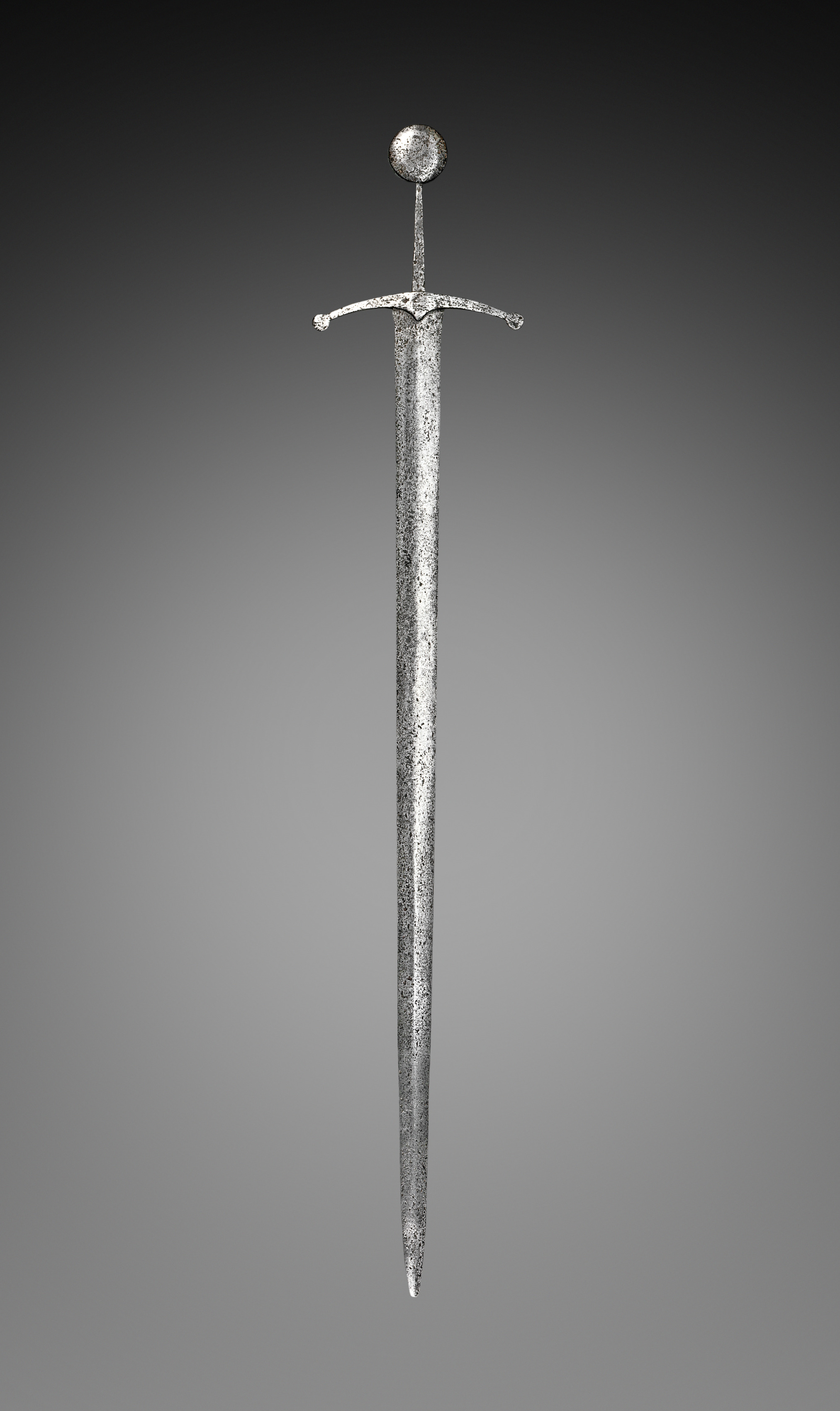
Deconstructing the Blade: An Avant-Garde Analysis of the 15th-Century European Sword
At Zoey Fashion Lab, our mandate is not merely to study garments, but to interrogate the very DNA of material culture. When we speak of a "New DNA Strand," we refer to the latent, untapped codes embedded within historical artifacts—codes that, when isolated and re-synthesized, can yield revolutionary design language. Today, we turn our deconstructive lens to a singular object of martial and ceremonial power: the European sword of the 15th century. Unassigned to a specific nation, this steel artifact exists as a pure archetype of its era—a transitional piece between the chivalric high Middle Ages and the nascent early modern period. Our analysis will strip this weapon of its historical function and re-encode its structural, metallurgical, and gestural properties into an avant-garde fashion narrative that challenges conventional silhouettes, textures, and kinetic expression.
I. Metallurgical Cartography: The Steel as Textile
The primary material—high-carbon steel—is typically read as rigid, unyielding, and masculine. In our deconstruction, we reclassify it as a compressed textile. The forging process, involving repeated heating, folding, and quenching, is analogous to weaving and felting. Each hammer blow is a stitch; each tempering cycle is a dye bath. The resulting grain structure, visible in the blade’s patina and micro-scratches, forms a unique topographical map. For Zoey Fashion Lab, this translates into a fabric development strategy: metallic chainmail reimagined as liquid drapery. We propose a textile where laser-cut stainless steel micro-scales are linked with memory-wire filaments, allowing the garment to hold a rigid, blade-like crease when static, yet flow like silk when in motion. The "steel" is no longer a slab; it becomes a responsive skin that records the wearer's kinetic history, much like the sword's edge records its combat encounters.
Subverting the Edge: From Sharpness to Silhouette
The sword’s defining characteristic—its edge—is our primary point of subversion. In military terms, the edge is a line of maximum efficiency for cutting. In fashion terms, we interpret this as a radical linearity that disrupts the organic curves of the human body. The 15th-century longsword features a distinct profile: a tapering double-edged blade, a crossguard (quillons) that acts as a horizontal stabilizer, and a pommel that counterweights the entire system. Our avant-garde collection will directly transpose these components onto a garment architecture:
- The Blade Torso: A floor-length coat constructed from bias-cut panels of rigid, high-sheen technical jersey. The center-back seam mimics the fuller (the central groove) of the blade, creating an optical illusion of a concave spine that draws the eye downward, elongating the figure.
- The Crossguard Shoulders: The quillons become exaggerated, cantilevered shoulder pads. However, instead of soft padding, we use 3D-printed titanium lattice structures that flare horizontally from the neckline. These are not decorative; they alter the wearer's posture, forcing a proud, martial carriage—a silent commentary on the armor of contemporary social performance.
- The Pommel Hem: The counterweight is reimagined as a weighted, fluid hem. Using integrated micro-beads of tungsten sewn into a sheer organza underlayer, the garment's bottom edge swings with a pendulum-like gravity, creating a mesmerizing, slow-motion ripple that echoes the sword’s balance point.
II. Gestural Semiotics: The Body as Scabbard
A sword is incomplete without its scabbard—a protective sheath that defines its absence. In our fashion DNA, the body becomes the scabbard. The garment is not worn over the body; it is worn around the body’s potential for violence and grace. We propose a series of asymmetric wrap constructions that mimic the action of drawing a blade. A single, continuous strip of material—perhaps a hybrid of horsehide leather and carbon fiber—wraps diagonally across the torso, secured by a series of magnetic, blade-shaped clasps. The act of dressing becomes a ritual of sheathing and unsheathing, a performative gesture that blurs the line between attire and armament.
Patina and Decay: The Narrative of Use
Unlike pristine couture, this sword carries the patina of age—scratches, micro-pitting, and a darkened, oxidized surface. We reject the notion of "finish" as perfection. Instead, we champion controlled corrosion as a design element. For the collection, we will develop a fabric treatment that accelerates natural wear in specific stress zones (elbows, knees, underarms). Using a bio-engineered enzyme wash, the fabric will appear "battle-worn" upon first wearing, with a gradient of color from deep gunmetal to raw silver. This is not dystopian grunge; it is an honest acknowledgment that every garment has a life cycle, and that true luxury lies in the story of use, not in sterile preservation. The sword’s nicks and dulled edges are its resume; our garments will carry a similar, albeit aesthetic, resume of the wearer’s lived experiences.
III. The Avant-Garde Synthesis: Beyond Historical Costume
The danger of historical reference is mere pastiche—a knight in shining armor for a Halloween party. Our avant-garde methodology avoids this by abstracting the sword’s essential physics rather than copying its visual iconography. The key elements we extract are:
- Balance and Counterbalance: The sword’s handling relies on a precise point of balance. We apply this to garment construction by placing hidden weights in unexpected locations (e.g., at the back of a collar or the tip of a sleeve) to create a dynamic, gravitational tension that makes the wearer move with deliberate, dance-like intention.
- Dual-Edged Functionality: A double-edged blade serves two purposes—cutting forward and parrying backward. Our garments feature reversible construction with two distinct textural personalities: one side is smooth, reflective, and aggressive (the cutting edge); the other is matte, absorbent, and protective (the parrying edge). The wearer can invert the garment based on their psychological or social armor for the day.
- The Void of the Fuller: The fuller lightens the blade without compromising strength. In our design, this becomes a negative-space technique—strategic cutouts and laser-perforated panels that reduce fabric weight while creating dramatic shadow play against the skin. This is not mere decoration; it is structural efficiency translated into visual seduction.
IV. Conclusion: A New Armor for a New Century
The 15th-century European sword is not a relic; it is a repository of design intelligence. By deconstructing its steel into a textile, its edge into a silhouette, and its balance into a movement system, Zoey Fashion Lab recontextualizes this weapon of war into a tool of self-expression. The resulting garments are not costumes. They are wearable manifestos that interrogate the relationship between protection and exposure, rigidity and fluidity, history and futurism. In an era of soft, disposable fast fashion, this "New DNA Strand" offers a radical alternative: clothing that possesses the gravity, the integrity, and the timeless authority of a forged blade. It is armor, yes—but armor for the soul, designed to cut through the noise of the contemporary world with the silent, elegant precision of a master swordsman.