The Bowl Deconstructed: An Avant-Garde Blueprint for SS26
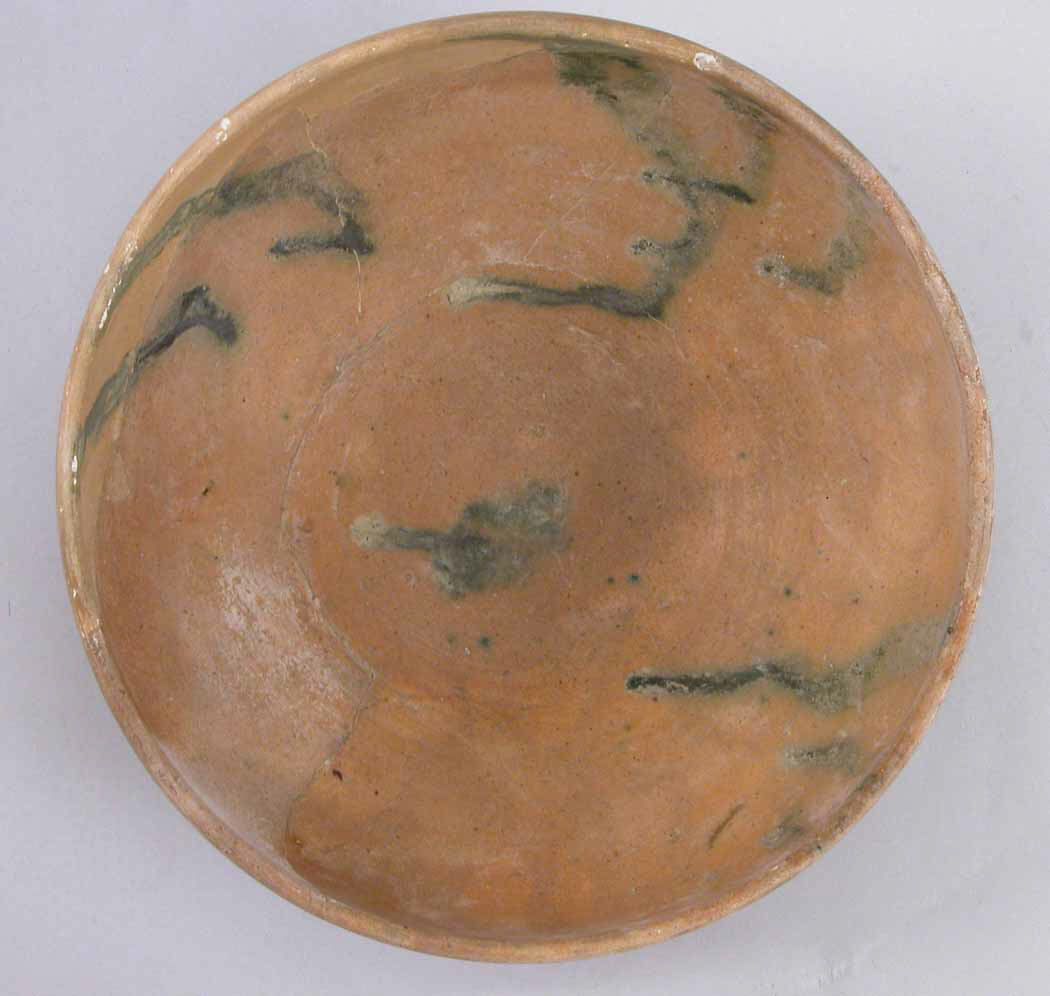
The earthenware bowl—humble, archaic, and resolutely functional—is an unlikely muse for the vanguard. Yet within its concave void and its unassuming curve lies a masterclass in structural tension, a dialogue between containment and release that resonates profoundly with the ethos of Zoey Fashion Laboratory. For SS26, we do not merely reference the bowl; we dissect it, invert it, and re-forge its geometry into a new language of wearable architecture. This is not a nostalgic homage to craft, but a brutalist re-imagining of form, where the buff slip and splashed green glaze become the chromatic and textural DNA for a collection that challenges the very notion of the garment's silhouette.
I. The Concave Imperative: Silhouette as Negative Space
The bowl’s primary offering is its concavity. Traditional couture often privileges the convex—the bustled hip, the padded shoulder, the protruding bustier. Our SS26 proposition inverts this paradigm. We posit the garment as a vessel, a wearable negative space that does not cling to the body but rather frames it, creating an interstitial volume between flesh and fabric. The silhouette is no longer a line drawn around the body; it is a hollow carved out of the environment.
Consider the “Cratère Gilet”: a sleeveless shell constructed from rigid, thermally bonded buff-toned felt, its front panel sculpted into a deep, parabolic scoop that mirrors the bowl’s interior. The garment does not close at the sternum; instead, it hangs open, revealing a secondary layer of sheer, glaze-green organza that shimmers like the ceramic’s vitreous surface. The negative space becomes the design, a deliberate void that draws the eye inward, creating a sense of intimate depth. This is not modesty; it is mystery, a sartorial archaeology where the body is the hidden artifact.
Furthering this concept, the “Splash Skirt” employs a radial, asymmetric godet construction. Rather than falling in a conventional column, the skirt’s panels flare outward from a single, off-center hip point, mimicking the kinetic splash of the green glaze as it was thrown across the buff clay. The result is a silhouette that is simultaneously static and dynamic—a frozen moment of creation. The hemline is not a straight edge but a jagged, irregular contour that traces the path of the original ceramic accident. This is futuristic silhouetting, not through the addition of volume, but through the precise choreography of its release.
II. Material Alchemy: From Earth to Epoch
The materiality of the bowl—its earthenware body, its buff slip, its green glaze—is a rich palimpsest of geological time and human intervention. For SS26, we translate these elements into a textile narrative that is both primitive and hyper-futuristic. We reject the sterile synthetics of mainstream futurism in favor of a “neo-terrestrial” materiality, one that acknowledges its organic origins while being transformed by advanced fabrication techniques.
The buff slip, that fine clay wash, becomes a color story of warm, chalky neutrals—not a stark white, but a nuanced, calcium-rich ivory with a matte, powdery finish. This is achieved through a proprietary treatment of organic cotton and milk-fiber blends, which are then garment-dyed and mechanically abraded to simulate the tactile, slightly porous surface of the bisque-fired ceramic. The green glaze, with its characteristic splashes and drips, is re-imagined not as a print, but as a “liquid metal” application. Using a process of sonic welding, we fuse iridescent, celadon-toned PVC platelets onto the fabric in irregular, painterly clusters. The effect is not a flat pattern but a three-dimensional, topographical surface that catches light and shifts in hue with movement, echoing the glaze’s depth and translucency.
For structural elements, we employ a “crockery core”—a rigid, recycled PET boning encased in a buff-colored, organic hemp twill. This composite material allows for the creation of sharp, unyielding folds and cantilevered forms that hold their shape with the authority of fired clay. A jacket sleeve, for instance, can be sculpted into a permanent, curved arc, as if it were a shard of a shattered vessel, its interior lined with a soft, unglazed terracotta-colored jersey for comfort against the skin. This juxtaposition—hard exterior, soft interior—is the essence of our material philosophy.
III. Structural Innovation: The Garment as Ceramic Architecture
The most radical innovation for SS26 lies in our approach to construction. We move beyond traditional seams and darts, adopting a methodology we term “Kintsugi Couture”—a nod to the Japanese art of repairing broken pottery with gold lacquer. Instead of concealing construction, we celebrate the joints and fractures of the garment. Seams are not hidden; they are exposed, exaggerated, and reinforced with a metallic, gold-toned thread that traces the structural load-bearing points of the design. This is not a decorative embellishment but a functional necessity, transforming the garment into a visible diagram of its own engineering.
This philosophy manifests in the “Shard Bodice”. Constructed from multiple, interlocking panels of the crockery core, the bodice is assembled like a puzzle, with each panel connected by visible, metallic hinges and lacing. The garment does not stretch to fit the body; rather, it is adjusted via a system of internal tension cables, allowing the wearer to alter the volume and angle of the form. This is a modular, customizable architecture, a futuristic nod to the idea of the garment as a responsive, adaptable shell. The lacing, rendered in a luminous, green-glazed leather, echoes the splash motif, while the gold-toned hinges reference the precious repair of the original bowl, transforming a flaw into a feature of supreme value.
Finally, we introduce the “Vessel Collar”, a standalone neckpiece that is a direct, sculptural translation of the bowl’s rim. Formed from a continuous, rolled strip of the rigid material, it encircles the neck not as a choker but as a floating, open torus, hovering just off the collarbone. Its interior is painted with the same splashed green glaze, a hidden flash of color visible only when the wearer moves her head. The collar is a study in balance and negative space, a halo of architectural intent that frames the face as the most precious object of all.
In conclusion, the bowl, in its silent, earthen dignity, offers a profound lesson in form, material, and structure. For Zoey Fashion Laboratory SS26, it is not a relic but a catalyst—a launchpad for a new era of fashion that is intellectually rigorous, materially innovative, and unapologetically avant-garde. We do not wear the bowl; we inhabit its possibilities.