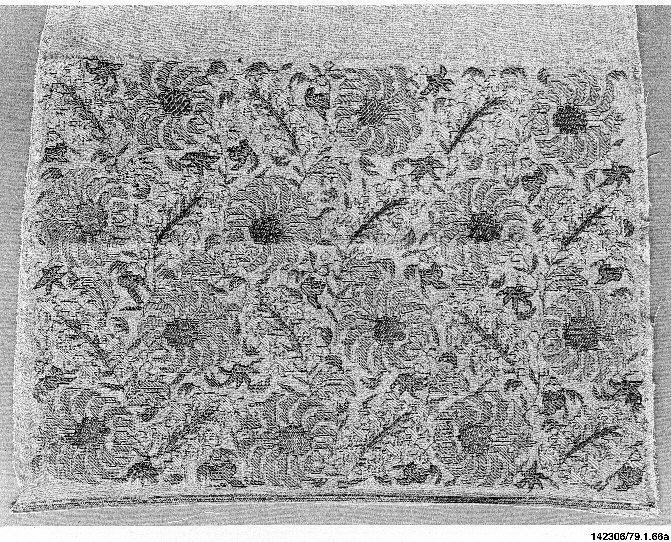
The Towel End: A Deconstructive Manifesto for SS26
In the rarefied air of avant-garde couture, the mundane is not merely observed—it is dissected, recontextualized, and reborn as a provocation. Zoey Fashion Laboratory’s SS26 study, “Towel End,” performs exactly this alchemy. Originating from a global frontier that defies geographic singularity, this piece elevates the humble towel’s terminal selvage—its frayed, often-discarded edge—into a complex architectural proposition. This is not a garment; it is a thesis on the end of form, the beginning of structure, and the radical potential of the overlooked.
Deconstructing the Domestic: From Utility to Utopia
The towel end, in its vernacular life, is a site of wear and dissolution. It is where the fabric surrenders to friction, where threads loosen and identity blurs. By isolating this zone and magnifying it to couture scale, the Laboratory inverts the hierarchy of textile value. The plain weave of the base—a linen and silk union—provides a deceptively simple canvas, a field of disciplined tension. Yet, it is the embroidered metal-wrapped thread that performs the critical rupture. This thread, rigid and luminous, does not decorate; it reinforces the very idea of an ending. Each stitch is a structural rivet, a deliberate halt in the flow of the weave, creating a topography of raised seams that catch light like fractured circuitry. The result is a surface that oscillates between soft absorbency and metallic armor—a dialectic of comfort and defense.
Futuristic Silhouette: The Anti-Drape
Conventional towel-based design languishes in bathrobe territory—soft, enveloping, and formless. “Towel End” rejects this passivity. The silhouette is engineered around the concept of the “truncated cascade.” Rather than falling in uninterrupted gravity, the garment’s hem—the literal towel end—is weighted with the metal-wrapped embroidery, causing it to kink, fold, and cantilever away from the body. Imagine a jacket whose rear panel terminates in a sharp, asymmetric shelf, or a skirt that flares into a frozen wave, its edge stiffened into a three-dimensional scallop. This is not drape; it is arrested motion. The linen-silk ground provides the fluid potential, while the metallic thread acts as a skeletal restraint, creating silhouettes that appear to be mid-transformation—caught between liquid and solid states.
Structural Innovation: The Exoskeletal Selvage
The Laboratory’s true innovation lies in treating the embroidered edge as a load-bearing member, not a decorative trim. In standard couture, seams are hidden or finished. Here, the towel end is exposed, exaggerated, and structurally amplified. The metal-wrapped threads are not merely sewn; they are woven into a micro-lattice that can be shaped post-production. This allows for a garment that is initially flat, then manipulated into permanent, sculptural folds—a process akin to cold-forging metal on fabric. The wearer becomes an active participant in the architecture, bending the stiffened hem to create new volumes. This is wearable parametric design, where each fold is a unique computational outcome, yet executed through ancient hand-embroidery techniques. The contrast is jarring and brilliant: a digital-age sensibility rendered in artisanal time.
Global Frontier: A Cartography of Ends
The “Global Frontier” origin is not a marketing tagline; it is a material philosophy. This piece synthesizes the Nordic tradition of utilitarian linen with the opulent metal-thread work of South Asian zardozi, and the Japanese aesthetic of wabi-sabi—finding beauty in imperfection and decay. The towel end is the universal edge of every culture’s textile history, yet it is universally discarded. By centralizing it, the Laboratory creates a garment that speaks to a borderless future, where identity is not rooted in origin but in the process of transformation. The frayed ends are not cleaned; they are celebrated as a fringe of potential, each loose thread a tentative line drawing in space.
SS26 Context: Beyond Sustainability
In the context of SS26, “Towel End” is a defiant counter-narrative to the season’s predictable themes of airy minimalism or nostalgic revival. It proposes a “post-utilitarian luxury”—where value is derived from conceptual density rather than material rarity alone. The linen and silk are sustainable by nature, but the metal-wrapped thread introduces a deliberate obsolescence: it will tarnish, it will create new patinas, it will evolve with the wearer. This is anti-fast-fashion in its purest form—a garment that refuses to remain static. The silhouette may appear severe, even alien, but its tactile invitation is undeniable. One is compelled to touch the stiffened edge, to trace the metallic paths, to understand how a towel’s end became a new beginning.
Conclusion: The Edge as Center
Zoey Fashion Laboratory’s “Towel End” is a masterclass in re-framing. It takes the most overlooked fragment of daily life and elevates it to a structural and philosophical keystone. The garment’s power lies not in its comfort or wearability in a traditional sense, but in its intellectual rigor—its ability to make the viewer question the very boundaries of textile, form, and finish. As we move toward SS26, this piece stands as a beacon of what couture can achieve when it abandons the center and embraces the fringe. The towel end is no longer an ending; it is the most potent starting point the Laboratory has ever discovered. It is, quite simply, the edge of the future, stitched in metal and silk.