Deconstructing the Cartes de Visite: Albumen as Architectural Blueprint for SS26
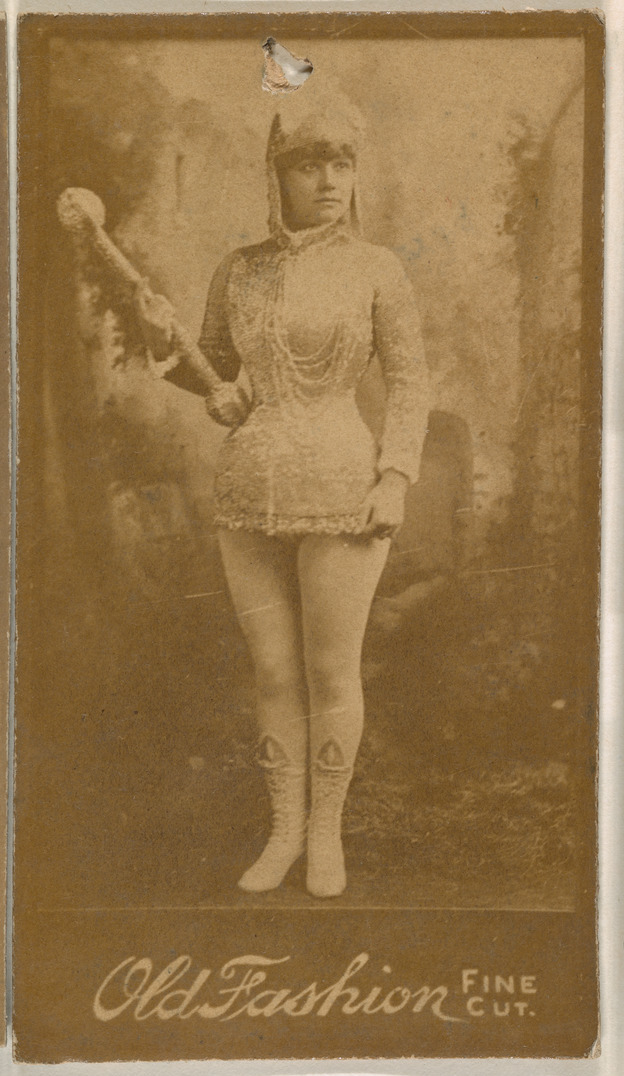
The albumen print, that fragile relic of nineteenth-century portraiture, is not merely a historical artifact; it is a blueprint for temporal collapse. When we at Zoey Fashion Laboratory dissect the Portrait of actress, from the Actresses series (N664), we are not engaging in nostalgic revivalism. We are performing an archaeological excavation of the future. This photograph, a promotional carte de visite for Old Fashion Fine Cut Tobacco, presents a paradox: a mass-produced image of singular femininity, captured in a medium that chemically fuses silver salts to egg whites. For SS26, this tension—between the industrial and the organic, the reproducible and the unique—becomes the cornerstone of our structural innovation.
The actress’s pose, rigid yet theatrical, is a study in controlled tension. Her corseted torso, a prison of whalebone and fabric, is not a limitation but a generative constraint. In our laboratory, we translate this silhouette into a negative-space exoskeleton. We discard the literal corset for a series of cantilevered, carbon-fiber ribs that hover three centimeters off the body, creating a visible void between skin and structure. This is not a garment that clings; it is a garment that orbits. The albumen’s sepia and cream tonalities are inverted into a high-gloss, thermo-chromatic shell that shifts from pearl white to oxidized bronze under body heat. The photograph’s flat, frontal gaze is answered with asymmetrical, single-sleeve constructions that deny the viewer a complete profile, forcing a confrontation with the fragmented self.
Material Alchemy: From Silver Salts to Living Polymers
The chemical fragility of the albumen print—its tendency to crack, fade, and yellow—is not a flaw to be corrected but a language to be spoken. For SS26, we introduce photolytic organza, a textile embedded with micro-encapsulated silver nitrate that darkens when exposed to UV light. As the wearer moves from shadow to sun, the garment develops in real time, mimicking the slow exposure of the original photograph. This is not a print; it is a process. The structural innovation lies in the seams: we use a laser-sintered, memory-alloy thread that, upon activation by body moisture, contracts to create puckered, topographic folds. These folds are not decorative; they are load-bearing, redistributing the garment’s weight away from the shoulders and hips to create a floating, anti-gravitational drape. The actress’s static pose is thus animated into a kinetic architecture that responds to breath, pulse, and ambient humidity.
Furthermore, the albumen’s glossy surface is reinterpreted through a liquid-crystal laminate applied to recycled PET mesh. This laminate is not merely reflective; it is refractive, splitting light into spectral bands that shift with the viewer’s angle. The effect is a deliberate disorientation, a refusal of a singular reading. In the original portrait, the actress’s identity is subsumed by the tobacco brand’s marketing machinery. In our SS26 iteration, we weaponize that anonymity. The garment’s surface is a screen for projected data—biometric readings, stock tickers, social media feeds—rendered as abstract, painterly smears. The wearer becomes a live broadcast, a deconstructed celebrity whose value lies not in recognition but in real-time data generation.
Silhouette as Ruin: The Fractured Hourglass
Futuristic silhouette for SS26 is not about sleek, aerodynamic minimalism; it is about archaeological reconstruction. We take the Victorian hourglass and shatter it, then reassemble the shards with visible, industrial hardware—titanium rivets, exposed zippers, and magnetic closures. The waist is not cinched but implied, through a series of floating, trapezoidal panels that create a vortex of negative space. The shoulders are exaggerated, not with padding but with inflatable, pneumatic bladders that can be manually inflated or deflated, altering the wearer’s profile from sharp and militaristic to soft and biomorphic. This is a silhouette that is not fixed but negotiated, a direct counterpoint to the rigid, fixed pose of the albumen actress.
The skirt, if it can be called that, is a deconstructed crinoline made of laser-cut, anodized aluminum hoops, each one independent and articulated. These hoops do not support fabric; they support each other, creating a self-referential structure that clatters and chimes with each step. The sound is intentional—a percussive reminder of the garment’s presence. The original photograph’s flat background is replaced by a haptic, living fringe of fiber-optic threads that transmit tactile data to the wearer’s skin, a form of silent communication with the environment. This is not clothing; it is a prosthetic for a hyper-sensory age.
Structural Innovation: The Exoskeletal Gaze
Our final innovation is the variable-morph collar, a direct homage to the actress’s high, restrictive neckline. Constructed from shape-memory polymers, this collar can transition from a demure, closed band to a wide, wing-like fan that extends beyond the shoulders, effectively creating a personal architecture of space. It is a shield, a crown, and a statement of refusal. In the context of the tobacco advertisement, the actress’s body was a vehicle for consumption. In SS26, the collar houses a miniaturized, olfactory diffuser that releases a custom scent compound—a mix of vetiver, ozone, and burnt sugar—creating an invisible but potent boundary. The wearer does not merely occupy space; they define it.
This analysis is not a prescription but a provocation. The albumen photograph is a ghost, and we are summoning it into a new materiality. The SS26 collection is a manifesto against passive consumption, a call for garments that think, respond, and refuse. The actress’s frozen smile is replaced by a sneer of active agency. The Old Fashion Fine Cut Tobacco branding is erased and replaced with a new logo: a barcode that, when scanned, reveals a manifesto on garment labor rights. This is the frontier of fashion—not as decoration, but as a critical, structural intervention into the world. The future is not worn; it is architected.