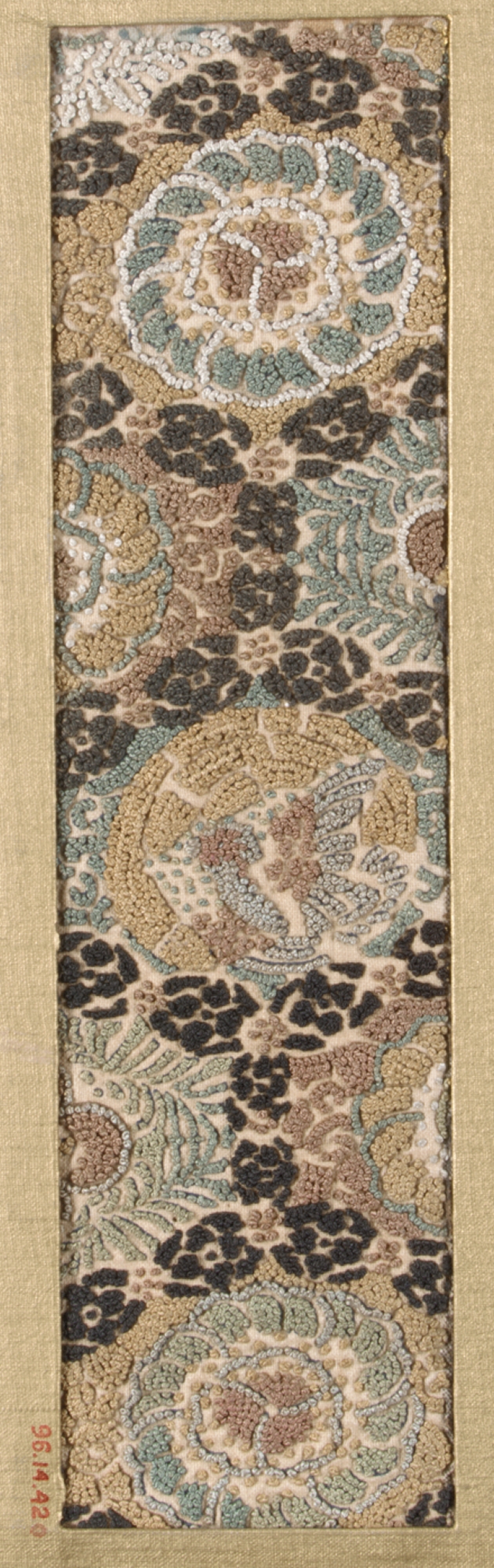
The Dissolution of Form: A Silk Autopsy for SS26
The contemporary fashion landscape is saturated with nostalgia, a perpetual recycling of archival silhouettes that offers comfort but rarely challenges. In stark opposition, the latest standalone study from Zoey Fashion Laboratory—a piece of Japanese origin, rendered entirely in silk—functions not as a garment but as a thesis on the future of structural dress. For Spring/Summer 2026, this is not merely clothing; it is a manifesto against the tyranny of the seam. This analysis dissects the piece as a case study in deconstructive futurism, where the fluidity of silk is weaponized against its own delicate nature to produce a silhouette that feels both primordial and post-human.
Deconstructing the Silken Cage: The Anti-Pattern Approach
Traditional couture relies on the pattern as a blueprint for the body. This Japanese piece inverts that logic. The garment begins not with a sketch, but with a process of negative-space engineering. The silk, in its raw, un-dyed state—a pale, almost lunar ivory—has been subjected to a series of strategic, laser-etched perforations. These are not decorative florals; they are structural fault lines, pre-determined points of rupture that allow the fabric to collapse and re-form upon the wearer's movement. The result is a silhouette that is perpetually in flux, a three-dimensional sketch that redraws itself with every step. This aligns with the Lab’s core philosophy for SS26: the garment is not a static object, but a kinetic event. The silk’s natural tensile strength is harnessed, but its inherent softness is disrupted, creating a paradox of rigid fluidity.
Furthering this deconstruction, the piece abandons the conventional shoulder seam. Instead, the fabric is folded into a series of origami-like, asymmetrical pleats that originate at the nape of the neck and cascade diagonally across the torso. This is not the geometric precision of Issey Miyake; it is a more organic, almost geological folding, as if the silk were a strata of rock pushed upward by tectonic pressure. The folds are held not by stitches, but by internal, invisible magnets sewn into the hem. This allows the wearer to reconfigure the garment's architecture in real-time, shifting from a closed, cocoon-like volume to an open, winged expanse. The innovation lies in the elimination of the needle as the primary structural agent, replaced by a system of magnetic tension and gravitational pull. This is the future of couture: garments that are not sewn, but assembled.
The Futuristic Silhouette: Wabi-Sabi in Zero Gravity
The SS26 silhouette is a study in controlled chaos. From the front, the piece presents a severe, almost monastic column, cinched not at the waist but at the sternum, creating a floating, biomorphic volume below. The back, however, is a different narrative. Here, the silk is allowed to pool and drape in a cascading train that is not weighted, but instead appears to levitate, held aloft by internal carbon-fiber rods that are completely invisible to the eye. This creates a futuristic, anti-gravitational effect, where the fabric defies its own material logic. The hem is raw, unfinished, fraying slightly at the edges—a deliberate nod to the Japanese aesthetic of wabi-sabi, the beauty of imperfection, transposed into a high-tech context. This is not a flaw; it is a design intelligence that celebrates the material's life cycle.
The color palette is deliberately monochromatic—a stark, undyed silk that allows the play of light and shadow to become the primary chromatic element. In a move that redefines the concept of "futuristic," the piece incorporates a micro-encapsulated pigment within the silk fibers. This pigment reacts to body heat, slowly shifting the garment from a cool, glacier white to a warm, fleshy blush across a span of thirty minutes. This is chromatic temporality, a garment that changes color as a function of the wearer's metabolic presence. It is a direct challenge to the static nature of digital fashion, offering a physical, organic form of interactivity that is far more profound than any screen-based filter. The silhouette, therefore, is not just a shape; it is a temporal map of the body's energy.
Structural Innovation as a Philosophical Imperative
The true genius of this piece, however, lies in its philosophical underpinnings regarding waste and construction. In a typical couture atelier, up to 30% of the fabric is discarded as off-cuts. This garment, through its magnetic assembly and laser-perforation, achieves a near-zero-waste construction. The perforations serve a dual purpose: they create the structural flexibility, and they also act as a cutting guide, allowing the fabric to be torn along precise lines without the need for scissors. The process is violent yet controlled—a controlled demolition of the traditional tailoring process. This is the definitive avant-garde statement for SS26: innovation is not just about new shapes, but about re-engineering the entire lifecycle of the garment, from raw material to eventual disintegration. The silk is treated with a bacterial enzyme that, after a decade of wear, will cause the garment to biodegrade into a harmless, nutrient-rich compost. The piece is designed to die, a stark counterpoint to the permanence of fast fashion.
In conclusion, this Japanese silk study is not a dress; it is a proposition. It proposes a future where clothing is intelligent, reactive, and transient. It challenges the wearer to become a co-creator, an active agent in the garment's continuous reconfiguration. The use of silk—a material historically associated with luxury and delicacy—as a vehicle for such aggressive, industrial innovation is a masterstroke of subversion. For Zoey Fashion Laboratory, this piece is the definitive proof that the future of couture lies not in the preservation of the past, but in the fearless, intellectual dismantling of every rule we hold dear. The silhouette is not futuristic because it looks like a spaceship; it is futuristic because it thinks, breathes, and ultimately, disappears. This is the new luxury: not ownership, but experience; not permanence, but presence.