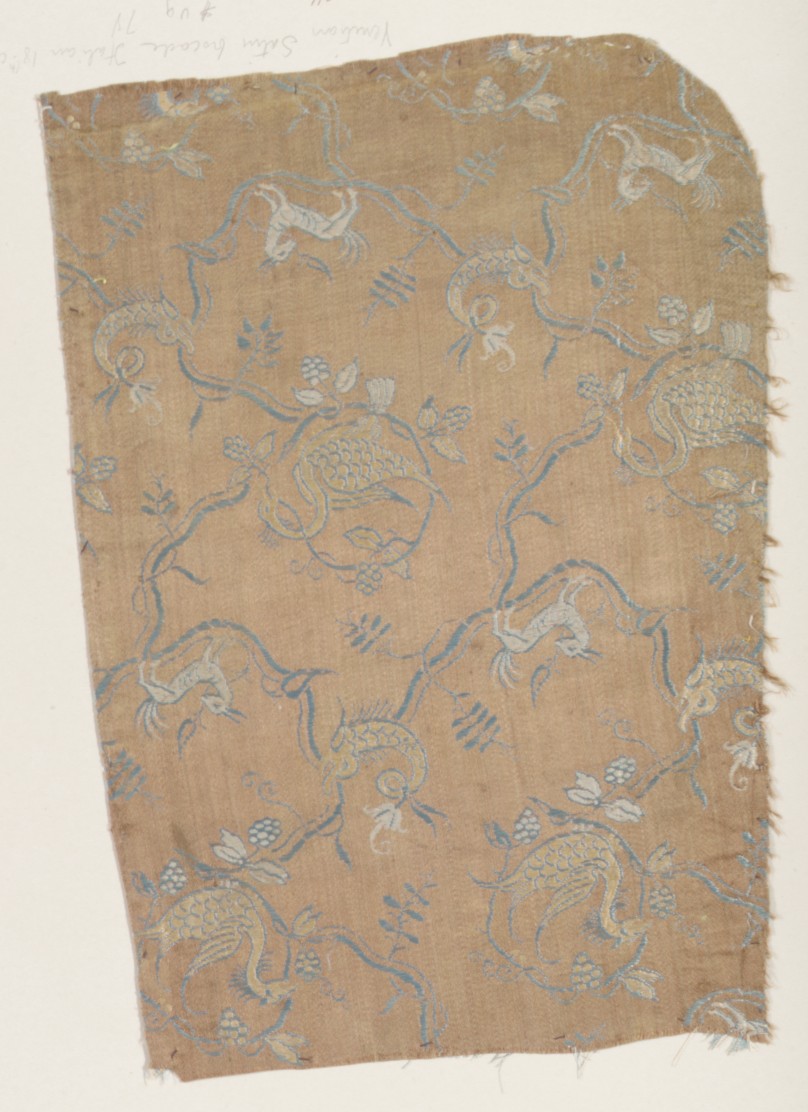
The Fragment as Genesis: Deconstructing the Global Frontier for SS26
In the relentless churn of contemporary fashion, the whole has become suspect. The pristine, uninterrupted garment—a relic of 20th-century bourgeois formality—no longer speaks to our fractured, hyper-accelerated reality. For Spring/Summer 2026, Zoey Fashion Laboratory posits that the fragment is not a ruin, but a blueprint. It is the atomic unit of a new sartorial syntax, a deliberate rupture that reveals the architecture of creation itself. This standalone avant-garde study, titled Fragment: Global Frontier, isolates the concept from external context to interrogate its purest potential. The medium is silk—not as a symbol of luxury or softness, but as a high-tensile structural membrane, a substrate for radical innovation. We are not designing clothes; we are choreographing entropy into elegance.
Deconstructing the Silk Membrane: From Fluidity to Structural Rigidity
Silk has historically been synonymous with drape, flow, and submission to the body. Our laboratory rejects this passive relationship. In Fragment: Global Frontier, silk is treated as a composite material, a point of departure for engineered tension. Through a proprietary process of heat-set pleating, resin-infused paneling, and laser-cut perforation, we transform the fluid membrane into a semi-rigid exoskeleton. The fabric no longer falls; it stands. It holds space. This is not a rejection of silk’s heritage but an elevation of its latent strength. The result is a silhouette that appears to be in a state of controlled collapse—a garment perpetually caught between construction and dissolution.
Consider the signature piece: a bias-cut slip dress, ostensibly simple, yet dissected into seven independent panels. Each panel is cut on a different grainline, then rejoined with exposed, architectural seams that float 3mm above the skin. The tension between the panels creates a subtle, kinetic distortion—the garment breathes, not with the wearer, but as an independent organism. The hem is not finished but left raw, its edges frayed into micro-fringes that catch light like a fractured prism. This is deconstruction as a generative force, not a nostalgic nod to 1990s grunge, but a forward-looking interrogation of how a garment can occupy space.
The Global Frontier Silhouette: Asymmetry and the Cartography of the Body
The Global Frontier is not a geographical location but a conceptual boundary—the liminal space where the body ends and the environment begins. Our silhouettes for SS26 are cartographic, mapping this frontier through aggressive asymmetry and volumetric displacement. We reject bilateral symmetry as a colonial imposition on the human form. Instead, the body is treated as a terrain to be surveyed and strategically occupied.
The primary silhouette is the “Diasporic Torso.” A single shoulder is exposed, while the opposite side is built up into a cantilevered volume of pleated silk that extends 40cm from the body, resembling a wing mid-fold. This volume is not decorative; it functions as a counterweight, shifting the wearer’s center of gravity and altering their gait. The wearer becomes a participant in the garment’s performance. Below, the skirt is a series of graduated, asymmetrical panels—each one shorter than the last—creating a visual rhythm of interruption. The front is truncated at the knee, the back cascades to the ankle, and a single, diagonal sash of raw-edged silk cuts across the waist, anchoring the composition. This is not a dress; it is a piece of wearable architecture that negotiates with gravity and motion.
Structural Innovation: The "Zero-Point" Seam and Modular Fragmentation
Innovation in couture is often mistaken for novelty in embellishment. At Zoey Fashion Laboratory, structural innovation is our core discipline. In Fragment: Global Frontier, we debut the “Zero-Point” seam system. Traditional seams join two edges to create a single, flat plane. Our system instead uses a micro-anchor—a 2mm titanium ring, hand-wrapped in silk thread—to connect panels at a single point. This allows for a 360-degree range of motion at the joint, creating a lattice of fabric that can fold, twist, and expand in response to the body’s biomechanics. The garment becomes a network of discrete fragments, each one autonomous yet interdependent.
Furthermore, we introduce the concept of modular fragmentation. A single garment, such as a long, columnar coat, is designed with a series of concealed magnetic closures along its vertical axis. The wearer can detach the lower third, transforming the coat into a bolero jacket. The detached piece can then be re-folded and re-attached as a sculptural neckpiece or a hip-slung pouch. This is not a multi-way dress; it is a system that empowers the wearer to participate in the design process. The fragment is not a fixed state but a variable in an equation. This approach challenges the very notion of a “finished” garment, proposing that couture is an ongoing dialogue between creator, wearer, and moment.
The Semiotics of the Unfinished: Luxury in the Imperfect
In this study, the unfinished is not an accident but a deliberate signifier. Raw edges are not serged; they are left to fray, but with an intentionality that borders on the obsessive. Each thread is hand-combed into a precise, wispy fringe. A single, deliberate pull is created in the weave, then stabilized with a micro-silicone dot to prevent further unraveling. This is the semiotics of the imperfect, a luxury language that speaks to a world weary of sterile perfection. The wearer of a Zoey Fashion Laboratory fragment is not seeking to conceal flaws but to display a curated, intellectualized vulnerability.
This aesthetic is further amplified by the color palette—or rather, the anti-palette. We employ a range of “non-colors”: undyed silk in its raw, ecru state; a deep, carbon black that absorbs light; and a silver-grey achieved through a chemical wash that mimics the patina of oxidized metal. There is no print, no embroidery, no decorative flourish. The pattern is the weave; the ornament is the construction. The value lies in the process, the invisible labor of the atelier, and the radical choice to leave the garment open to interpretation.
Conclusion: The Fragment as a Manifesto
Fragment: Global Frontier is more than a collection; it is a manifesto for a new era of couture. It declares that the future of fashion lies not in the seamless, the whole, or the completed, but in the discrete, the ruptured, and the provisional. By elevating silk—the most classical of materials—through aggressive structural intervention, we prove that tradition is not a constraint but a canvas. The fragment is our response to a fractured world: not to lament the break, but to build with the pieces. This is the definitive avant-garde position for SS26—a vision that is intellectually rigorous, technically audacious, and unapologetically forward. The garment is no longer a second skin; it is a fragment of a future that we are actively constructing, one meticulous cut at a time.