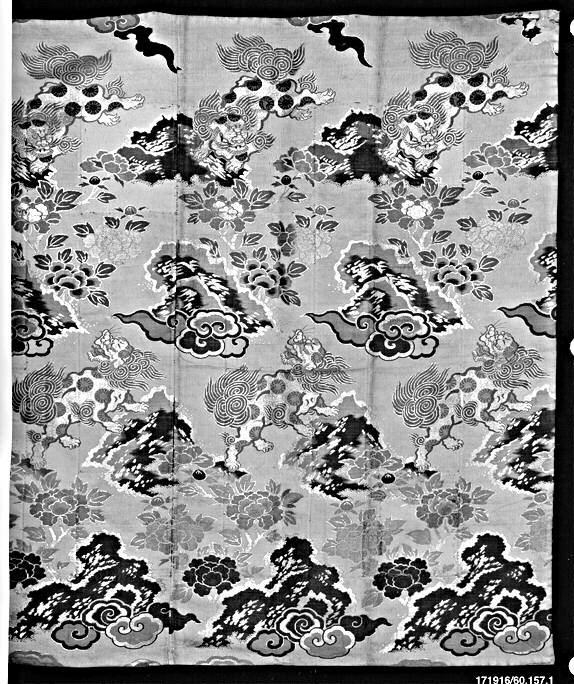
Deconstructing the Sacred: The Priest’s Robe as a Blueprint for SS26
In the relentless pursuit of fashion’s next frontier, the laboratory of Zoey Fashion Laboratory does not look to the obvious—the street, the screen, or the sterile gallery. We look to the ritualistic, the hierarchical, and the profoundly static. The Japanese priest’s robe, a garment of profound spiritual gravity, is not merely a relic of tradition; it is a radical architectural proposition. For SS26, we strip this sacred vestment of its liturgical context and re-engineer it as a high-concept study in futuristic silhouettes and structural innovation. This is not appropriation; this is abstraction. We are extracting the garment’s DNA—its volume, its drape, its ceremonial weight—and splicing it with post-humanist design logic.
Volume as an Act of Defiance
The traditional Japanese priest’s robe, or kesa, is defined by its rectangular patchwork and its horizontal, ground-hugging mass. It is a garment that negates the body’s verticality, creating a silhouette of immense, grounded stability. For SS26, we invert this paradigm. The futuristic silhouette we propose does not drape; it levitates. Using high-tensile metallic thread woven into the silk substrate, we have engineered a fabric that can hold a crease at a 90-degree angle and a fold that defies gravity. The robe’s traditional, sweeping hem is truncated and re-projected outward, creating a series of cantilevered planes that orbit the wearer’s torso. The result is a garment that appears to be in a state of controlled suspension—a sacred object caught mid-ascension.
Our deconstruction begins with the elimination of the vertical seam. The robe is no longer a draped rectangle; it is a series of interlocking, tessellated panels. Each panel is cut on the bias but fused with a heat-reactive polymer that, when activated, snaps into a predetermined, three-dimensional curve. This is not tailoring; this is garment architecture. The wearer’s body becomes the foundation upon which a dynamic, ever-shifting structure is erected. The silhouette is no longer defined by the body’s natural lines but by the negative space between the fabric and the flesh. We are designing the void as much as the cloth.
Material Alchemy: Silk and Metallic Thread
The material palette is deliberately dichotomous: the ethereal softness of silk against the rigid, conductive energy of metallic thread. But we are not using metallic thread as mere embellishment. In our laboratory, the thread is the structural skeleton. We have developed a proprietary weaving technique where the metallic filaments are woven at a density that creates a memory-metal effect. When the garment is twisted or compressed, the metallic threads resist, holding the silk in a state of permanent tension. This allows for a garment that can be folded flat for transport but which, when released, springs back into its full, voluminous architectural form.
This is a critical departure from traditional couture. The priest’s robe is a garment of stillness, designed to be worn in static, meditative poses. Our SS26 iteration is a garment of kinetic potential. The metallic thread acts as a nervous system, transmitting energy and creating a subtle, almost imperceptible shimmer that shifts with the wearer’s micro-movements. The silk, in turn, softens the metallic harshness, creating a tactile experience that oscillates between the sacred and the industrial. The result is a fabric that is both a monument and a membrane—a surface that absorbs light in some areas and reflects it in others, creating a chiaroscuro effect that is impossible to replicate with conventional textiles.
The New Liturgy: Performance and Utility
Our deconstruction also targets the robe’s ritualistic function. The original garment is designed for a specific, hierarchical performance—the ceremony. For SS26, we re-contextualize this performance for the secular, urban arena. The robe’s voluminous sleeves are re-engineered as functional cargo modules, sealed with magnetic closures and lined with a breathable, antimicrobial membrane. The interior pockets are not for prayer beads but for digital devices, modular batteries, and personal climate-control systems. The garment becomes a wearable environment, a mobile sanctuary for the hyper-connected, hyper-mobile individual.
The traditional kesa is composed of multiple strips of cloth, symbolizing the Buddha’s patchwork robe. We honor this lineage by using upcycled silk from obsolete kimonos and ceremonial garments, but we re-cut and re-fuse these strips into a seamless, monolithic surface. The visible patchwork is replaced by a laser-etched topographic map of the garment’s own internal structure. The seams are not hidden; they are celebrated as load-bearing joints, reinforced with a liquid metal alloy that is applied via robotic deposition. This is couture as engineering, where every stitch is a calculated decision, and every fold is a load-bearing member.
Silhouette: The Anti-Body
The ultimate statement of this collection is the anti-body silhouette. We are not accentuating the waist, hips, or shoulders. We are erasing them. The robe’s traditional, horizontal emphasis is exaggerated to the point of absurdity, creating a silhouette that is wider than it is tall. The shoulders are extended with rigid, wing-like structures that are hinged at the scapula, allowing for a range of motion that is both robotic and ethereal. The hem is asymmetrical, dipping to the floor in the back and rising to mid-thigh in the front, creating a dynamic, diagonal line that propels the eye forward.
This is a garment for the post-human priest—a figure who has transcended the biological body and exists as a pure, conceptual entity. The robe is no longer a covering; it is a prosthetic extension of the self, a shell that amplifies presence and obscures identity. It is a statement against the tyranny of the body-positive movement, which often reduces fashion to a tool for flattery. Instead, we propose a fashion of intellectual confrontation, where the garment challenges the wearer to inhabit a different mode of being, a different spatial relationship with the world.
Conclusion: The Sacred as Speculative Future
The Japanese priest’s robe, in its original form, is a testament to the power of simplicity and repetition. In our SS26 analysis, we have deconstructed that simplicity to reveal a complex, futuristic core. We have replaced the spiritual with the speculative, the ceremonial with the functional, and the static with the kinetic. This is not a costume; it is a schematic for a new form of dress. By stripping the robe of its religious meaning, we have uncovered its pure, structural essence—a blueprint for garments that are not worn, but inhabited. In the Zoey Fashion Laboratory, the sacred is not discarded; it is re-programmed for the future. The result is a silhouette that is both a memory of the past and a projection of the next century, a testament to the idea that true innovation lies not in the new, but in the radical re-reading of the old. This is the definitive avant-garde study for SS26.