Deconstructing the Sovereign: The Five Pound Piece as a Wearable Paradox
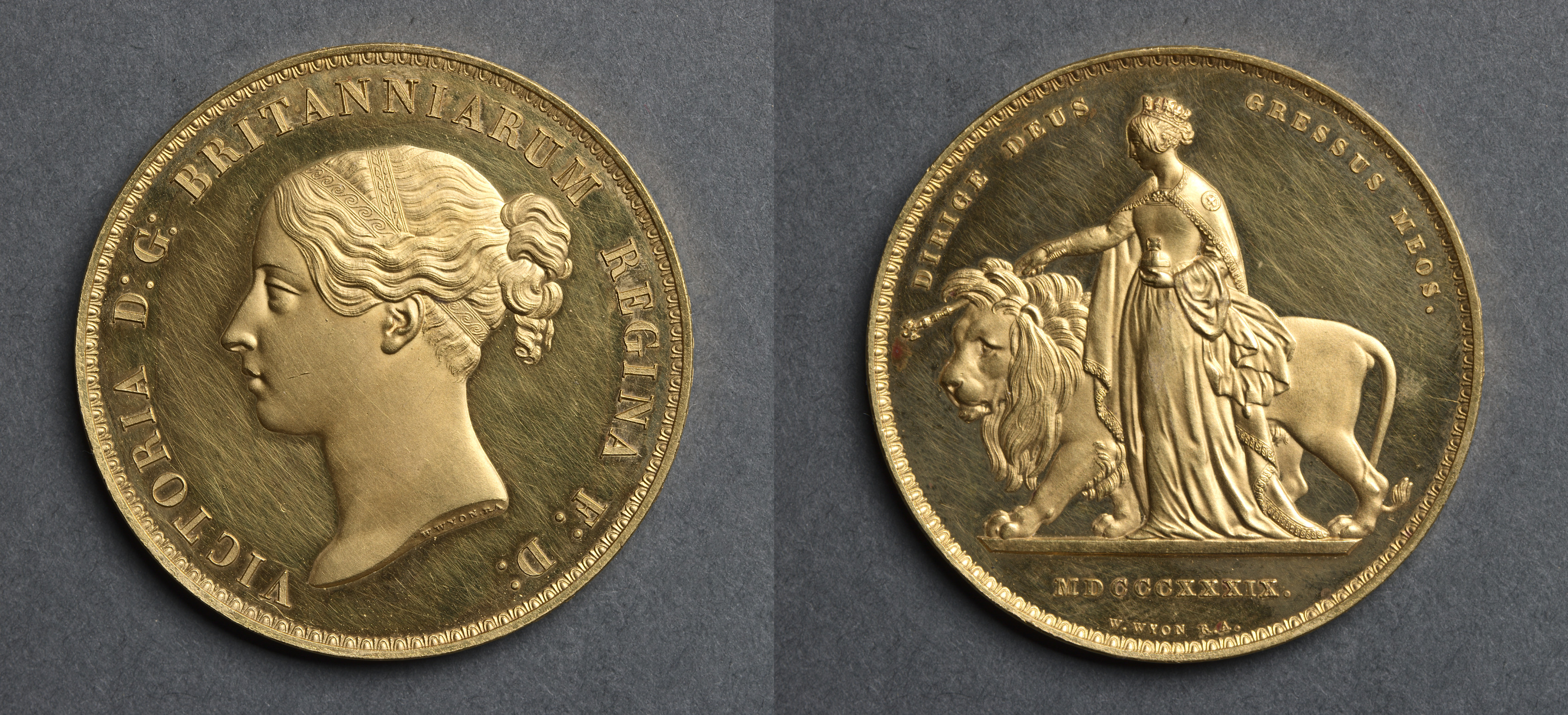
At Zoey Fashion Lab, we do not merely observe historical artifacts; we dissect them, extracting their latent narratives and re-stitching them into the fabric of contemporary avant-garde expression. The subject of our current analysis—the Victorian Five Pound Piece, bearing the stoic profile of Queen Victoria on its obverse and the allegorical figure of Una on its reverse—presents a profound dichotomy. Crafted in solid gold, this coin is not simply currency; it is a compressed theatre of imperial power and mythic idealism. For the avant-garde designer, this artifact is a blueprint for a new kind of sartorial language, one that speaks in volumes of contradiction: rigidity versus flow, state authority versus poetic solitude, and metallic permanence versus ephemeral fashion.
The Obverse: Architecture of Authority
The obverse face, featuring Victoria’s crowned and veiled portrait, is a study in structural formalism. The profile is sharp, almost architectural, with the diadem and laurel wreath functioning as a rigid framework that contains the monarch’s gaze. In our deconstruction, this face translates into hard tailoring and geometric precision. Consider a garment where the shoulder line is not merely padded but forged, echoing the coin’s milled edge. The fabric would be a high-tensile technical silk, bonded with a micro-layer of metallic film to simulate the cold, reflective quality of the gold. The color palette here is monochromatic and severe: burnished bronze, tarnished silver, and the deep, shadowed black of a velvet-lined jewel case.
This side of the coin dictates a silhouette of containment. We propose a corseted blazer with seams that trace the exact contours of Victoria’s profile, effectively wearing the monarch’s image as an exoskeleton. The buttons are not functional; they are sculptural nodules, cast in resin and gold dust, mimicking the coin’s raised lettering. The texture is paramount—a juxtaposition of polished, almost mirror-like surfaces against the granular, frosted finish of the coin’s field. This is the uniform of the state, but subverted: the jacket is cut asymmetrically, with one sleeve ending in a sharp, cuff-like point, while the other dissolves into a train of raw, unhemmed metallic organza, suggesting the erosion of imperial certainty.
The Reverse: The Fluidity of Myth
Flipping the artifact, we encounter Una, the personification of Truth and Unity from Spenser’s Faerie Queene, leading her lion. This is the antithesis of the obverse’s rigidity. Here, the imagery is narrative, flowing, and deeply romantic. The lion, a symbol of brute strength, is rendered subservient to a gentle maiden—a radical inversion of power. For the avant-garde, this face is the deconstruction of structure itself. It calls for draping, for fabric that moves with the organic unpredictability of water or wind. We interpret this through zero-waste pattern cutting, where a single piece of fabric is folded, twisted, and pinned to create a dress that has no seams, only tension points.
The material narrative shifts from the metallic to the ethereal. We propose a gown of liquid gold lamé, but one that has been deliberately distressed, crinkled, and over-dyed with a patina of deep verdigris and antique rose. This is not the gold of the mint; it is the gold of a forgotten reliquary, soft and malleable. The silhouette is a column, but one that is constantly in flux. A series of internal drawcords, invisible to the eye, allow the wearer to manipulate the garment’s form, pulling the fabric up to create a cascading ruffle at the hip, or releasing it to fall into a puddle at the feet. The lion is not depicted literally but abstractly: a massive, sculptural collar of curled, faux-leather petals that frames the neck, suggesting a mane without being literal.
Archive Resonance: The Mirror and the Slab
The provided reference—“Mirror with Split-Leaf”—is the key to synthesizing these two halves. The obverse is the mirror: a polished, reflective surface that demands to be seen, a symbol of imperial self-regard. The reverse is the stone slab: a flat, narrative relief that tells a story, a monument to an ideal. The avant-garde collection must oscillate between these two states. We are not designing a costume; we are designing a transformative armor for the modern psyche.
The collection, tentatively titled “Sovereign/Submissive,” would feature garments that are reversible. One side is the obverse: a stark, high-collared cape in brushed silver, with the queen’s profile embossed using a high-pressure heat technique. The other side is the reverse: the same cape, turned inside out, reveals a hand-painted silk lining depicting Una’s lion, but rendered in a fractured, cubist style, breaking the myth into geometric shards. The wearer chooses which narrative to project. This duality is the essence of avant-garde fashion—the ability to hold two opposing truths simultaneously and present them as a cohesive, provocative statement.
Technical Execution and Material Alchemy
The technical challenge is to translate the coin’s weight and permanence into something wearable. We achieve this through material alchemy. The primary fabric is a double-faced wool, one side boiled and felted for opacity, the other left raw and napped. Onto this, we apply a galvanic plating process typically used in aerospace engineering, depositing a micron-thin layer of actual gold onto the textile. This is not a print; it is a molecular bond. The result is a fabric that has the drape of cloth but the thermal and reflective properties of metal. For the Una side, we use a biodegradable cellulose film, printed with conductive inks that subtly warm the skin, creating a living, breathing surface that contrasts with the static obverse.
The accessories are equally critical. A headpiece, forged from a single sheet of anodized aluminum, is laser-cut with the intricate palmettes of the coin’s edge. It sits on the head like a crown, but its interior is padded with black latex, creating a jarring mix of regal and industrial. The footwear is a sculptural boot with a heel shaped like an inverted column, referencing the architectural stability of the obverse, but the sole is made of a clear, jelly-like resin, making the wearer appear to float—a nod to Una’s ethereal nature.
Conclusion: A Currency of Self
The Five Pound Piece is ultimately a symbol of value. In re-appropriating it, Zoey Fashion Lab asks: what is the currency of the self in the 21st century? Is it the hard, reflective authority of the obverse—our public persona, our professional armor? Or is it the softer, narrative truth of the reverse—our private myths, our inner lions? The answer, as our collection posits, is that we are both. The avant-garde garment is not a solution but a question, posed in gold, wool, and shadow. By deconstructing this Victorian relic, we construct a new body—one that is simultaneously a monument and a myth, a mirror and a slab, a sovereign and a subject. This is the ultimate act of fashion rebellion: to wear history not as a costume, but as a skin that we can choose to shed or to armor, at will.