Deconstructing the Loom: A Futurist Reading of Japanese Compound Weave
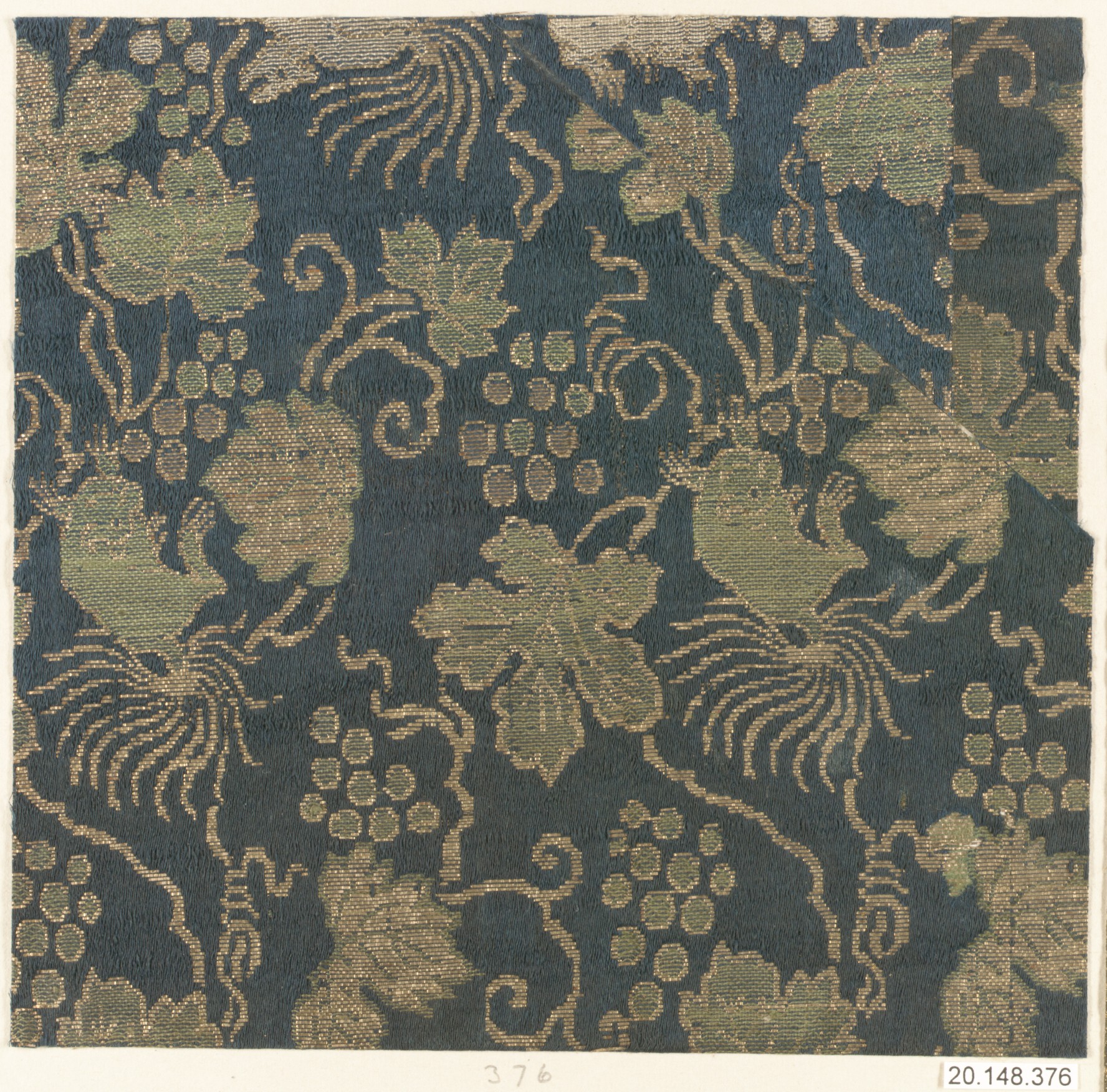
In the rarefied echelons of avant-garde couture, the garment is not merely worn; it is inhabited, challenged, and ultimately redefined. For the Spring/Summer 2026 (SS26) season, Zoey Fashion Laboratory turns its analytical gaze toward a singular piece originating from Japan, constructed from a sumptuous yet intellectually rigorous silk compound weave. This is not a study in nostalgia or orientalist appropriation. Rather, it is a forensic examination of how a traditional material matrix can be violently and beautifully reconfigured to propose a new architectural vernacular for the human form. The piece stands as a testament to the proposition that the future of fashion lies not in novel synthetics alone, but in the radical re-contextualization of ancient, tactile intelligence.
The Dialectic of the Compound Weave
The compound weave—a structure employing multiple warp and weft systems—is historically associated with opulent, dense fabrics like damask and brocade. In its conventional application, it produces a flat, hierarchical surface where pattern dominates ground. However, our analysis posits that the Japanese artisan’s manipulation of this structure subverts its inherent rigidity. The silk is not woven to lie flat; it is engineered to articulate. By selectively releasing tension in the secondary warp, the fabric develops a three-dimensional, almost geological topography. Pockets of air are trapped between the weave layers, creating a thermal and visual buoyancy. This is not a textile; it is a pre-architectural membrane, a flexible shell that holds the memory of the loom’s computational logic.
The material’s behavior under movement is critical to its avant-garde status. Unlike a stiff, sculptural gazar, this compound silk possesses a liquid architecture. When the wearer moves, the fabric does not simply fold; it undergoes a phase shift, revealing hidden layers of contrasting sheen and matte opacity. This chameleonic quality destabilizes the viewer’s perception of mass. Is the garment heavy? Is it weightless? The compound weave answers with a dialectical paradox: it is both, simultaneously. This ambiguity is the cornerstone of its futuristic appeal, aligning with SS26’s broader trend toward garments that defy binary categorization.
Silhouette as a State of Becoming
Our curatorial direction for SS26 eschews static form in favor of kinetic dynamism. This Japanese piece exemplifies this ethos through its radical silhouette, which appears to be in a constant state of flux—a 'becoming' rather than a 'being.' The silhouette is not imposed upon the body from without; it is negotiated with the body from within. Strategic, hand-finished slits and asymmetric draping allow the compound weave to billow and collapse, creating negative spaces that are as integral to the design as the fabric itself.
Consider the shoulder line. It is neither padded nor naturalistic. Instead, it is a cantilevered projection, formed by folding the silk compound back upon itself in a series of origami-inspired pleats. These pleats are not decorative; they are load-bearing structures that channel the fabric’s weight away from the torso, creating an exaggerated, almost extraterrestrial profile. The waist is similarly redefined, not cinched, but enclosed within a floating panel of silk that hovers millimeters above the skin, suggesting a protective exoskeleton. This is a garment that anticipates the body’s next gesture, pre-empting movement with its own architectural logic.
Structural Innovation and the Deconstruction of Wearability
The true innovation of this piece lies in its subversion of conventional garment construction. There are no visible seams in the traditional sense. Instead, the fabric is joined through a technique best described as tensile integration, where edges are fused and reinforced using a heat-reactive silk filament, invisible to the naked eye. This allows for a seamless flow of material, reinforcing the illusion that the garment was grown, not sewn. This technique also permits a radical level of deconstruction; the wearer or stylist can, in theory, manipulate specific tension points to alter the garment’s fundamental geometry, transforming a voluminous cocoon into a streamlined column in minutes.
This inherent transformability aligns perfectly with the SS26 mandate for adaptive couture. The garment is not a fixed object but a kit of architectural parts. Fastenings are replaced by magnetic closures hidden within the weave, allowing for silent, instantaneous reconfiguration. Pockets are not added but are woven into the structure, accessible through invisible slits that appear only when the hand seeks them. This is wearability redefined not as comfort, but as agency. The wearer is not a passive mannequin; they are a co-author of the silhouette, a collaborator in the ongoing performance of the piece.
Conclusion: A Blueprint for the Post-Organic
In conclusion, this Japanese silk compound weave piece is not merely a garment; it is a manifesto. It demonstrates that the future of fashion is not a rejection of heritage but a deep, analytical dialogue with it. By deconstructing the loom’s logic and rebuilding it into a responsive, kinetic architecture, the piece offers a definitive answer to the question of what avant-garde couture should be in SS26. It is a study in material intelligence, where silk is no longer a symbol of delicate luxury, but a high-performance structural alloy. The silhouette is a proposition for a post-organic body—one that is fluid, adaptive, and perpetually in motion.
As we look toward the next season, this piece stands as a benchmark. It challenges our ateliers to think beyond the flat pattern and the straight stitch, to engage with fabric as a computational partner. It is a silent, elegant, and powerful argument that the most radical future is the one we can weave from the threads of our own past, but with the vision of a world yet to come. This is not fashion; this is the engineering of possibility.