Deconstructing Dagmay: The Avant-Garde Resonance of Mandaya Ikat
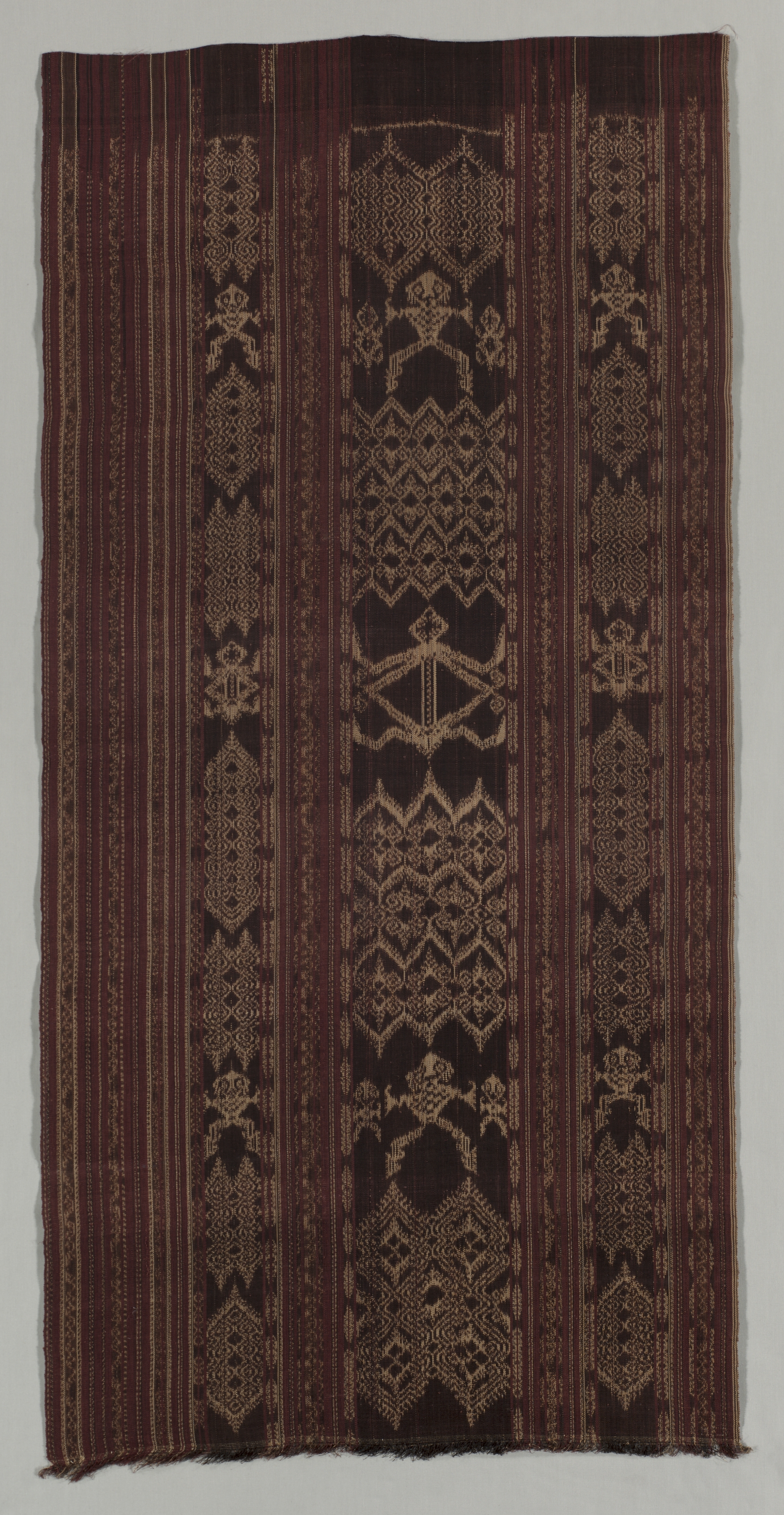
At Zoey Fashion Lab, our mandate transcends the mere cataloging of fabric. We engage in a form of archaeological futurism, excavating the technical and philosophical strata of textile traditions to unearth their disruptive potential. In this session of Fabric Deconstruction, we turn our analytical lens to the Mandaya ikat textile, known locally as dagmay, from the eastern shores of Mindanao, Philippines. To the uninitiated, dagmay is a plain-weave, hemp-based cloth. To the avant-garde designer, it is a radical manifesto woven in fiber—a pre-colonial blueprint for a future where material, process, and cultural memory are inextricably fused.
Technical Dissection: The Alchemy of Hemp and Resist
The foundational architecture of dagmay is deceptively simple: a plain weave utilizing the sturdy bast fibers of the abaca plant (Musa textilis), often blended with other native plant fibers. However, the genius of the Mandaya weaver lies not in the loom’s complexity, but in the dye-resist process executed prior to weaving. This is the defining characteristic of ikat—a term derived from the Malay-Indonesian word mengikat, meaning "to tie" or "to bind."
In the creation of dagmay, the warp threads are meticulously bundled, tied with organic materials, and then immersed in natural dyes. The bindings resist the dye, creating intricate, ghost-like patterns that only materialize once the threads are woven. The technical mastery here is staggering. The Mandaya weaver must possess a three-dimensional spatial memory, visualizing the final pattern while the threads are still loose and undulating. A misalignment of a single binding can distort the entire geometric narrative. The result is a cloth where the pattern is not printed, embroidered, or applied, but is intrinsic to the very structure of the thread itself. This is not surface decoration; it is structural encoding.
Chromatic Systems: The Earth’s Palette
The color palette of traditional dagmay is a study in ecological restraint. The dominant hues are derived from local flora: the deep, earthy reds and maroons extracted from the roots of the loko vine (Morinda citrifolia), and the stark, almost architectural blacks and greys achieved through iron-rich mud or tannin-rich bark. These are not passive colors. The red, in particular, is a pigment of power, historically reserved for the Bagani (warriors) and Baylan (spiritual leaders).
From an avant-garde perspective, this chromatic system offers a radical departure from the synthetic, hyper-saturated palettes of contemporary fast fashion. The subtle irregularities in hand-spun hemp and natural dye create a vibrational depth that synthetic fabrics cannot replicate. The color is not flat; it breathes, shifts, and reflects light differently depending on the angle of the weave and the humidity of the air. This is a living color, one that challenges the sterile perfectionism of industrial dyeing.
Pattern Language: Geometry as Code
The motifs of dagmay are not merely decorative; they are a semiotic system. The iconic pakid (diamond) pattern, often resembling a stylized crocodile or serpent, is a symbol of protection and strength. Other patterns reference the manok (rooster) or the bayawak (monitor lizard), creatures that inhabit the Mandaya cosmological landscape. These are not abstract shapes but narrative glyphs that encode the weaver’s worldview, their relationship to the animist spirits of the forest, and their social status within the community.
For the avant-garde, this transforms dagmay from a mere textile into a wearable code. It is a form of proto-programming, where the loom acts as a biological computer and the weaver as the coder. The geometric precision of the diamond patterns, when juxtaposed with the organic irregularity of the hand-spun thread, creates a visual tension that is profoundly modern. It resonates with the principles of Deconstructionism in fashion, where the visible seams, the raw edges, and the exposed structural logic become the aesthetic statement.
The Archive Resonance: A Dialogue Across Centuries
To fully appreciate dagmay’s avant-garde potential, we must contextualize it within the broader framework of Archive Resonance. As referenced in our research notes—"在人类文明的长河中,器物与绘画不仅是时代技艺的结晶,更是文化碰撞与美学交融的无声见证" (In the long river of human civilization, artifacts and paintings are not only the crystallization of the era's craftsmanship, but also the silent witnesses of cultural collision and aesthetic fusion)—this cloth is a silent witness to centuries of trade, conflict, and adaptation.
During the 16th and 17th centuries, the Philippines was a critical node in the Manila-Acapulco Galleon Trade. While silver and silk flowed from the Americas and Asia, local textiles like dagmay were traded, gifted, and sometimes plundered. This historical trajectory means that dagmay is not a static, isolated artifact. It is a hybrid object, bearing the subtle influences of contact with other maritime cultures, yet retaining its core Mandaya identity. This tension—between external influence and internal resistance—is precisely the fertile ground for avant-garde innovation. We are not looking at a "primitive" craft, but at a sophisticated, adaptive technology that has survived through resilience and innovation.
Avant-Garde Applications: From Tradition to Disruption
How does Zoey Fashion Lab propose to translate this 800-year-old tradition into a forward-thinking design language? We propose a three-pronged approach:
1. Structural Sculpture
Abandon the flat, two-dimensional garment. The inherent stiffness of hemp makes dagmay ideal for architectural draping and sculptural silhouettes. Instead of cutting the fabric to conform to the body, we can manipulate the weave itself to create volume. Think of a coat that does not drape, but stands as a monolithic structure, its geometric ikat patterns mimicking the facets of a brutalist building. The garment becomes a wearable installation, challenging the Western canon of fluidity and softness.
2. Deconstructed Weave
Embrace the wabi-sabi of imperfection. We can intentionally leave sections of the warp threads unbound, allowing the dye to bleed and create a "glitch" in the pattern. We can cut into the woven fabric and deliberately fray the edges, exposing the hemp fibers as a fringe. This is not a sign of damage, but a celebration of the process over the product. It is a rebellion against the "finish" of luxury fashion, presenting the raw, unpolished truth of the material.
3. Digital-Physical Hybridity
We can scan the intricate ikat patterns and use them as data points for generative design algorithms. By analyzing the geometric logic of the diamonds and serpents, we can create new, infinite variations of the pattern that are then rendered in bio-fabricated cellulose or 3D-printed structures. This is not cultural appropriation; it is cultural computation, a respectful collaboration between the ancestral intelligence of the Mandaya weaver and the computational power of the modern studio. The result is a new language that honors the source code while writing a new chapter.
Conclusion: The Future is Woven, Not Printed
The Mandaya dagmay is far more than a historical artifact. It is a testament to the enduring power of human ingenuity and a profound challenge to the contemporary fashion industry’s obsession with speed, disposability, and surface-level aesthetics. Its technical complexity—the pre-visualization of pattern in the thread—demands a level of patience and skill that is antithetical to mass production.
For Zoey Fashion Lab, dagmay represents the ultimate avant-garde material. It is a fabric that contains its own history, its own code, and its own future. By deconstructing its technical processes and reinterpreting its cultural resonance, we are not simply making clothes; we are weaving a new narrative—one where the past is not a museum piece, but a living, breathing collaborator in the creation of a radical, sustainable, and deeply meaningful fashion future. The future of fashion is not in the print; it is in the thread itself.