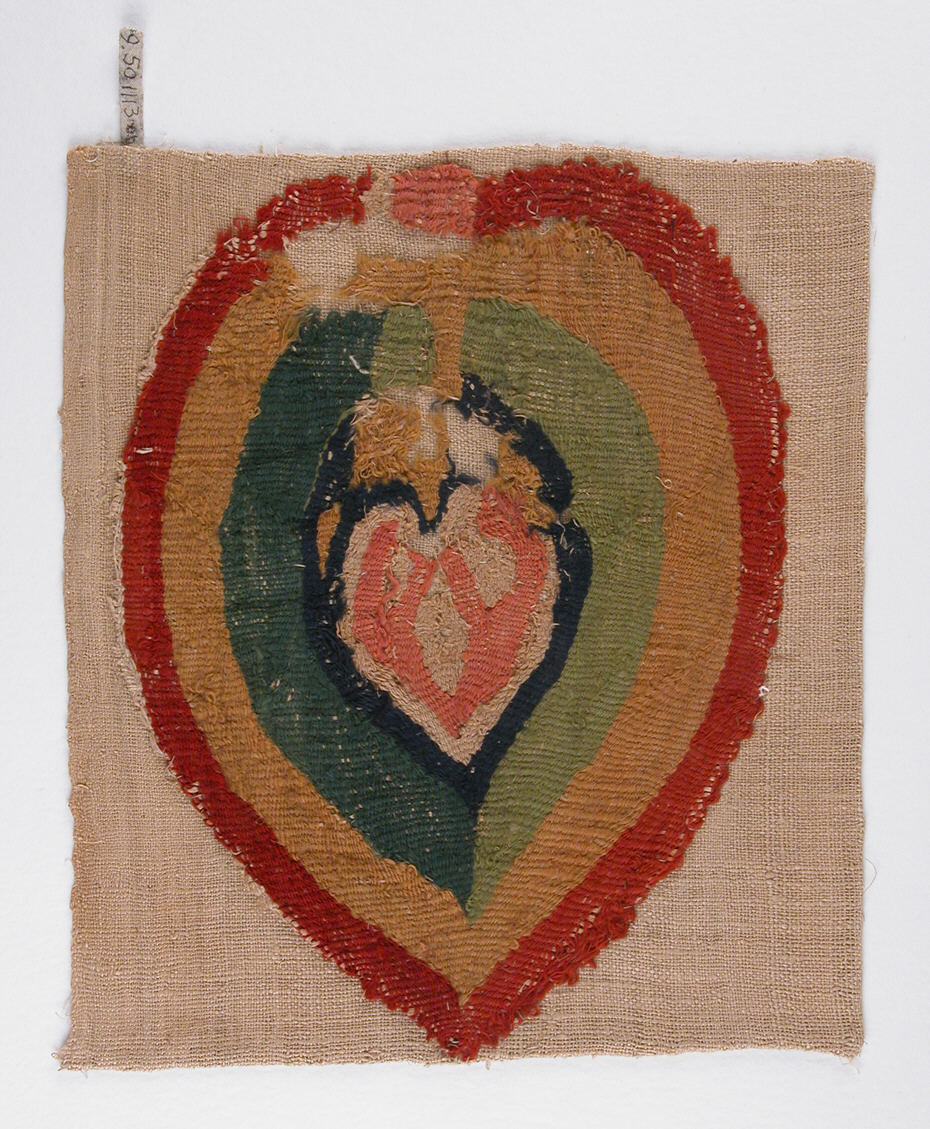
The Architecture of Adornment: Deconstructing Ornament as Structural Imperative for SS26
The lexicon of contemporary fashion has long misdiagnosed ornament as a superficial afterthought—a decorative veneer applied post-construction to gratify the eye. For Zoey Fashion Laboratory’s SS26 avant-garde study, we reject this taxonomy outright. Ornament is not the residue of embellishment; it is the generative force of silhouette, the tensile logic that binds fabric to form, and the philosophical counterweight to modernist austerity. In this standalone analysis, we interrogate ornament through a global frontier lens, employing a rigorous material dialogue of linen, wool, and tapestry weave to propose a new structural paradigm—one where adornment becomes load-bearing, and where the future of couture is written not in sequins, but in engineered relief.
Reclaiming Ornament: From Superfluity to Structural Syntax
The historical avant-garde—from the Bauhaus’s rejection of the decorative to Adolf Loos’s infamous proclamation that ornament is crime—has bequeathed a suspicious inheritance. Yet, our laboratory operates in the post-ironic phase of deconstruction, where the binary of structure versus surface collapses. Ornament, in our SS26 proposition, is redefined as tectonic embellishment: a system of raised weaves, sculptural pleats, and volumetric embroidery that does not sit upon the garment but rather constitutes its very architecture. The tapestry weave, traditionally relegated to flat, pictorial domesticity, is here exploded into three-dimensional relief. We manipulate its weft and warp to create topographic undulations—ridges that trace the scapula, valleys that channel the spine—transforming the body into a living landscape.
This is not decoration; it is functional ornamentation, where every raised thread and interlaced fiber serves a kinetic purpose. Consider a linen double-faced coat where the tapestry motif does not merely embellish the shoulder but constructs it—a cantilevered epaulet formed from densely packed wool and linen, lifting away from the torso to create an airy, negative-space silhouette. The ornament is the skeleton, the garment’s load-bearing exoskeleton. The wearer does not don a decorated object; they inhabit an architectural membrane.
Global Frontier: The Cartography of Adornment
Our creative provenance draws from the "Global Frontier"—not as a homogenizing trend, but as a decentralized network of indigenous, nomadic, and artisanal knowledge systems. We mine the ornamental grammars of Andean ikat, Central Asian suzani, and West African kente, yet we refuse folkloric pastiche. Instead, these traditions are abstracted into algorithmic pattern languages, where geometric motifs are recomputed into futuristic, non-repeating tessellations. The tapestry weave becomes a digital-analog hybrid: hand-loomed, yet informed by computational design that optimizes thread density for structural performance.
For SS26, a signature piece—a floor-sweeping, cocoon-like overcoat in undyed wool—features a tapestry panel running vertically down the spine. The motif is a fractured map of the Silk Road, reimagined as a series of interlocking, angular cells. But this is no flat print. The weave is differential in thickness: the cells are raised by up to three centimeters, creating a tactile, braille-like surface that casts dramatic shadows under gallery lighting. As the wearer moves, the raised cells flex and compress, altering the garment’s silhouette in real-time. Ornament becomes a dynamic, responsive system—a living cartography that shifts with each gesture.
Material Alchemy: Linen, Wool, and the Tapestry Weave Reimagined
The material triad of linen, wool, and tapestry weave is our laboratory’s holy trinity. Linen, with its rigid, cellulose-based fiber, offers tensile strength and a crisp, architectural drape. Wool, conversely, provides elasticity, thermal memory, and a soft, malleable volume. When combined in a tapestry weave, they create a hybrid composite fabric that is both stiff and fluid, heavy yet breathable. We engineer this composite at the yarn level: twisting fine linen filaments with coarser wool roving to produce a single, biaxial thread capable of holding complex, three-dimensional forms without internal wiring or boning.
The tapestry weave itself is subverted from its flat, pictorial origins. We employ a double-cloth technique, where two independent warps and wefts interlace to create pockets, channels, and inflated cells. These cells can be selectively stuffed with raw wool fibers or left hollow, producing a gradient of relief across the garment’s surface. The result is a fabric that behaves like a topographical map—dense and protective over the shoulders, porous and airy across the chest. This is not merely textile; it is wearable engineering, where the weave’s structural logic dictates the silhouette’s futuristic geometry.
Futuristic Silhouettes: The Ornamental Exoskeleton
The SS26 collection proposes a new canon of silhouettes, all derived from ornamental logic. The Orbital Shoulder: a sphere-like, tapestry-woven cap that encircles the deltoid, leaving the arm bare. The ornament is not attached; it is woven directly into the garment’s main panel, creating a seamless, continuous form. The Ribbed Carapace: a bodice where vertical tapestry ribs, each one centimeter wide, are spaced at intervals to allow for ventilation and movement. The ribs are not merely decorative—they are structural stays that support the garment’s weight, distributing it evenly across the torso, eliminating the need for a separate foundation garment.
Perhaps most radical is the Inverted Tapestry Train: a full-length, floor-dragging panel that is woven upside down, with the weft and warp reversed at the hem. This creates a frayed, deconstructed edge that appears to dissolve into thread, while the upper portion remains dense and rigid. The ornament, here, is the act of unraveling—a deliberate, controlled decay that challenges the permanence of couture. It is a futuristic meditation on entropy, where the garment’s own materiality becomes the subject of its adornment.
Conclusion: Ornament as Radical Autonomy
In this standalone avant-garde study, we have dismantled ornament’s historical subservience and rebuilt it as a primary agent of form. For Zoey Fashion Laboratory, SS26 is not a collection of clothes but a series of structural propositions—each garment a thesis on how adornment can bear weight, define space, and choreograph movement. The tapestry weave, once a decorative craft, is now a computational, load-bearing system. Linen and wool, once natural opposites, are fused into a hybrid composite with unprecedented architectural potential.
We do not ask the wearer to admire ornament; we ask them to inhabit it. The future of couture lies not in the rejection of decoration, but in its radical re-engineering. Ornament is no longer a crime—it is the very evidence of construction, the visible logic of form. This is the definitive frontier: where the global, the ancient, and the futuristic converge in a single, woven gesture. The laboratory is open, and the threads are live.