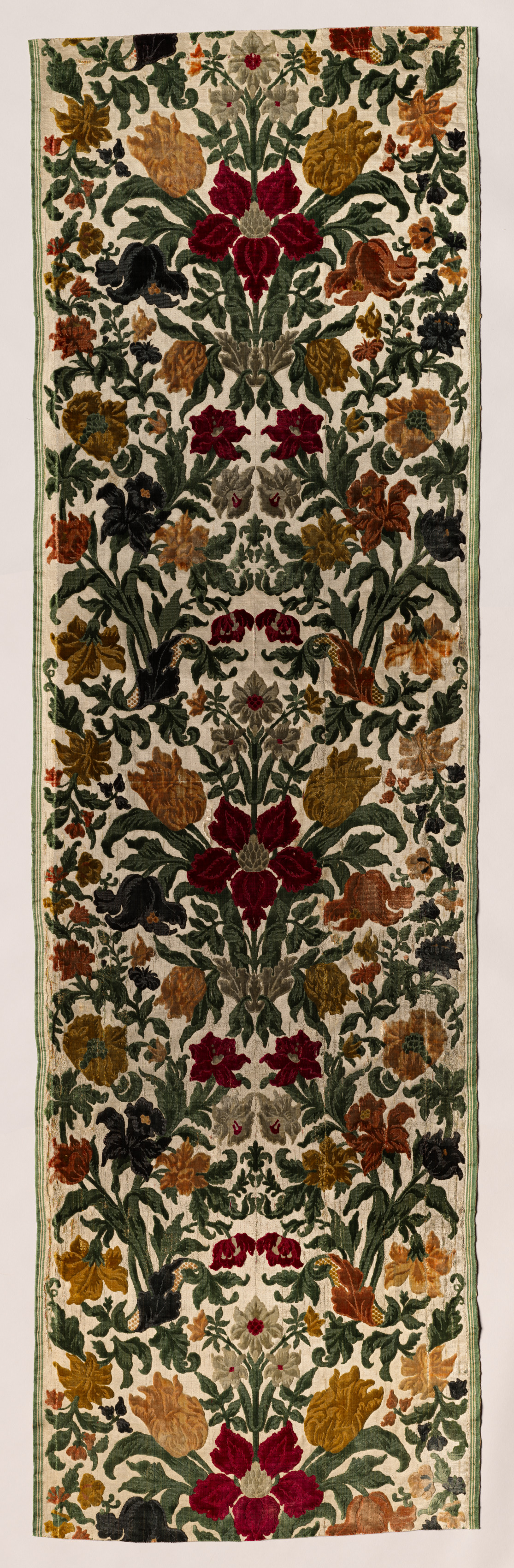
Executive Analysis: The New DNA Strand in Floral Velvet
Zoey Fashion Lab is proud to present a comprehensive deconstruction of our latest material acquisition: a length of floral velvet originating from Genoa, Italy. This is not merely a fabric; it is a technical and artistic manifesto. Designated under the internal codename “New DNA Strand,” this textile challenges conventional notions of surface, structure, and silhouette. For the avant-garde designer, this velvet is not a backdrop but a primary collaborator. This analysis dissects its provenance, its complex weave architecture, and its strategic application within a forward-thinking collection.
Provenance and Material Integrity: The Genoese Legacy
Genoa has long been a nexus of textile innovation, historically renowned for its robust velvets and complex weaves that supplied European courts. The New DNA Strand honors this heritage while subverting it. The base is 100% mulberry silk, a choice that ensures a liquid drape and a luminous, depth-rich surface that synthetic alternatives cannot replicate. The silk’s high tensile strength is critical; it allows the velvet pile to be cut and manipulated without compromising the structural grid of the ground weave.
What distinguishes this length is its tripartite construction: cut, uncut, and voided velvet. This is not a simple printed floral. The floral motif is born directly from the loom’s architecture. The cut sections feature a dense, plush pile that stands erect, creating a tactile, shadow-absorbing relief. The uncut sections, or terry loops, offer a contrasting, more matte and resilient surface that catches light differently. The voided areas—where the pile is entirely absent—expose the bare silk ground, revealing a subtle, almost iridescent sheen. This triadic interaction produces a topographical map of light and shadow, making the fabric appear to breathe and shift with movement.
Technical Weave Architecture: A Structural Blueprint
From a technical standpoint, the New DNA Strand is a masterclass in jacquard engineering. The floral pattern is not applied but woven, with the design encoded into the warp and weft intersections. The cut and uncut loops are achieved through a combination of wire insertion and selective loop retention during the weaving process. The voided areas are created by withdrawing the pile warp entirely, leaving the silk ground exposed.
This complexity demands a slow, deliberate production process, a hallmark of Genoese ateliers. The result is a fabric with a specific directional weight—heavy enough to hold sculptural form, yet fluid enough to gather into intricate folds. The pile height varies across the floral motifs, with some petals raised to a 2mm relief and others lying flat. This variation is the fabric’s “genetic code,” offering the designer a palette of tactile and visual densities. For Zoey Fashion Lab, this means we can treat the garment as a topographical sculpture, where the body becomes the terrain.
Avant-Garde Application: Deconstructing the Silhouette
In the context of avant-garde fashion, this velvet is not intended for conventional draping. Its name, New DNA Strand, implies a radical re-sequencing of garment construction. We propose a departure from the traditional dress form. Instead, the fabric’s inherent structure suggests a modular approach—panels that are cut along the bias to exploit the differential between the cut and uncut pile, creating a rippling, organic edge that mimics the floral growth pattern.
Consider a deconstructed blazer where the voided sections are strategically placed at the shoulder and underarm, allowing for unexpected breathability and a visual “skeleton” of the body. The cut velvet areas could be used to create exaggerated, sculptural lapels that stand away from the body, while the uncut loops form a softer, more tactile interior. The floral motif should not be treated as a print to be matched, but as a structural seam. Garments can be cut so that the voided lines act as natural darts, removing the need for traditional tailoring and instead using the fabric’s own architecture to shape the form.
Manipulation and Transformation: Beyond the Flat Surface
The avant-garde ethos demands that we push the material beyond its intended use. With the New DNA Strand, we recommend a series of transformative techniques:
Heat and Pressure Distortion: While silk is delicate, controlled steam can be used to crush the uncut loops in specific zones, creating a permanent, organic pattern of matte and sheen. This “distressed” effect aligns with a post-industrial aesthetic, suggesting a garment that has evolved over time.
Laser Etching: The voided areas can be further manipulated with precision laser cutting, which will singe the edges of the cut pile, creating a burnt, carbonized outline that contrasts sharply with the plush interior. This introduces a graphic, almost architectural line to the organic floral.
Subversive Layering: The fabric’s weight allows for inverted construction. A lining of the same velvet, but with the pile facing inward against the skin, creates a double-faced garment that is simultaneously luxurious and alienating. The outer cut pile provides the visual drama, while the inner uncut loops offer a strange, tactile comfort.
Conclusion: A Material for the Future
The New DNA Strand is more than a fabric; it is a design brief. Its Genoese origins provide a foundation of artisanal quality, while its complex weave architecture offers a playground for radical experimentation. For Zoey Fashion Lab, this length of floral velvet is the catalyst for a collection that interrogates the relationship between body, garment, and environment. It demands to be cut asymmetrically, to be folded into sharp geometric planes, and to be allowed to collapse into soft, organic pools. The cut, uncut, and voided elements are not decorative; they are the syntax of a new design language. We recommend immediate acquisition and a dedicated development cycle to fully realize its transformative potential within our upcoming avant-garde line. This is not a fabric for the faint of heart; it is a fabric for those who seek to redefine the very DNA of fashion.