The Scroll Unfurled: Deconstructing Temporal Architecture for SS26
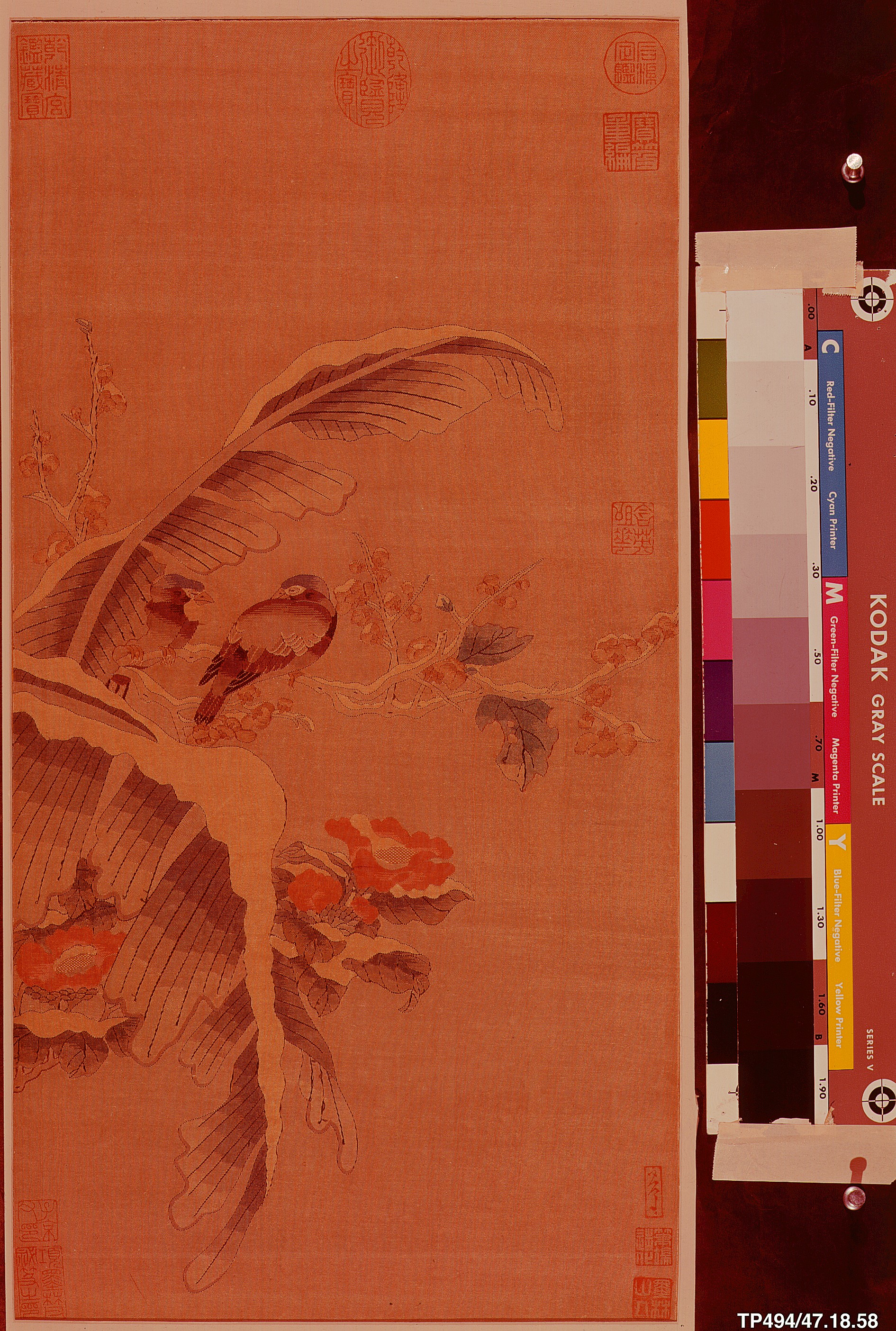
The hanging scroll—a quintessential artifact of Chinese aesthetic contemplation—is rarely examined through the lens of radical garment construction. Yet, within its deceptively simple format lies a blueprint for a new sartorial temporality. For Zoey Fashion Laboratory’s SS26 proposition, the scroll is not a nostalgic reference but a structural manifesto that dismantles the binary of static dress and dynamic motion. The kesi silk tapestry, with its warp-and-weft precision, becomes a metaphor for a fabric that is simultaneously woven, painted, and sculpted. This analysis dissects the scroll’s formal grammar to propose a silhouette system that is neither draped nor tailored, but unfurled—a continuous surface that negotiates the body as an active, shifting axis.
I. The Anti-Garment: Verticality as a Load-Bearing Principle
Traditional Western couture privileges the horizontal—the shoulder seam, the bust line, the hem. The hanging scroll inverts this logic, establishing vertical tension as the primary structural force. For SS26, we propose a series of gowns and outer layers that terminate not at the hem but in weighted, cylindrical rods—a direct translation of the scroll’s wooden dowel. These rods, fabricated from brushed aluminum or bio-resin, do not merely add weight; they anchor the garment’s kinetic energy. As the wearer moves, the fabric does not flutter randomly; it rotates around the vertical axis, creating a controlled, pendulum-like oscillation.
This is a radical departure from the fluid, gravity-defying silhouettes of recent seasons. The scroll silhouette is anti-voluminous in the traditional sense, yet it achieves a new form of presence. The body becomes the central roller, and the fabric is a continuous, unbroken plane that wraps, folds, and stacks. Consider a coat that opens not at the front but along a diagonal seam, mimicking the scroll’s lateral unrolling. The wearer does not "put on" the garment; they activate it, pulling a silk cord that adjusts the internal tension, effectively changing the garment’s length and drape in real-time. This is not wearable tech in the digital sense, but mechanical couture—a return to the physicality of construction.
II. Kesi as a Structural Logic: Beyond Surface Ornament
The kesi technique—slit tapestry weaving—is often appreciated for its pictorial richness. However, its true avant-garde potential lies in its structural discontinuity. Unlike brocade or embroidery, kesi creates areas of different densities and flexibilities within a single weave. The "slits" where color changes occur are not flaws; they are pre-programmed flex points. For SS26, we re-engineer this logic using laser-cut, bonded panels of silk organza and technical neoprene. The "slit" becomes a physical hinge, allowing a rigid panel to articulate against a supple one.
This yields a revolutionary approach to fit. The garment does not rely on darts or princess seams to conform to the body. Instead, the body’s topography is mapped onto a grid of variable-stiffness zones. A panel over the scapula is dense and load-bearing, while the adjacent section over the latissimus dorsi is feather-light and translucent. The result is a silhouette that appears to be digitally rendered yet is entirely analog. The kesi-inspired construction allows for a garment that is simultaneously armored and ethereal, a paradox that defines the SS26 aesthetic: hardware-softness.
III. The In-Between Space: Negative Volume and the Unrolled Form
The hanging scroll is never viewed in its entirety at once; it is an object of sequential revelation. This temporal aspect informs our third principle: negative volume as a design material. Instead of constructing a garment that fully encloses the body, we propose pieces that create a "gap" between fabric and skin—a void that is as intentional as the textile itself. This is achieved through internal cantilevered struts, hidden within the seams, which push the fabric away from the body at specific points.
For example, a jacket might hover 15 centimeters above the wearer’s lower back, creating a dramatic shadow gap that visually severs the torso from the hips. This is not deconstruction in the 1990s Rei Kawakubo sense, which emphasized raw edges and asymmetry. This is architectural suspension. The silhouette becomes a series of floating planes, connected by invisible tension cables. The wearer’s movement is not constrained but amplified by this negative space, as the fabric moves independently, creating a parallax effect that changes with every step. The scroll’s "unfurling" is thus translated into a perpetual state of becoming—the garment is never fully "closed."
IV. Materiality of Time: Silk, Metal, and the Patina of the Future
Our material palette for SS26 rejects the sterile futurism of chrome and vinyl. Instead, we embrace material honesty with a temporal twist. The silk tapestry is treated with a mineral wash that creates a subtle, iridescent patina, reminiscent of ancient bronze. This is not a distressed or vintage effect; it is a pre-aging that suggests the garment has already existed in the future and is now returning to the present. The metallic dowels are not polished but left with a brushed, matte finish, bearing subtle tooling marks that echo the hand of the weaver.
This material strategy is critical to the collection’s intellectual rigor. It challenges the fashion industry’s obsession with the "new" by proposing that true innovation lies in re-contextualizing ancient structural logic. The hanging scroll, an object designed for slow, contemplative viewing, becomes a tool for accelerating the wearer’s physical presence. The result is a garment that feels both ancient and post-human, a wearable artifact from a civilization that has mastered the art of controlled entropy.
V. The Scroll as a Wearable Score: Performance and Movement
Finally, we must consider the performative aspect. A garment constructed on scroll principles is inherently choreographic. It demands a specific gait—a slow, deliberate stride that allows the weighted hem to swing in a pendulum arc. We envision the collection not as static pieces but as wearable scores for movement. The internal tension cords allow the wearer to adjust the silhouette from a tight, columnar form to a wide, bell-like shape, effectively changing the "music" of their movement.
This is a direct challenge to the fast-paced, fragmented consumption of contemporary fashion. The scroll garment is an instrument of focus. It forces the wearer and the viewer to slow down, to observe the unfurling of a form over time. In an era of ephemeral digital imagery, Zoey Fashion Laboratory proposes a return to the physicality of duration. The hanging scroll, once a vehicle for poetry and landscape, now carries a new payload: a definitive statement on the future of silhouette—one that is rigorous, poetic, and structurally audacious. The SS26 collection is not a homage; it is a re-engineering of time itself through the medium of the body.