Deconstructing the Byzantine Thread: A Material Autopsy of the Rare Silk Tunic Fragment
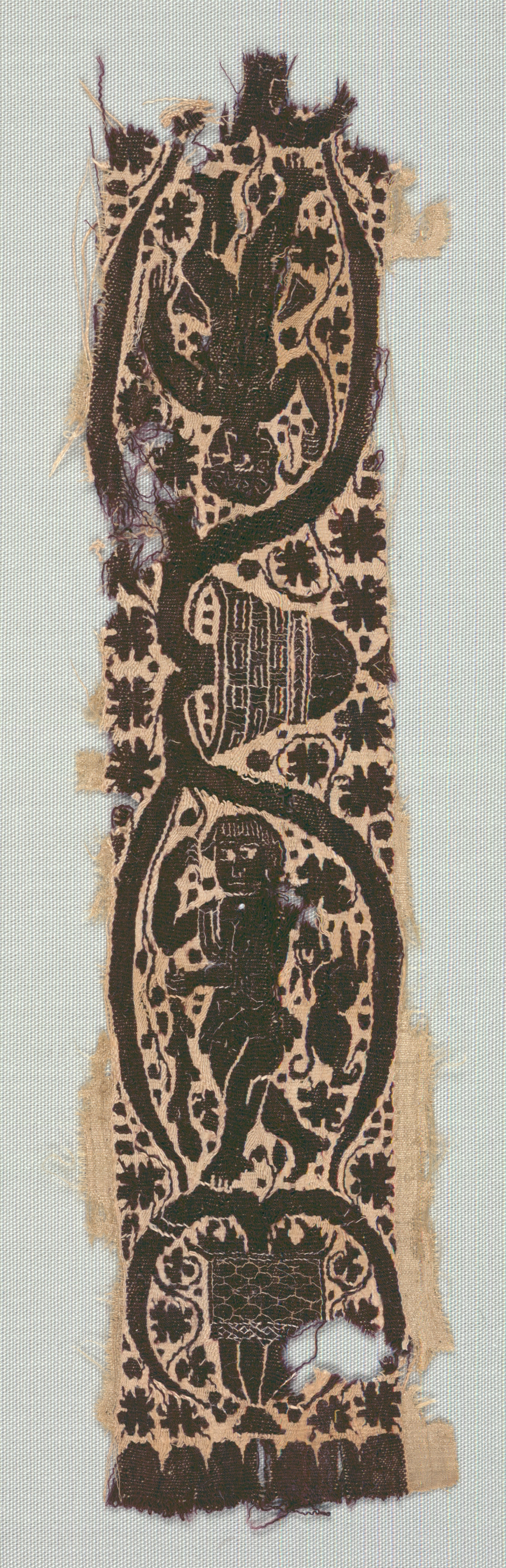
At Zoey Fashion Lab, our mandate transcends the mere cataloging of historical garments. We engage in a forensic dialogue with the past, extracting structural intelligence from textiles that have survived centuries. The Rare Silk Tunic Fragment with Ornamental Sleeve Band, hailing from Byzantine Egypt, is not simply an artifact; it is a masterclass in pre-industrial engineering, a repository of chromatic data, and a conceptual blueprint for avant-garde design. This analysis dissects the fragment’s technical anatomy—its weave architecture, material hierarchy, and ornamental logic—to propose a radical reinterpretation for contemporary fashion, framed as a new DNA strand for Zoey’s experimental atelier.
I. Technical Provenance: The Weave as a Structural Language
The fragment’s foundation is a plain weave of silk, a ground structure that is deceptively simple yet functionally profound. In plain weave, every weft thread passes over and under every warp thread, creating a balanced, grid-like matrix. This is the textile equivalent of a skeletal system—rigid, stable, and capable of bearing the weight of subsequent ornamentation. The choice of silk for this ground layer is critical. Unlike linen or wool, silk’s continuous filament provides a high tensile strength with minimal bulk, allowing for a dense yet featherlight drape. For the avant-garde designer, this suggests a departure from bulky, structured silhouettes toward a fluid architecture that moves with the body while maintaining its form.
However, the true technical sophistication emerges in the ornamental sleeve band, executed in tapestry weave with supplementary weft wrapping. Tapestry weave is a discontinuous weft technique where colored threads are interlaced only where needed, creating sharp, pixelated transitions between hues. The addition of supplementary weft wrapping—where a thread is wrapped around a warp thread without passing through the full shed—introduces a three-dimensional relief. This is not mere decoration; it is a strategic manipulation of light and shadow. The wrapped threads act as micro-pillars, casting minute shadows that alter the perceived color and texture depending on the viewing angle. This technique anticipates modern jacquard and 3D-knitting methodologies, where surface relief is achieved not by adding fabric but by restructuring the yarn’s path.
II. Material Alchemy: Linen, Wool, and Silk in Dialogue
The fragment employs a deliberate hierarchy of materials: undyed linen, dyed wool, and silk. Each fiber is chosen for a specific behavioral property, not for aesthetic convenience. The undyed linen, likely used in the warp or as a binding thread, serves as the structural anchor. Linen’s stiffness and low elasticity provide a rigid counterpoint to silk’s fluidity, preventing the garment from collapsing into a shapeless mass. This is a lesson in composite engineering—using a stiff fiber as a hidden skeleton within a supple exterior, a principle we now replicate with boning and thermoplastic polymers.
The dyed wool in the tapestry band introduces a chromatic and tactile contrast. Wool’s natural crimp and scale structure absorb dyes differently than silk, resulting in a matte, diffuse color that appears almost chalky against silk’s glossy, jewel-like sheen. The dyes themselves—likely derived from madder (red), woad (blue), and weld (yellow)—were not merely colorants but chemical agents that altered the fiber’s surface energy. In deconstructing this, we recognize that color in antiquity was a material event, not a surface coating. For Zoey’s avant-garde line, this suggests a move away from pigment-based dyeing toward fiber-reactive and structural color techniques, where hue is a function of yarn twist, cross-section, and light interference.
III. The Ornamental Sleeve Band: A Micro-Architecture of Power
The sleeve band is not peripheral; it is the epicenter of the garment’s communicative power. In Byzantine culture, such bands (clavi) denoted social status, religious affiliation, and imperial favor. The ornamental design—likely featuring geometric interlace or stylized vegetal motifs—was executed with a precision that suggests a specialized workshop, possibly monastic. The band’s placement on the sleeve is significant: it is a zone of high motion. As the wearer gestured, the wrapped wefts would catch light, creating a kinetic shimmer. This is an early example of performative materiality, where the garment is designed to be seen in motion, not just in repose.
From a deconstructionist perspective, the band functions as a boundary object. It demarcates the transition between the body’s interior (the arm) and the exterior social space. The ornamental density acts as a visual barrier, drawing the eye to the liminal zone between self and other. For avant-garde fashion, this translates into a design strategy where seams and joins are not hidden but exaggerated. Instead of seamless integration, we propose a deliberate rupture—a sleeve band that is oversized, structurally independent, and mechanically attached, functioning as a wearable sculpture that redefines the arm’s silhouette.
IV. The New DNA Strand: Translating Ancient Code to Avant-Garde Form
Our reference to a “New DNA Strand” is not metaphorical. The fragment’s construction can be sequenced into a set of algorithmic rules—a genetic code for garment fabrication. The plain weave is the coding sequence (stable, repetitive). The tapestry weave is the regulatory element (variable, expressive). The supplementary weft wrapping is the epigenetic modification (environmentally responsive, altering expression without changing the base code). By isolating these three layers, we can generate a contemporary design protocol:
- Layer 1 – Ground Matrix: Use a high-twist, recycled silk yarn in a plain weave to create a base fabric that is both strong and breathable. This is the canvas for innovation.
- Layer 2 – Chromatic Insertion: Employ a digital jacquard loom to recreate the discontinuous weft logic, but replace wool with a biopolymer filament that changes opacity with body heat. The ornament becomes a live sensor.
- Layer 3 – Relief Modulation: Integrate robotic embroidery to apply supplementary weft wrapping on a macro-scale, creating raised, tactile ridges that echo the ancient band’s topography. These ridges can be designed to channel airflow or create acoustic damping.
The resulting garment is not a costume replica but a functional mutation—a tunic that retains the fragment’s structural DNA while expressing a new, futuristic phenotype. The sleeve band becomes a detachable, modular component, allowing the wearer to switch between a minimalist plain-weave shell and a heavily ornamented, sculptural appendage.
V. Conclusion: The Fragment as a Living System
The Rare Silk Tunic Fragment is a testament to the fact that innovation is not linear. It is a recursive loop where ancient solutions—tapestry wrapping, material hierarchy, kinetic ornament—resurface with renewed relevance. At Zoey Fashion Lab, we do not treat this fragment as a relic to be preserved under glass. We treat it as a living system, a source code to be decompiled, recompiled, and reissued in a contemporary language. The Byzantine artisans did not have computers, but they understood the logic of modular design, the physics of light on textured surfaces, and the psychology of ornament as power. By decoding their technical choices, we arm ourselves with a deconstructive toolkit that allows us to build garments that are not merely fashionable, but architecturally intelligent, materially honest, and conceptually daring. The fragment’s true value lies not in its age, but in its capacity to inform a future that has not yet been woven.