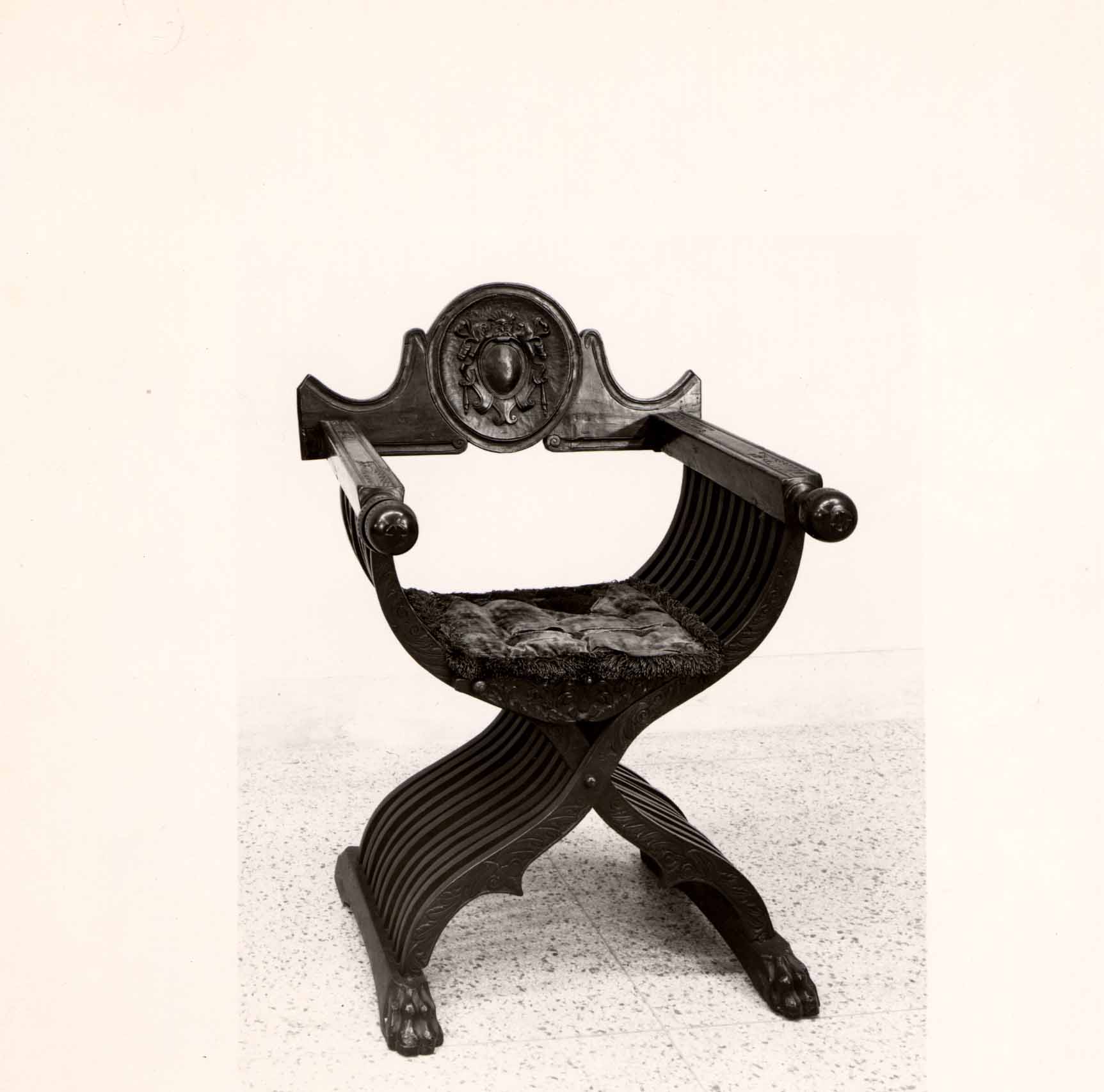
The Savonarola Reconfigured: An Architecture of Temporal Collapse
In the hallowed lexicon of furniture history, the Savonarola chair—that quintessential emblem of Renaissance itinerant power—has long been consigned to the amber of antiquarian reverence. Its X-frame, a study in Romanesque pragmatism, and its turned walnut spindles, speak of a world where craft was subordinated to the exigencies of portability and clerical gravitas. Yet for Zoey Fashion Laboratory, the folding armchair is not a relic; it is a blueprint for a sartorial insurrection. This analysis dissects the Italian walnut-and-silk archetype not as a piece of interior décor, but as a proto-exoskeleton—a generative matrix for SS26’s most radical propositions in silhouette, drape, and kinetic structure.
The Savonarola’s genius lies in its dialectical tension between rigidity and collapse. When deployed, it presents a formidable, almost thronelike frontage; when folded, it becomes a slender, almost apologetic sliver of timber. This binary state—monumental yet ephemeral—is the precise conceptual fulcrum upon which our SS26 collection pivots. We reject the static garment. We champion the transformable second skin that can articulate power or conceal it with a single, deliberate gesture.
Deconstructing the X-Frame: From Furniture Joint to Bodily Fulcrum
The defining structural element—the intersecting, pivoting bars—offers an unprecedented opportunity to reimagine the human torso as a living hinge. In our SS26 narrative, the X-frame is not mimicked; it is transubstantiated into the garment’s own load-bearing architecture. We propose a series of corseted cuirasses constructed from laminated walnut veneer, meticulously steam-bent and articulated at the sternum and sacrum with polished brass pivots. These are not restrictive garments; they are wearable mechanisms that allow the wearer to modulate their own silhouette.
Silhouette 01: The Collapsible Apex
Consider the “Savonarola Gilet”—a sleeveless shell that, when the wearer stands in repose, flares into a formidable, pyramidal volume reminiscent of the chair’s open state. The panels, cut on a severe bias from technical silk taffeta, are interwoven with rigid, walnut-strut channels. When the wearer raises their arms or performs a specific choreographed twist, these struts slide and collapse inward, transforming the gilet into a sleek, almost second-skin basque. This is not mere costume; it is a performative commentary on the fragility of authority. The silhouette is never static; it is a series of potentialities, each more provocative than the last.
The turned spindles of the original—those repetitive, lathe-produced balusters—are reimagined as a radical fringing system. We eschew the soft, fluid fringe of the 1920s for a rigid, percussive fringe: hundreds of slender, walnut-turned beads, each no more than three centimeters in length, are hand-knotted onto silk cords and deployed along the hem of a floor-length duster coat. As the model walks, these beads do not sway; they clatter, creating an audible, percussive rhythm that mimics the mechanical action of the chair’s folding joints. The sound is not an accident; it is an integral component of the garment’s aggressive, architectural presence.
Silk as Structural Membrane: The Paradox of Soft Armor
The historical Savonarola often featured a silk seat or back panel—a fragile, luxurious membrane stretched between unyielding wood. This dichotomy is the second pillar of our SS26 thesis. We invert the hierarchy: the silk becomes the primary structure, and the walnut is reduced to a decorative, albeit load-bearing, punctuation.
Technique: The Laminated Tension Panel
Our atelier has developed a proprietary technique of silk-resin lamination, wherein multiple layers of raw silk charmeuse are saturated with a bio-based, plant-derived resin and then pressed within a mold that replicates the chair’s curved seat. The result is a material that is simultaneously translucent, rigid, and impossibly light. This composite is then used to construct a series of “apron” panels that hang from the waist, creating a rigid, shell-like carapace over the hips. The panels are not sewn; they are hinged with micro-milled walnut joints, allowing the wearer to fold the entire lower section of the garment upward, converting a dramatic, bell-shaped skirt into a high-low hemline with a single, fluid motion.
This technique challenges the very notion of drape. The fabric does not flow; it articulates. It moves in discrete, mechanical segments, echoing the chair’s folding action. We are designing for a future where the wearer is not merely dressed but equipped—a mobile, adaptive entity capable of shifting from a state of formidable presence to one of streamlined efficiency without ever changing clothes.
Futuristic Silhouettes: The Throne as a Second Skin
Our SS26 silhouette is defined by what we term the “Occupied Void.” This is the negative space created between the body and the garment, a space that is not empty but charged with potential. The Savonarola, when occupied, creates a void behind the sitter’s back—a zone of authority and mystery. We translate this into garments with exaggerated, cantilevered back panels. A trench coat, for instance, features a walnut-stayed, umbrella-like structure that extends a full forty centimeters behind the shoulders, creating a permanent, regal shadow. This is not a cape; it is a portable architectural canopy, a direct descendant of the chair’s imposing backrest.
Further, we propose the “Folding Silhouette” for evening wear: a columnar gown constructed from gazar and organza, but with a series of internal, articulated walnut ribs that run vertically from shoulder to hem. The wearer can, with a subtle shift of the hips, cause these ribs to splay outward, transforming the narrow column into a wide, pleated fan—a direct homage to the chair’s scissor-action. The garment becomes a tool for negotiating social space, expanding to command attention or contracting to allow passage.
Conclusion: A Legacy of Collapsible Power
The Savonarola chair, in its quiet, walnut-and-silk dignity, is not an artifact of the past but a prophecy of the future. Its core innovation—the ability to collapse grandeur into portability—is the ultimate luxury in an era of ephemeral, experience-driven fashion. For SS26, Zoey Fashion Laboratory does not reference history; we cannibalize its structural DNA to forge a new species of garment. These are not clothes. They are instruments of transformation, wearable pieces of furniture that empower the wearer to fold, expand, and redefine their own physical and social architecture. The chair is no longer for sitting. It is for wearing.