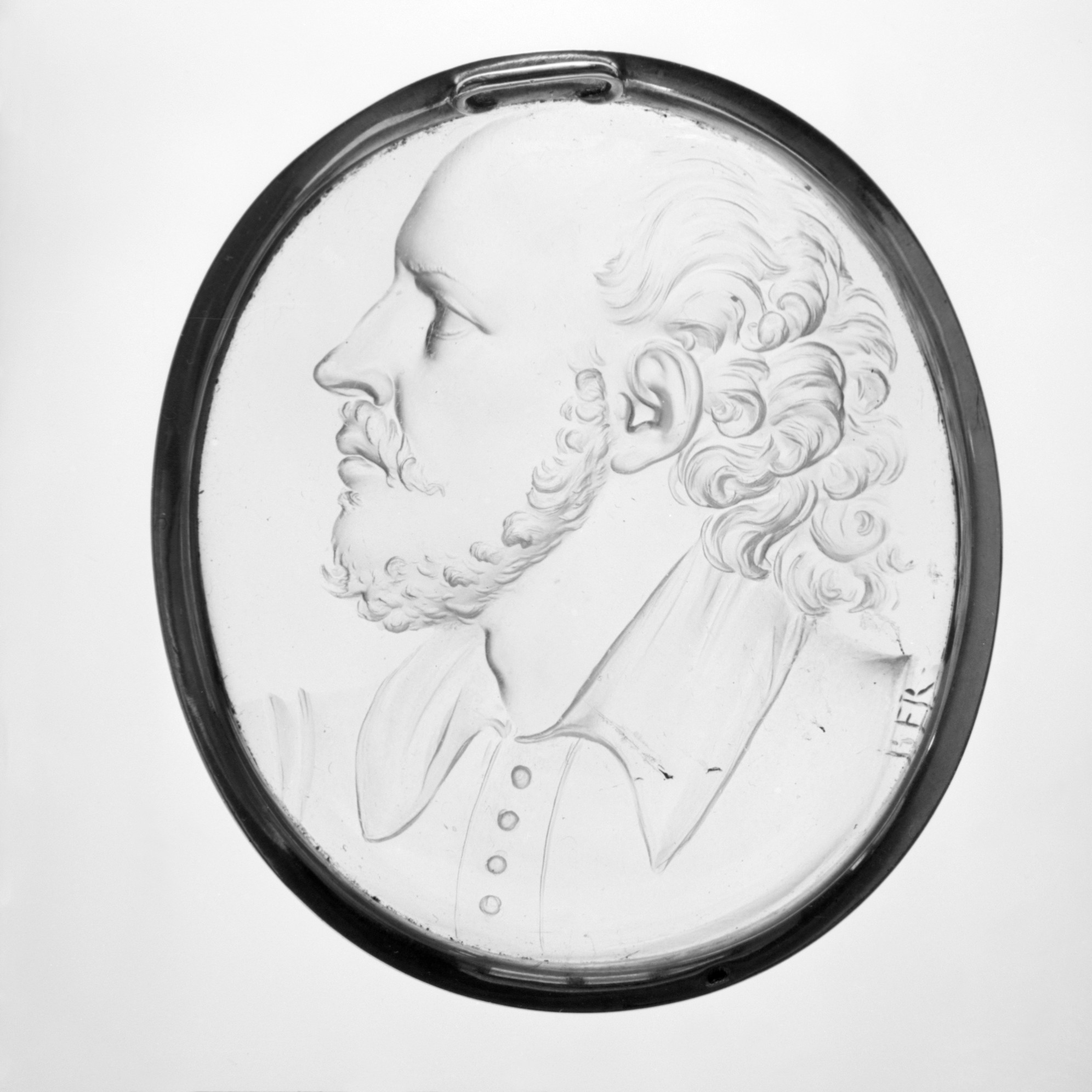
The Bard Reforged: Deconstructing the Immortal Quill in Glass and Gold
In the hallowed halls of Zoey Fashion Laboratory, we do not merely reference history; we perform a vivisection of its most sacred specters. The subject before us, William Shakespeare, is not a quaint relic of Elizabethan ruffles and velvet doublets, but a volatile nexus of linguistic invention, psychological depth, and temporal fluidity. For Spring/Summer 2026, we strip away the period costume to expose the raw, algorithmic chaos of his genius. Our chosen materials—prismatic glass and molten gold—are not decorative. They are the structural lexicon through which we translate the playwright’s iambic pentameter into a new form of wearable architecture. This is not homage; this is a hostile takeover of the canon, re-engineered for the post-human silhouette.
Linguistic Geometry: The Sonnet as Structural Scaffold
The foundational premise of this collection is the translation of Shakespeare’s prosody into three-dimensional space. We abandon the soft, organic draping of traditional theater costume in favor of a rigid, tessellated exoskeleton that mimics the mathematical precision of a sonnet’s 14 lines and its volta. Each garment is conceived as a poem fractured by a conceptual earthquake. The ‘quatrain’ becomes a series of interlocking, laser-cut glass plates that articulate with the body like a suit of armor for the mind. These plates are not flat; they are subtly curved and beveled to catch and distort light, creating a shifting, iridescent surface that references the duplicity of Shakespeare’s characters—the seeming versus the being.
Consider the ‘Macbeth’ corset, a piece that does not cinch the waist but rather extends outward in a brutalist cantilever. Here, the glass is smoked, almost black, absorbing light to represent the protagonist’s ambition. It is anchored by a single, razor-thin filament of gold that traces the spine, a literal interpretation of the "golden string" of fate that leads to the abyss. The innovation lies in the kinetic hinge system: each glass segment is connected via a micro-engineered, gold-alloy pivot that allows for a range of motion previously thought impossible in rigid materials. The wearer does not walk; they activate a series of controlled, percussive movements, a physicalized iambic rhythm.
Vitreous Alchemy: The Physics of Emotion
Our choice of glass is a deliberate rejection of textile softness. Glass is a liquid frozen in time, much like Shakespeare’s texts—fluid in interpretation yet crystallized in their historical moment. In this SS26 study, we manipulate the material at a molecular level. We employ a technique of thermal shock lamination, bonding layers of dichroic glass to a gossamer-thin substrate of recycled gold mesh. The result is a fabric that is paradoxically both brittle and supple, shattering into a controlled pattern under stress while retaining its structural integrity. This is the physical manifestation of tragedy: the moment of breaking, yet the form remains.
The ‘Ophelia’ cascade dress eschews the traditional skirt in favor of a waterfall of suspended glass filaments, each no thicker than a human hair, tipped with a bead of molten gold. As the model moves, these filaments create a visual and auditory cacophony—a delicate, chime-like whisper that evokes the madwoman’s songs. Yet, the silhouette is futuristic, a sharp, columnar form that narrows at the ankle, trapping the light within its depths. It is not a dress; it is a phononic sculpture, a wearable instrument that sonifies the character’s descent into silence.
Gilded Chaos: The Corrosion of Power
Gold, in our lexicon, is not a symbol of wealth but of decay. We treat the metal not as a polished finish, but as a volatile bio-film that appears to be actively corroding the glass structures it touches. Using a proprietary electrochemical process, we encourage the gold to bloom into irregular, dendritic formations across the surface of the glass. This creates a visual tension—the purity of the sonnet against the entropy of the narrative. The ‘Lear’ mantle, for instance, is a massive, shoulder-enveloping structure of raw glass shards, bound together by a latticework of this 'diseased' gold. The silhouette is monstrous, top-heavy, and unstable, mirroring the king’s fractured psyche. The gold here is not gleaming; it is mottled, pitted, and oxidized, appearing as a metallic fungus that consumes the logic of the garment itself.
Silhouettes for the Temporal Nomad
This collection abandons the waistline as an anchor. Our silhouettes are defined by negative space and counter-balance. We introduce the ‘Prospero’ harness—a complex network of gold and glass that suspends a single, massive shard of clear crystal behind the back, like a detached spine. This creates a forward-leaning, inquisitive posture, a physical embodiment of the sorcerer’s control and his eventual relinquishment of it. The front of the garment is stark, almost nude, a void against the explosive structuralism of the rear. This is the avant-garde imperative: to challenge the viewer’s gaze, to force a re-evaluation of what constitutes the ‘front’ and ‘back’ of a body, and to place the narrative weight upon the unseen.
The final piece, ‘The Tempest’s Eye,’ is a full-body garment constructed from thousands of individually hand-set, gold-flecked glass prisms. It functions as a living prismatic field, refracting the environment around the wearer into a kaleidoscopic blur. The silhouette is androgynous, an armored column that obscures all anatomical signifiers. It is the ultimate expression of Shakespeare’s most profound theme: that we are all actors upon a stage, and our identity is merely a function of the light we refract. This is not clothing for the future; it is a declaration of the future’s arrival, a testament to the fact that true innovation lies not in new materials, but in the radical re-contextualization of the old. The Bard’s quill is now a scalpel, and we are the surgeons of style.