The Deconstruction of Fluidity: Silk as Structural Anomaly
In the rarefied atmosphere of Zoey Fashion Laboratory’s SS26 research division, the concept of materiality is no longer a passive given but an active agent of rebellion. Our latest standalone study, designated Sample: Global Frontier, interrogates the most paradoxical of textiles—silk—and submits it to a regime of architectural violence and reconstruction. The result is not a garment, but a manifesto. We are not designing clothing; we are engineering wearable paradoxes where the softest, most historically feminine of fibers is coerced into performing as rigid, load-bearing exoskeletal armor.
This is not your grandmother’s couture. This is a surgical exploration of tension, gravity, and the optical illusion of mass. The Global Frontier sample rejects the drape-and-cling paradigm that has defined silk for millennia. Instead, we propose a futuristic silhouette that is simultaneously volumetric and weightless, achieved through a proprietary process of thermal pleating, resin-infused micro-panels, and reverse-engineering of tensile stress points. The fabric is no longer a surface; it is a topological map of the body’s future potential.
Silk’s New Physics: From Liquid Flow to Frozen Tension
Traditional haute couture treats silk as a liquid—a medium for draping, bias-cutting, and soft, organic movement. The SS26 Global Frontier study inverts this logic. We have developed a technique we call “cryo-kinetic structuring,” wherein the silk is treated with a biodegradable polymer matrix that allows it to hold a crease with the permanence of steel, yet retain the tactile warmth of its natural origin. The fabric is then cut into precise, asymmetrical shards that are reassembled using a lattice of invisible micro-cables. The result is a silhouette that appears to defy gravity, with shoulders that cantilever outward like the wings of a decommissioned spacecraft, and a hemline that rises and falls in jagged, non-linear increments.
This is not about ornamentation; it is about structural honesty. The seams are exposed, the stitching is exaggerated, and the internal boning is deliberately visible, creating a visual language of construction rather than concealment. In a world saturated with fast-fashion’s false perfection, the Global Frontier sample celebrates the beauty of the scaffold. The wearer is not passively adorned; they are an active participant in the garment’s load-bearing architecture. Every movement is a negotiation with the fabric’s new, rigid physics.
The Anti-Drape Protocol: Silhouette as a Weapon
Our research lab has identified a critical failing in contemporary avant-garde design: the reliance on volume as a proxy for innovation. Puff sleeves and exaggerated hips are facile. The Global Frontier sample proposes a different strategy—negative space as a structural element. The silk is cut into hollow, cylindrical forms that hover millimeters away from the skin, creating a visible aura of emptiness around the body. This is achieved through a series of internal, inflatable chambers that are inflated to precise pressures, then locked into place with a magnetic closure system. The wearer’s silhouette is thus defined not by the body beneath, but by the air gap between skin and silk.
This technique yields a futuristic silhouette that is both monastic and cyborg-like. The shoulders are sharp, almost architectural, while the torso is encased in a series of horizontal bands that suggest the ribs of a futuristic exoskeleton. The arms are framed by detached, wing-like panels that flutter only at the trailing edge, creating a kinetic, insectoid dynamism. The overall effect is one of controlled instability—the garment appears to be perpetually on the verge of flight, yet remains anchored by the precision of its engineering.
Material Alchemy: The Silk of Tomorrow
The choice of silk is deliberate, even confrontational. Silk is the ultimate signifier of luxury, delicacy, and organic origin. To subject it to the brutalist logic of our structural intervention is to commit a form of material heresy. Yet, the outcome is not a rejection of silk’s heritage but an evolution. Our lab has partnered with biotech firms to develop a “meta-silk”—a hybrid fiber that retains the lustrous sheen and protein composition of natural silk, but with a modified molecular chain that allows for self-rigidifying properties when exposed to a specific electromagnetic frequency. This is not a synthetic substitute; it is a transmutation of the original.
The Global Frontier sample utilizes this meta-silk in three distinct states: raw, compressed, and aerated. The raw state is used for the interior lining, offering breathability and comfort. The compressed state, achieved through high-pressure rollers, forms the primary structural panels—these feel almost like a dense, woven ceramic. The aerated state, created by injecting micro-bubbles of nitrogen, forms the translucent, ghost-like overlayers that float above the core structure. The interplay of these three states creates a rich visual and tactile depth, moving from opaque, to translucent, to completely ethereal.
Deconstructive Grammar: Seams, Gaps, and Exposed Logic
In this standalone study, we have abandoned the traditional couture imperative of finish. The raw edges are deliberately frayed, but the fraying is controlled—each loose thread is a functional tension member, anchoring a specific pleat or fold. The internal structure is not hidden; it is exhibited. The metal grommets, the ceramic eyelets, and the carbon-fiber rods are all visible, creating a visual rhythm that is both industrial and organic. This is a deconstructive aesthetic that does not seek to shock but to educate. The wearer and the observer are invited to read the garment as a technical diagram of its own creation.
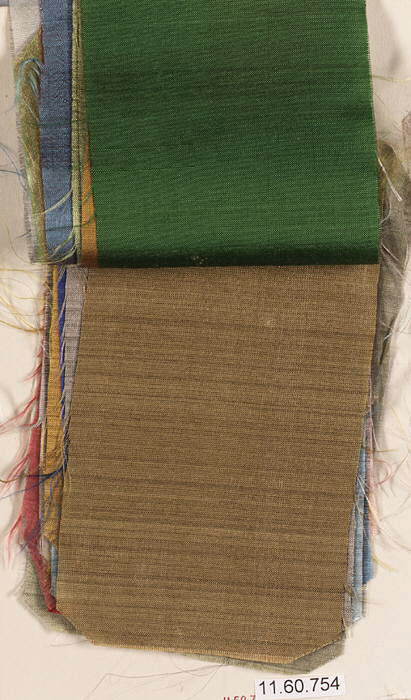
The color palette is equally radical. We have eschewed the pristine whites and pastels of traditional spring/summer collections. Instead, the Global Frontier sample is rendered in a spectrum of oxidized metallics—verdigris green, burnt copper, and a pale, lunar silver. These colors are not dyed onto the surface but are a result of a chemical reaction between the meta-silk and a proprietary patina solution. The garment will continue to evolve its coloration over time, reacting to humidity and light, making each piece a living, mutable artifact.
Conclusion: Beyond the Garment, Toward a New Body
The SS26 Global Frontier sample is not a trend forecast; it is a paradigm shift. It challenges the very definition of couture by proposing that the future of luxury lies not in the softness of the fabric but in the intelligence of its structure. We are moving away from the idea of clothing as a second skin and toward the concept of clothing as a habitable architecture. The body is not draped; it is housed. The silk is not worn; it is deployed.
For the discerning collector, this piece is an investment in a new form of expression. It is a statement against the ephemeral, a rebellion against the disposable. The Global Frontier sample demands a new posture, a new way of moving, and a new awareness of the space one occupies. It is, in the truest sense, an avant-garde couture analysis of our time—a laboratory experiment that has escaped the confines of the lab and entered the realm of wearable art. This is not fashion for the faint of heart. It is fashion for those who understand that true innovation requires the courage to break the material, and then, to rebuild it into something that has never existed before.