Deconstructing the Msimsim: An Avant-Garde Reading of Tetouan’s Silk Legacy
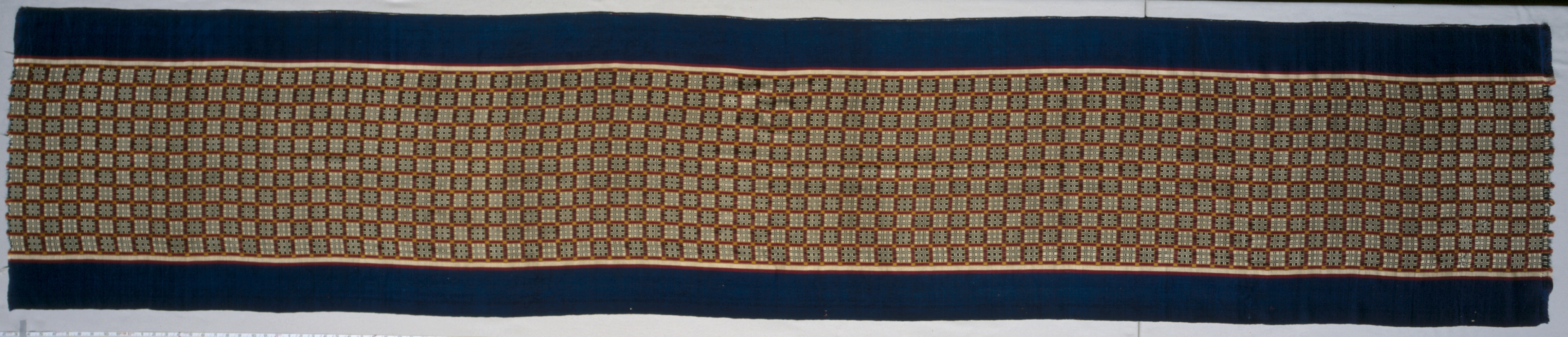
At Zoey Fashion Lab, we do not merely observe textiles; we interrogate them. We strip away the patina of familiarity to expose the raw, structural poetry beneath. Today’s subject, a Moroccan msimsim wall hanging from Tétouan, presents a fascinating paradox. On the surface, it is a relic of North African domestic artistry—a woven panel of silk and dye. Yet, through an avant-garde lens, this object transcends its geographic and historical confines. It becomes a proto-conceptual artwork, a manifesto of material intelligence, and a precursor to modern textile deconstruction. The Archive Resonance, which situates this piece within the 16th to 17th centuries, invites us to see it not as a static artifact but as a dynamic node in a centuries-long dialogue between craft, commerce, and cultural subversion.
Material Subversion: Silk as a Political and Sensory Agent
The choice of silk in a Moroccan weaving context is immediately significant. Silk was not indigenous to North Africa; it was a luxury import, often traded along the trans-Saharan and Mediterranean routes, carrying with it the weight of Ottoman, Andalusian, and even Far Eastern influence. In Tétouan, a city with a profound Andalusian refugee heritage, silk was not merely a fiber. It was a memory of a lost paradise—Granada—and a symbol of refined urbanity in a rural landscape. For the avant-garde analyst, this material choice is a form of cultural appropriation in reverse. The weaver did not passively receive an exotic material; they actively subverted its foreignness, bending it to a local, geometric vernacular. The silk’s natural lustre is not used for ostentatious display but is disciplined into tight, repetitive patterns, creating a tension between the material’s inherent opulence and the design’s austere rhythm. This is the first act of deconstruction: the domestication of the exotic through rigorous structural control.
The Grammar of Dye: Color as a Structural Load-Bearing Element
In contemporary fashion, color is often applied as a surface finish. In the msimsim, dye is structural. The palette—typically deep indigos, madder reds, and ochre yellows—derived from natural sources, is not decorative but architectural. Each hue demarcates a zone of the composition, creating a visual scaffolding that holds the intricate motifs in place. The avant-garde eye sees this as a precursor to color-field painting or even the hard-edge abstraction of the 20th century. The weaver’s use of negative space, where the undyed silk or the natural warp shows through, functions as a "breath" within the dense visual field. This is not accidental; it is a deliberate manipulation of light absorption and reflection. The dye creates a rhythm of pause and acceleration, forcing the viewer’s eye to navigate the surface as if reading a musical score. In this sense, the msimsim is not a picture of something; it is a performance of color, where the dye acts as a protagonist in a drama of light and shadow.
Pattern Disruption: The Avant-Garde Within Tradition
Traditional Moroccan weaving is often celebrated for its symmetry, its strict adherence to geometric grids. However, a closer, deconstructionist analysis of the msimsim reveals subtle anomalies—a deliberate misalignment, a slight variation in a motif’s size, a thread that deviates from the grid. These are not errors. They are the weaver’s signature, a quiet rebellion against the tyranny of perfect repetition. In the context of the 16th-17th century, this was a radical act. It parallels the modern avant-garde’s fascination with the objet trouvé or the deliberate flaw in minimalist sculpture. The weaver, working within a rigid tradition, found a space for individual expression by disrupting the pattern’s flow. This act of micro-subversion is the very essence of avant-garde thinking: to work within a system while simultaneously undermining its foundational logic. The msimsim, therefore, is not a passive decorative object but an active philosophical statement about the relationship between order and chaos, tradition and innovation.
From Wall to Body: Recontextualizing the Msimsim in Modern Fashion
For Zoey Fashion Lab, the msimsim’s true potential lies in its translation from a two-dimensional wall hanging to a three-dimensional bodily architecture. The avant-garde designer does not copy the pattern but extracts its structural DNA. Consider the following applications:
- Deconstructed Silhouettes: The hanging’s rectangular format can be reinterpreted as a kimono-like cloak or a modular wrap, where the "negative space" of the weave becomes the garment’s drape.
- Material Hybridity: The silk’s texture can be replicated or contrasted with modern technical fibers, such as recycled nylon or bio-fabricated cellulose, creating a dialogue between ancient luxury and contemporary sustainability.
- Color Blocking as Armor: The dye’s structural zones can be transformed into bold, asymmetric panels in a jacket or dress, turning the visual "scaffolding" into literal seams and darts.
- Digital Deconstruction: By scanning the msimsim and distorting its grid through algorithmic manipulation, we can generate new patterns that are both a homage and a radical departure—a form of generative design that honors the original weaver’s spirit of innovation.
Conclusion: The Msimsim as a Timeless Proto-Manifesto
The Tétouan msimsim is far more than a historical curiosity. It is a testament to the fact that avant-garde impulses are not exclusive to the modern era. The weaver of the 16th century was already engaging in a sophisticated form of material deconstruction, using silk and dye to challenge cultural hierarchies, to embed individual voice within collective tradition, and to create a visual language that is both local and universal. At Zoey Fashion Lab, we view this wall hanging as a foundational text—a blueprint for how to treat fabric not as a passive surface but as an active, thinking medium. The msimsim teaches us that true innovation is not about discarding history but about re-reading it with a critical, avant-garde eye. It is a silent, silken manifesto that continues to resonate, urging us to find the radical within the traditional, and to weave our own disruptions into the fabric of the future. The archive is not a repository of the past; it is a launching pad for the next disruption.