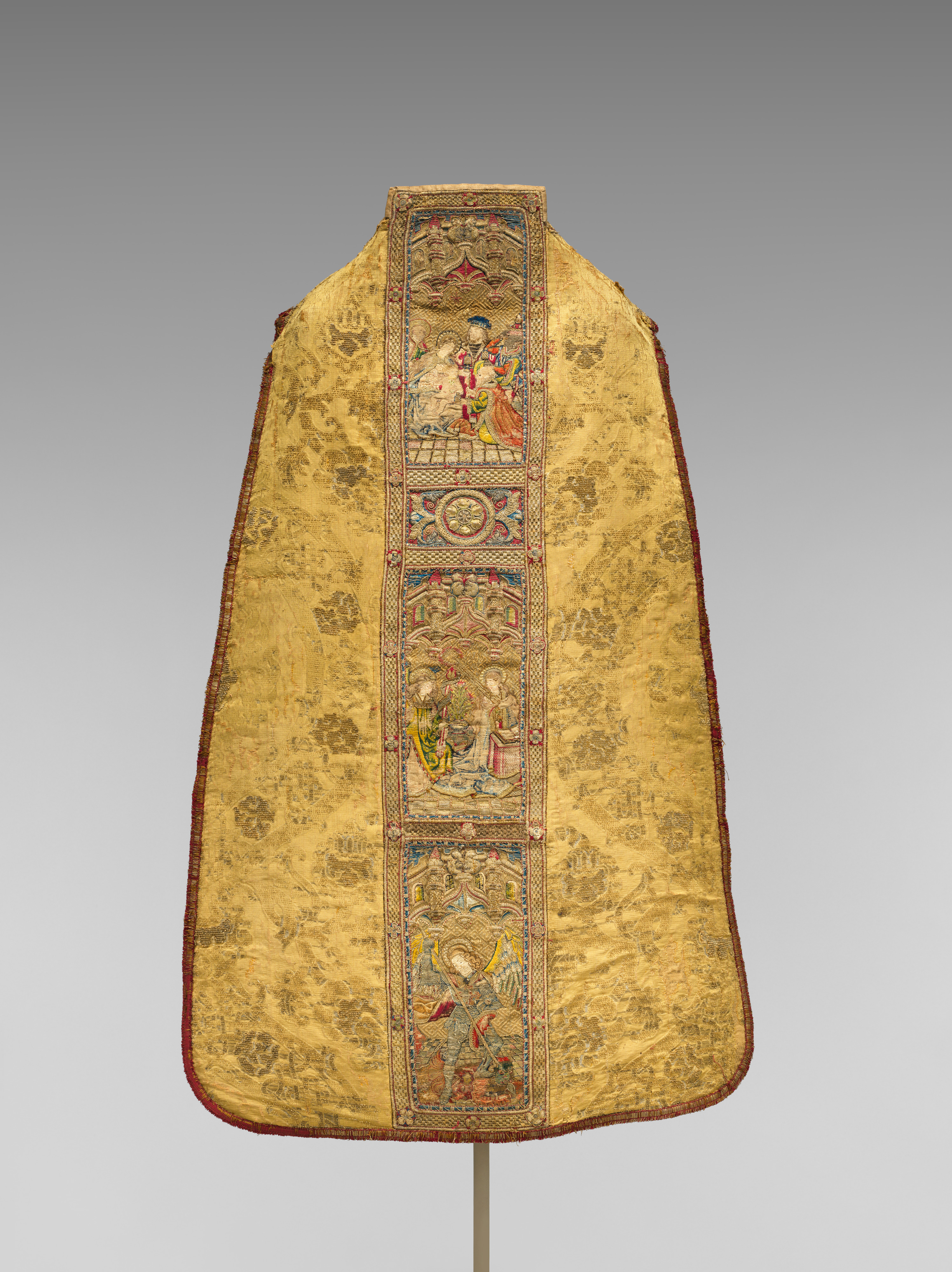
The Chasuble Reconfigured: A Study in Sacred Architecture for SS26
The chasuble—historically a vestment of liturgical weight, a garment of draped authority—has long been confined to the lexicon of ceremonial dress. For Zoey Fashion Laboratory’s SS26 avant-garde study, we sever this relic from its ecclesiastical moorings and reforge it as a blueprint for futuristic silhouette. The subject is not a revival; it is a reconstruction of the back as a site of structural rebellion. Our origin point, the Global Frontier, denotes a spatial and cultural liminality—a place where the sacred meets the synthetic, where drapery becomes data. The material, pure silk, is our volatile medium: a substance of liquid luminosity that demands architectural discipline. This analysis dissects how the chasuble back, stripped of its front-facing ritual, becomes a standalone manifesto for SS26’s most radical propositions in garment engineering.
Deconstructing the Vestigial Form: From Liturgy to Load-Bearing Surface
Traditional chasuble construction prioritizes the front—the pectoral plane, the visible emblem. We invert this hierarchy. The back panel is no longer a trailing afterthought but the primary load-bearing surface of the entire composition. In our SS26 iteration, the silk is not merely draped; it is tensioned. We employ a series of internal, invisible boning channels that radiate from the cervical vertebrae outward, creating a fan-like expansion that mimics the ribbed structure of a futuristic exoskeleton. This is not a silhouette that follows the body; it is a silhouette that precedes the body, carving negative space around the wearer’s spine. The result is a garment that stands independent of its occupant—a sculptural shell that, when viewed from behind, reads as a monolith of compressed light. The silk’s natural fluidity is arrested mid-motion, frozen by micro-tensioned seams that create a topographic map of the back’s muscular landscape. This is deconstruction not as decay, but as precision engineering of absence.
Silk as a Structural Paradox: Fluidity Encoded in Rigidity
Silk is typically the material of surrender—it clings, it flows, it whispers. For this Global Frontier study, we weaponize its paradox. By treating the silk with a low-temperature polymer resin in selective zones, we achieve a gradient of stiffness that transitions from liquid at the shoulders to architectural at the hem. The back’s lower third flares into a sharp, geometric train—not a sweeping romantic gesture, but a sharpened blade of fabric that cuts the air. This is achieved through a technique we term "fossilized drapery": the silk is pleated into origami-like facets, then heat-set to lock the folds into permanent, crystalline angles. The result is a chasuble back that appears both impossibly soft and unyieldingly hard. From the front, the garment is minimal—a sleek, almost monastic column. The revelation occurs upon rotation: the back erupts into a cascade of triangulated silk shards, each facet catching light at a different intensity. This is the SS26 signature: a silhouette that is a performative reveal, a garment that demands a 360-degree gaze.
The Global Frontier Aesthetic: Nomadic Techno-Ritual
The Global Frontier origin is not a geographical reference; it is a conceptual horizon where nomadic heritage meets extraterrestrial futurism. In this chasuble, we encode that duality through a series of kinetic attachment points—small, magnetic clasps hidden along the spine’s seam. These allow the wearer to modularly attach or detach additional silk panels, transforming the back’s volume from a compact capsule to a vast, suspended canopy. This is not mere versatility; it is a commentary on post-geographic identity. The chasuble becomes a portable architecture, a wearable territory that expands and contracts based on the wearer’s context. The silk’s natural sheen is enhanced with a micro-encapsulated finish that reacts to body heat, subtly shifting the fabric’s opacity. As the wearer moves, the back’s surface appears to breathe—a slow, organic pulse that contrasts with the sharp, mechanical lines of the construction. This is the tension of the Global Frontier: the organic and the engineered, the sacred and the speculative, coexisting in a single, tensile membrane.
Structural Innovation: The Cantilevered Collar and Zero-Gravity Hem
Our most radical intervention is the cantilevered collar—a high, rigid ring of folded silk that rises from the nape of the neck and projects forward, unsupported by the shoulders. This is achieved through a hidden lattice of carbon-fiber filaments, woven into the silk’s selvage, that allow the collar to float a full five centimeters off the skin. The effect is of a halo, but a technological one—a signal of intent rather than sanctity. The back’s hem, meanwhile, is engineered with a negative-tension drawcord system that allows the wearer to alter the silhouette’s length and volume in real-time. Pulling a discreet cord at the side seam causes the back’s lower panels to furl upward, creating a scalloped, asymmetric edge that exposes the lower spine. This is not a functional afterthought; it is a choreographic instrument, turning the act of dressing into a live performance of structural modification. The chasuble back, in this context, is no longer a static object but a responsive system—a garment that listens to the body’s gestures and replies with altered geometry.
Conclusion: The Back as a Frontier of Expression
For SS26, Zoey Fashion Laboratory declares that the future of couture lies not in the front-facing spectacle, but in the forgotten plane—the back—as a canvas for radical, structural storytelling. This chasuble is a definitive statement: that silk, the most ancient of luxury fibers, can be coerced into shapes that defy its nature; that the vestment’s historical weight can be shed to reveal a lightweight, modular, and kinetic future. The Global Frontier is not a place we travel to, but a condition we wear. In this standalone study, the chasuble back becomes a mirror of our contemporary condition—a surface of tension, adaptability, and hidden complexity. It is not a garment for the timid. It is architecture for the body’s rear guard, a silent declaration that what we leave behind is as deliberate as what we present. This is the new avant-garde: not the destruction of form, but its re-engineering into a silhouette that has yet to be named. The chasuble is dead; long live the chasuble—reborn as a monument to the unseen.