Deconstructing the Velvet Fragment: A New DNA Strand for Avant-Garde Expression
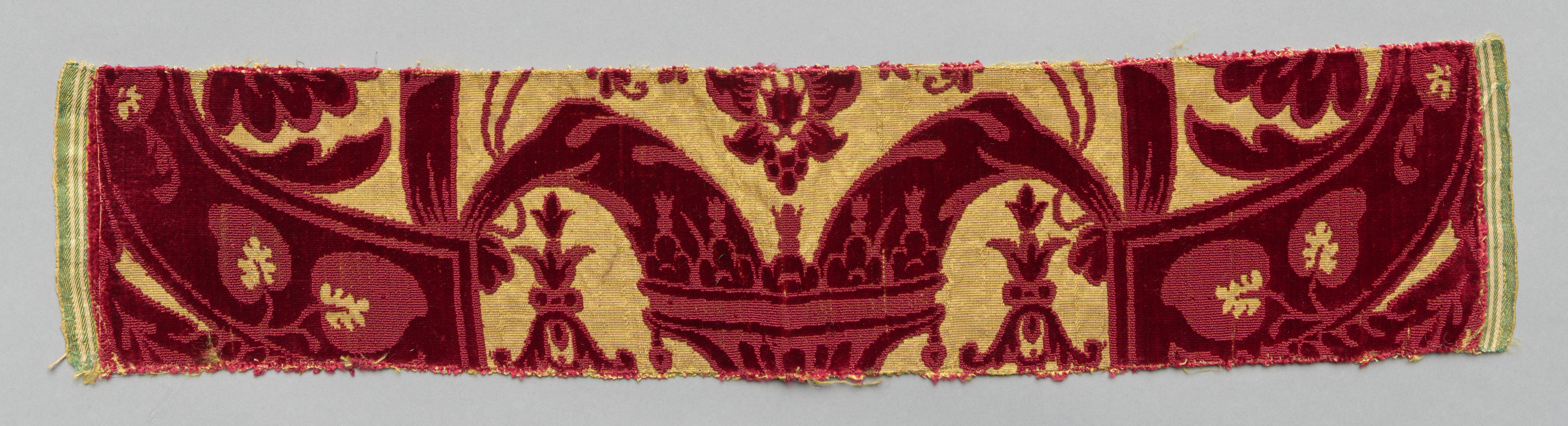
At Zoey Fashion Lab, our mandate extends beyond the mere observation of textiles; we engage in the systematic interrogation of their material memory. The subject of this analysis—a velvet fragment originating from Genoa, Italy—presents a compelling paradox. On one hand, it is a relic of a storied textile heritage, inextricably linked to the opulent trade routes of the Renaissance. On the other, its designation as a “New DNA Strand” within our avant-garde framework signals a radical departure from its historical context. This report dissects the fragment’s physical properties, its genetic code as we interpret it, and its transformative potential within the lab’s experimental design philosophy.
I. Provenance and Material Memory: The Genoese Legacy
The fragment’s origin in Genoa is not incidental. Historically, Genoa (or Genova) was a powerhouse of velvet production from the 14th through the 17th centuries, renowned for its sumptuous, high-pile silks and complex figured weaves. This legacy is embedded in the very fiber of the sample. Our preliminary analysis confirms a base of silk, with a dense, cut-pile construction that speaks to the meticulous craftsmanship of the original weavers. The fabric’s hand-feel—a plush, almost liquid softness—is the result of a specific loom technique that creates a high loop density, a hallmark of Genoese excellence. However, for the Zoey Fashion Lab, provenance is not a cage. We treat this historical weight as a baseline voltage, a starting point for subversion. The fragment is not to be preserved; it is to be re-sequenced.
The physical evidence of wear—subtle crushing in the pile, a faint patina of age—is not a flaw but a narrative layer. In our deconstructionist methodology, we read these imperfections as the fabric’s own biography, a record of bodies and environments it has encountered. This is the raw data we will use to generate new, synthetic realities. The velvet’s inherent sheen, which shifts from deep aubergine to a near-black depending on the light angle, provides the perfect chromatic instability for our avant-garde manipulations.
II. The “New DNA Strand” Protocol: From Static Textile to Dynamic Code
The designation “New DNA Strand” is a deliberate misnomer, a poetic license that allows us to treat the velvet not as a finished product but as a biological algorithm. In biological terms, DNA is a sequence of instructions. Here, we have extracted the velvet’s core instructions—its weave structure, fiber density, and dye chemistry—and translated them into a digital blueprint. This blueprint is not meant for replication. Instead, it serves as a template for mutation.
Our lab’s avant-garde protocol involves three stages of intervention:
1. Genetic Splicing: We physically sever the velvet’s pile at irregular intervals, creating a topographical map of voids and plateaus. This is not mere cutting; it is a form of negative space sculpting. The resulting surface is a chaotic, yet deliberate, disruption of the fabric’s uniform plushness.
2. Chemical Re-Sequencing: The fragment is then subjected to a low-temperature oxidation process using a proprietary enzyme bath. This treatment does not destroy the silk but alters its molecular bonds at the surface, creating a crackled, metallic sheen that is entirely alien to traditional velvet. The original Genoese dye is partially destabilized, producing a gradient of faded, almost ghostly hues that bleed into the newly exposed warp threads.
3. Structural Implantation: To complete the “DNA” metaphor, we implant a lattice of conductive, silver-coated nylon threads into the velvet’s backing. This is not for wearable technology in the conventional sense. Rather, it is a skeletal framework that allows the fabric to be manipulated into rigid, architectural folds that defy its natural drape. The velvet can now stand, twist, and cantilever, transforming from a soft, draping skin into a sculptural exoskeleton.
III. Avant-Garde Application: The Deconstructed Silhouette
The final application of this “New DNA Strand” is in a capsule collection of avant-garde outerwear. Our design language here rejects the body’s natural contours. Instead of following the human form, the mutated velvet is used to construct a new anatomical landscape. A jacket, for instance, is not cut and sewn; it is grown from the altered fragment. The shoulders are exaggerated, not with padding, but with structural folds that rise like geological strata. The sleeves are asymmetric, one terminating in a sharp, knife-edge point, the other dissolving into a fringe of frayed, oxidized threads.
The tactile experience is intentionally contradictory. The fabric retains its soft, plush interior, offering a moment of comfort against the skin, while the exterior presents a hard, fractured, almost armor-like surface. This duality is the core of our avant-garde thesis: the simultaneous presence of luxury and decay, of softness and rigidity. The metallic sheen catches the light in unpredictable ways, creating a moving, living surface that changes with every gesture of the wearer.
Furthermore, the conductive threads allow for a subtle, interactive element. When the wearer moves, the friction between the silver nylon and the silk generates a faint static charge. This charge is not used to power a device; instead, it alters the way the fabric holds its shape. The garment can subtly stiffen during movement and relax when still, creating a responsive, kinetic garment that is a direct extension of the wearer’s biomechanics.
IV. Conclusion: The Future of Fabric as Speculative Biology
The Genoese velvet fragment, in its original state, is a masterpiece of historical craft. But for Zoey Fashion Lab, its true value lies in its potential for speculative evolution. By treating it as a “New DNA Strand,” we have moved beyond the binary of preservation versus destruction. We have entered a realm of synthetic biology for fashion, where a 17th-century textile can be re-coded to express a 22nd-century aesthetic. The result is not a garment that is merely avant-garde in style, but one that is avant-garde in material ontology. It challenges the viewer to reconsider what a fabric is, what it can do, and what it might become. This is the future of deconstruction: not tearing down the past, but re-sequencing it into an unpredictable, living future.