Deconstructing the Halberd: A Metallurgical and Materialist Analysis for Avant-Garde Application
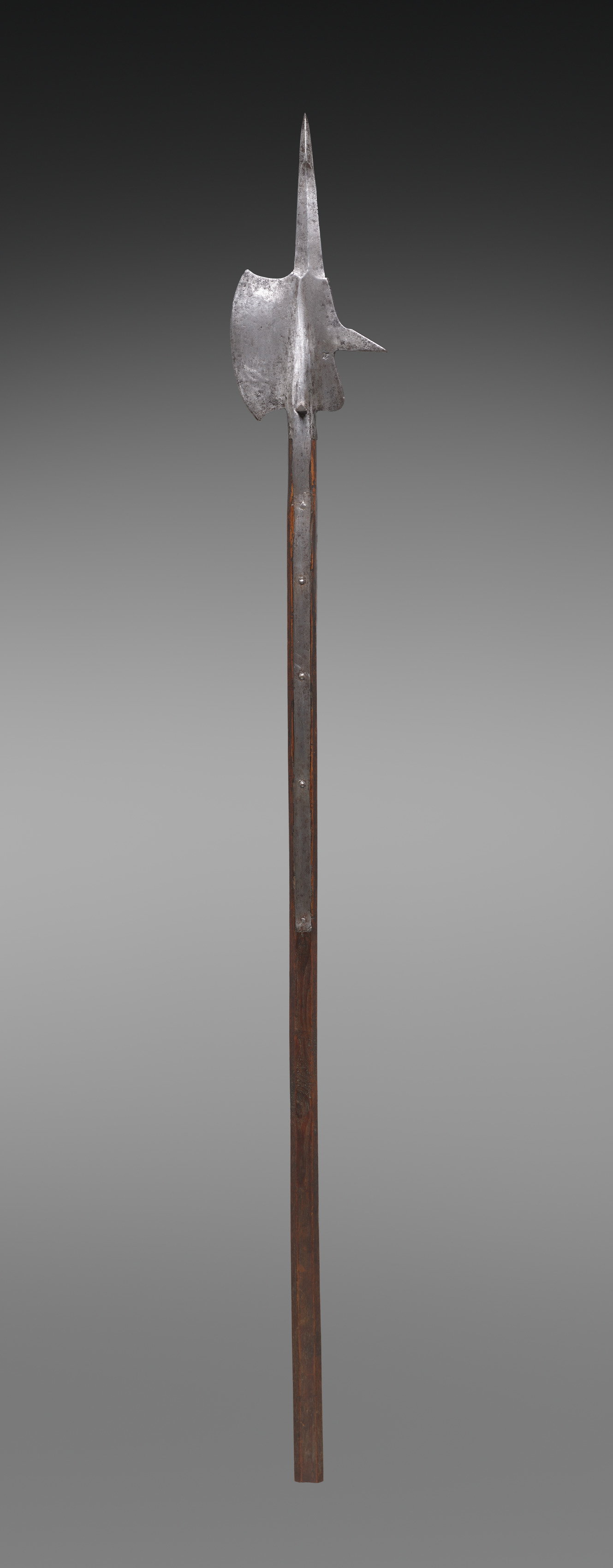
At Zoey Fashion Lab, our mandate extends beyond the conventional draping of textiles. We engage in the systematic deconstruction of historical artifacts, extracting their intrinsic structural logic and translating it into a new lexicon of wearable form. The subject of this analysis—the Swiss Halberd, specifically a specimen featuring a steel head mounted on a new rectangular wood haft with planed corners—presents a formidable challenge and an extraordinary opportunity. Referenced against our internal "New DNA Strand" paradigm, this weapon is not merely a tool of medieval warfare; it is a blueprint for architectural rigidity, geometric tension, and aggressive elegance.
I. The Steel Head: A Study in Asymmetric Tension
The primary component of the halberd is its forged steel head, a complex amalgamation of a thrusting spike, a cleaving axe blade, and a hooked back-spike. In our deconstruction, we do not view these as separate functions but as a single, continuous line of force. The thrusting spike represents verticality and linear precision, a direct counterpoint to the curved, sweeping energy of the axe blade. This dichotomy—the straight line versus the arc—is the foundational tension we seek to replicate in avant-garde silhouettes.
For fabric application, we translate this steel geometry into structured shoulder pads that terminate in sharp, asymmetric points, echoing the spike's trajectory. The axe blade's curvature informs the drape of a peplum or a dramatic, single-sided collar that sweeps across the torso, creating a visual slash. The back-spike, often overlooked, is the element of surprise; in our designs, this manifests as a concealed structural seam or a hidden fastening that disrupts the garment's primary silhouette, adding a layer of complexity that reveals itself upon movement. The steel's inherent properties—its cold luster, its unyielding strength, its capacity for both brutal impact and fine edge—are translated through the use of high-density technical fabrics, metallic-coated leathers, and rigid, resin-treated wools that hold their shape with uncompromising authority.
II. The Haft: Rectilinear Geometry and Tactile Contrast
Contrasting the organic complexity of the steel head is the haft: a new, rectangular wood haft with planed corners. The specification of "new" is crucial. It signifies a departure from the weathered, battle-worn original, presenting a pristine, untouched surface. The rectangular cross-section is a deliberate rejection of the more common oval or cylindrical haft. It introduces a sense of manufactured precision, a sharp-edged, almost brutalist modernity. The "planed corners" further refine this, softening the absolute right angles just enough to prevent clinical sterility, adding a subtle, tactile bevel.
In our New DNA Strand reference, this haft represents the structural skeleton of the garment. It is the internal corsetry, the boning, the architectural seams that provide the foundation upon which the more fluid elements can rest. We propose translating the rectangular profile into exaggerated, boxy blazers with defined, sharp shoulders and a straight, columnar silhouette. The planed corners become softened, rolled seams that prevent the garment from feeling overly rigid, offering a nuanced interplay between hard structure and gentle give. The wood's grain, though new, implies a natural origin; we echo this by pairing the severe geometry with organic, textured fabrics—raw silk, heavy linen, or a bouclé with a pronounced, uneven weave. This creates a dialogue between the man-made, rectilinear precision of the haft and the inherent, unpredictable irregularity of the natural fiber.
III. The New DNA Strand: Weaving History into the Future
The "New DNA Strand" is our internal methodology for re-contextualizing historical artifacts. It does not seek to replicate the past but to isolate its core genetic markers—in this case, the halberd's principles of opposition, balance, and functional aggression—and re-sequence them into a contemporary, avant-garde expression. The halberd is a weapon of extremes: it can slash, thrust, and hook. It is a multi-functional tool of immense versatility. Our garments must embody this same versatility, but translated into the language of fashion.
This translates to modular design. A single garment, inspired by the halberd, should be capable of multiple configurations. A cape, structured with the spike's rigidity, can be detached to reveal a sharp, axe-blade-inspired vest. Sleeves can be removed, altering the silhouette from a powerful, rectangular column to a lean, asymmetric line. The "aggression" of the weapon is not translated as literal violence, but as a confident, confrontational aesthetic. It is the sharpness of a collar, the precision of a seam, the deliberate placement of a pocket that disrupts the expected flow. The wearer is not merely adorned; they are armed with an attitude of unassailable self-possession.
IV. Material Synthesis and Construction Methodology
The final analysis concerns the synthesis of materials. The halberd is a study in contrasts: cold steel against warm wood, hard metal against organic fiber. Our construction methodology must honor this. We propose a primary palette of gunmetal grey, oxidized bronze, and deep, charcoal black to echo the steel's patina. Against this, we introduce the warm, pale tones of new oak—honey, sand, and bleached beige—to represent the haft. The textures must be equally disparate: high-shine, liquid metallic finishes for the "steel" elements, and matte, dry, almost powdery textures for the "wood" elements.
Construction techniques will employ laser-cut precision for the sharp, architectural pieces, ensuring clean, unyielding lines. The "wood" elements will be constructed using traditional tailoring methods, with hand-finished seams and a focus on drape and body. The connection points—where the "steel" meets the "wood"—will be the most crucial design detail. We will use exposed, industrial-grade zippers, large-scale metallic grommets, and structural rivets, not as mere fastenings, but as deliberate, sculptural accents that highlight the junction of the two disparate materials, celebrating the very act of connection and the tension it creates.
In conclusion, the Swiss Halberd, when subjected to the rigorous deconstruction of Zoey Fashion Lab, yields a rich vein of design potential. It is a testament to the enduring power of functional form and a perfect catalyst for an avant-garde collection that is both intellectually rigorous and visually arresting. It is not a costume; it is a philosophy of strength, precision, and audacious geometry, woven into the very fabric of the future.