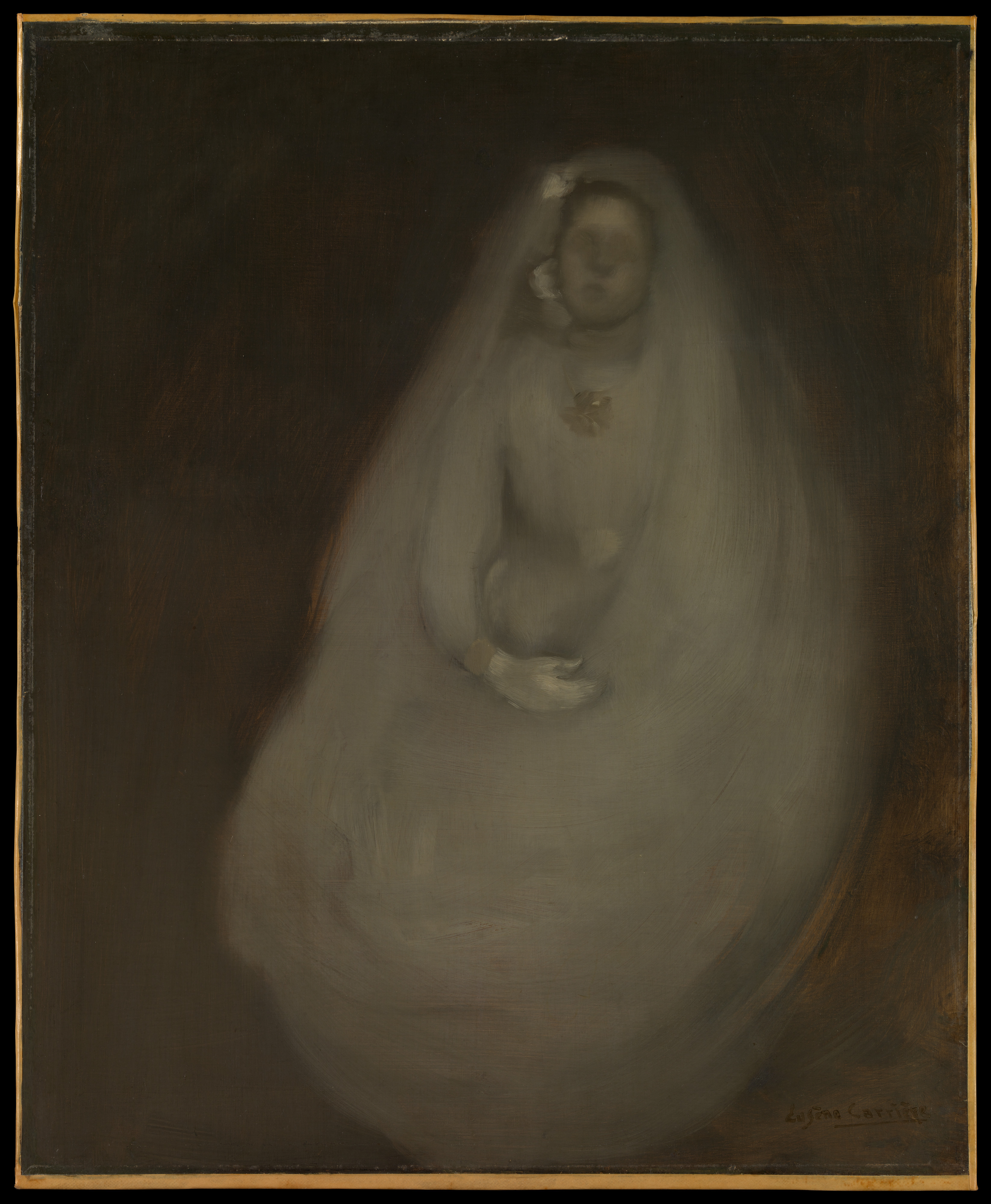
The First Communion: A Ritual of Deconstruction for the SS26 Frontier
In the rarefied atmosphere of Zoey Fashion Laboratory, we do not merely observe cultural rites; we dissect them, reconstruct their skeletal logic, and reissue them as prophecy. For the SS26 collection, our gaze turns to a seemingly archaic ceremony—The First Communion. Yet, within this global frontier of shifting values, this ritual of innocence and purity becomes a volatile substrate for our most aggressive architectural experiments. We are not interested in nostalgia. We are interested in the tension between sanctified memory and post-human possibility. The result is a standalone avant-garde study that weaponizes the ethereal, rendering the communion dress as a site of structural rebellion.
Deconstructing the Sacrament: From Veil to Visor
The traditional First Communion uniform—a white dress, a veil, gloves, and a prayer book—is a lexicon of restraint and conformity. Our laboratory’s methodology inverts this lexicon. The veil, historically a symbol of modesty and spiritual enclosure, is re-engineered as a biometric visor fabricated from thermoformed, pearlized mylar. It does not obscure the face to hide it; it obscures to project. Embedded with micro-LED filaments, the visor scans the wearer’s ocular movements and projects a digital halo of their own neural activity. The silhouette is no longer a soft, cascading waterfall of fabric but a hard, volumetric shield that interrupts the expected line of the shoulder. This is not a rejection of purity; it is a redefinition of it—purity as data, as a closed-loop system of self-knowledge.
The dress itself undergoes a radical excision. We sever the bodice from the skirt, leaving a deliberate negative space of four inches, exposing a core of carbon-fiber stays that mimic the ribcage. This "exoskeletal corsetry" is not about cinching the waist but about framing the void. The gap suggests a body in transition, a being that has outgrown its biological casing. The skirt, instead of a full A-line, is constructed from panels of upcycled communion lace that have been laser-cut into geometric fractals. These panels are then suspended from a lightweight titanium hoop structure, creating a silhouette that is simultaneously rigid and kinetic—a moving cage that echoes the architectural brutalism of a sacred monolith.
Material Alchemy: Oil, Canvas, and the New Skin
Our "Material: Oil on canvas" directive is not a literal instruction but a conceptual catalyst. We translate the painterly gesture into fabric innovation. The primary textile for this study is a hand-poured silicone canvas, embedded with white oil pigment and crushed mother-of-pearl. This creates a surface that is not merely white but a luminous, dimensional topography—each panel reflects light differently, mimicking the impasto strokes of a master painting. The fabric is heavy, almost liquid, yet it is cut with surgical precision to stand away from the body, creating a silhouette that feels like a frozen moment of paint in motion.
This "canvas" is then treated with a proprietary catalytic finish that allows it to harden into sculptural pleats without stitching. The pleats are not soft; they are sharp, angular, and reminiscent of fractured glass. They are arranged asymmetrically, with a single, aggressive spiral that wraps from the left hip, across the torso, and terminates in a sharp point at the right shoulder blade. This is a structural innovation that defies the traditional draping of a communion gown. The garment is worn, but it is also a self-supporting artifact, a wearable sculpture that exists independently of the body’s movement.
Futuristic Silhouettes: The Asymmetrical Halo and the Inverted Train
The defining silhouette of this avant-garde study is the Inverted Train. Instead of trailing behind the wearer, the train is projected forward, over the shoulder, and is attached to a high, mandarin-style collar. This train is a single, unbroken sheet of the silicone canvas, measuring three meters in length. It is folded in a complex origami pattern that, when released, expands into a massive, wing-like structure that frames the face. This is not a sign of humility; it is a declaration of aerodynamic divinity. The wearer becomes a hybrid—part cherub, part warplane. The forward projection forces the body to lean back slightly, altering the center of gravity and creating a tense, heroic posture that is both confrontational and devotional.
Complementing this is the Asymmetrical Halo. We have abandoned the circular halo for a torqued, elliptical ring of brushed aluminum that is mounted on a single, articulated arm at the nape of the neck. The ring is offset, hovering just above the left ear and dipping below the right jawline. This creates an unbalanced, dynamic frame that challenges the symmetry of traditional religious iconography. The halo is not a passive backdrop; it is an active component, with a series of micro-motors that allow it to tilt and rotate in response to the wearer’s pulse rate. The more anxious the wearer, the more the halo spins—a visible manifestation of internal turmoil rendered as avant-garde spectacle.
Structural Innovation: The Pneumatic Chapel
Our most radical innovation is the Pneumatic Chapel Sleeve. The sleeves of the communion dress are reimagined as inflatable chambers, constructed from a bonded nylon and latex composite. When deflated, they are sleek, almost invisible. When activated by a small, wearable compressor, they inflate into massive, spherical volumes that double the wearer’s width. This is not a gimmick; it is a commentary on the ephemerality of sacred space. The sleeves are a portable chapel, a moment of contained awe that can be expanded or collapsed at will. The silhouette shifts in real-time, from a narrow, minimalist column to a monumental, globular form that evokes the dome of a cathedral. This is the ultimate expression of adaptive couture—a garment that is not static but a living, breathing architecture.
Conclusion: The Communion of the Future
This standalone avant-garde study for SS26 does not celebrate the First Communion; it interrogates its very premise. By stripping the ritual of its sentimental veneer, we expose its core as a powerful framework for exploring identity, purity, and the human-machine interface. The futuristic silhouettes we have developed—the forward-projected train, the torqued halo, the pneumatic sleeves—are not mere flights of fancy. They are functional prototypes for a new kind of ceremonial dress, one that acknowledges the complexity of a globalized, digitized, and increasingly post-human world. At Zoey Fashion Laboratory, the communion dress is no longer a garment of finality; it is a launchpad for the next species of fashion. It is a promise, not of innocence, but of infinite, structural becoming.