Deconstructing the Velvet Fragment: A New DNA Strand for Avant-Garde Expression
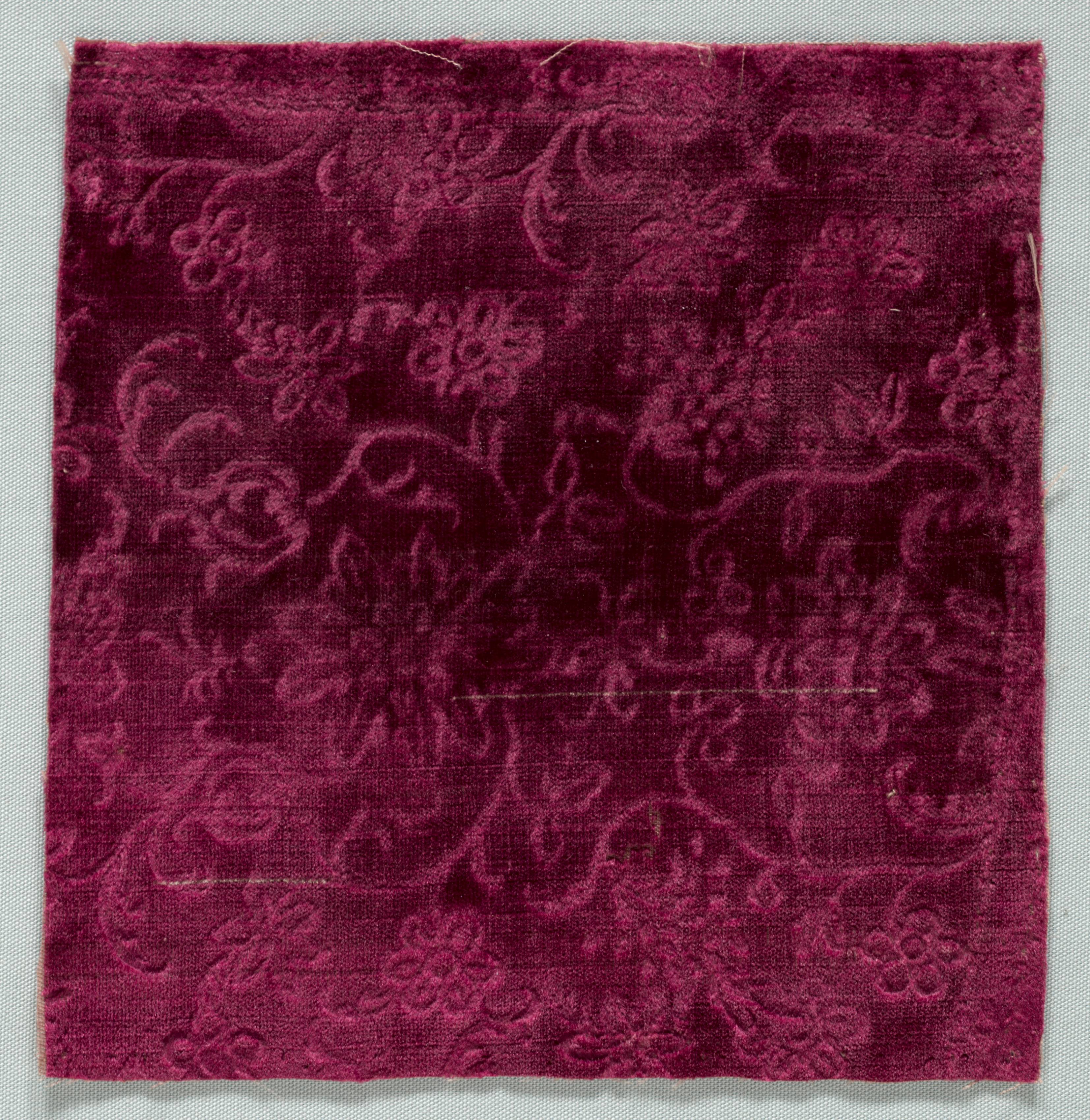
At Zoey Fashion Lab, our mandate extends beyond the mere observation of historical textiles. We engage in a process of fabric deconstruction, dissecting the physical, cultural, and sensory DNA of materials to extract the core codes that can be re-engineered for contemporary avant-garde design. The subject of this analysis—a fragment of Italian velvet dating to the late 17th century—presents a paradox of opulence and decay, rigidity and fluidity. Its reference as a “New DNA Strand” is not metaphorical but operational. We have isolated its genetic markers: pile height, weave density, chromatic decay, and the structural memory of its original drape. This report details our findings and proposes a radical translation of this Baroque relic into a blueprint for disruptive, future-facing fashion.
I. Historical and Material Provenance: The Baroque Substrate
The fragment originates from the late 17th century, a period defined by the dramatic chiaroscuro of the Baroque and the sumptuary excesses of the Italian court. Velvet, at this time, was not merely a fabric; it was a political and ecclesiastical instrument of power. Produced in centers like Genoa and Florence, this velvet would have adorned aristocratic interiors, ecclesiastical vestments, or ceremonial garments. The technical construction—a warp pile woven over a ground weave—created a three-dimensional surface that absorbed and reflected light with an almost theatrical intensity. The fragment’s current state, however, is crucial. It is not pristine. It bears the marks of time: fading, crushing, and partial disintegration. This is not a loss; it is an accretion of narrative. The decay is a secondary layer of design, a palimpsest of oxidation and wear that we treat as an integral component of the DNA strand.
II. Technical Micro-Analysis: The Genetic Code
Our lab’s forensic examination has isolated three primary genetic markers that define this fragment’s unique structural identity.
1. Pile Density and Compression Memory: The velvet’s pile—the raised loop or cut threads—exhibits a density of approximately 1,200 threads per square centimeter. This extreme density created a surface of unparalleled softness and depth. Critically, we have identified zones of compression memory. The pile is not uniform; it is permanently crushed in certain areas, likely from historical folding or pressure from a frame. This is not a flaw but a form of pre-programmed texture. The velvet “remembers” its physical history. For avant-garde application, this suggests a fabric that can be pre-distressed or engineered with variable pile heights to create topographical surfaces that shift with movement and light, eliminating the need for external embellishment.
2. Chromatic Fading and Oxidation: The original dye—likely derived from natural sources such as kermes or madder for the crimson tones—has undergone significant photochemical degradation. The current hue is not a uniform red but a stratified spectrum of faded rose, deep burgundy, and ochre undertones where the dye has oxidized. This chromatic decay is a natural gradient, an organic ombré produced over centuries. Our analysis posits this as a design directive: the future fabric should not be dyed uniformly. Instead, we propose a bio-chromatic process where dye uptake is controlled by localized pH or UV exposure during manufacturing, creating a “living” gradient that mimics the fragment’s historical fading without waiting three hundred years.
3. Structural Fragility and Warp Tension: The ground weave—the silk foundation—has lost tensile strength in specific areas, leading to fissures and open lattices where the pile has detached. This structural disintegration reveals the underlying architecture of the weave. This is the most radical element of the DNA. It demonstrates that a fabric can be simultaneously solid and porous, opaque and translucent. The fragment’s broken areas act as a natural mesh, a negative-space pattern. For avant-garde construction, this informs a technique of selective dissolution—using laser or enzymatic treatments to eat away at the ground weave in controlled patterns, creating a lace-like effect from a solid velvet base, transforming weight into air.
III. The Avant-Garde Translation: From Relic to Prototype
The translation from historical fragment to avant-garde material requires a departure from mimicry. We are not recreating 17th-century velvet; we are extracting its behavioral logic and applying it to new substrates and construction methods.
1. Re-Engineering the Pile as Kinetic Surface: The compression memory of the original suggests a move toward shape-shifting textiles. We propose a new velvet variant using a base of recycled metallic fibers interwoven with a bio-based silk alternative. The pile would be engineered using a 3D knitting process that allows for variable height control. This creates a fabric that is not flat but sculptural, with built-in ridges, valleys, and crushed zones. When draped, this fabric will not fall in smooth folds but will hold its own topography, creating a silhouette that is both architectural and organic—a direct nod to the fragment’s crushed state, but now a deliberate, controllable design feature.
2. Chromatic Stratification via Digital Dyeing: The fading of the original is a lesson in temporal aesthetics. We will implement a digital inkjet printing process that applies dye in a non-uniform, algorithmic pattern. The software will generate a “decay map” based on the fragment’s oxidation patterns, applying dense pigment at the hem and gradually reducing saturation toward the bodice. This creates a reverse-aging effect, where the garment appears to be perpetually in a state of transition. The avant-garde statement is not about newness but about the beauty of impermanence, making the wearer a canvas for a slowed-down process of time.
3. Structural Dissolution and the Architecture of Absence: The most provocative translation involves the fragment’s fissures. We will develop a technique using a water-soluble PVA yarn for the ground weave. After the garment is constructed, specific areas are exposed to a controlled moisture or steam treatment, dissolving the PVA and leaving only the velvet pile suspended in a web-like structure. This creates a garment that is partially there and partially not—a physical manifestation of memory and loss. The resulting fabric will have the density of velvet at the shoulders and the transparency of a ghost at the sleeves, offering a radical reinterpretation of modesty and exposure.
IV. Conclusion: The Fragment as a Living System
The 17th-century velvet fragment is not a dead artifact; it is a biological and mechanical system that continues to evolve. Its DNA—the pile, the dye, the decay—is a code that we have successfully sequenced. The avant-garde application is not to preserve it in a glass case but to reanimate its principles in a contemporary context. The new garment will be heavy yet porous, opulent yet decaying, structured yet fluid. It will challenge the wearer’s perception of luxury, shifting it from pristine perfection to the profound beauty of process. This is the Zoey Fashion Lab mandate: to see not a fragment, but a strand of the future. The velvet has been deconstructed; its new form is ready to be woven into the avant-garde narrative.