Technical Deconstruction & Material Semiotics
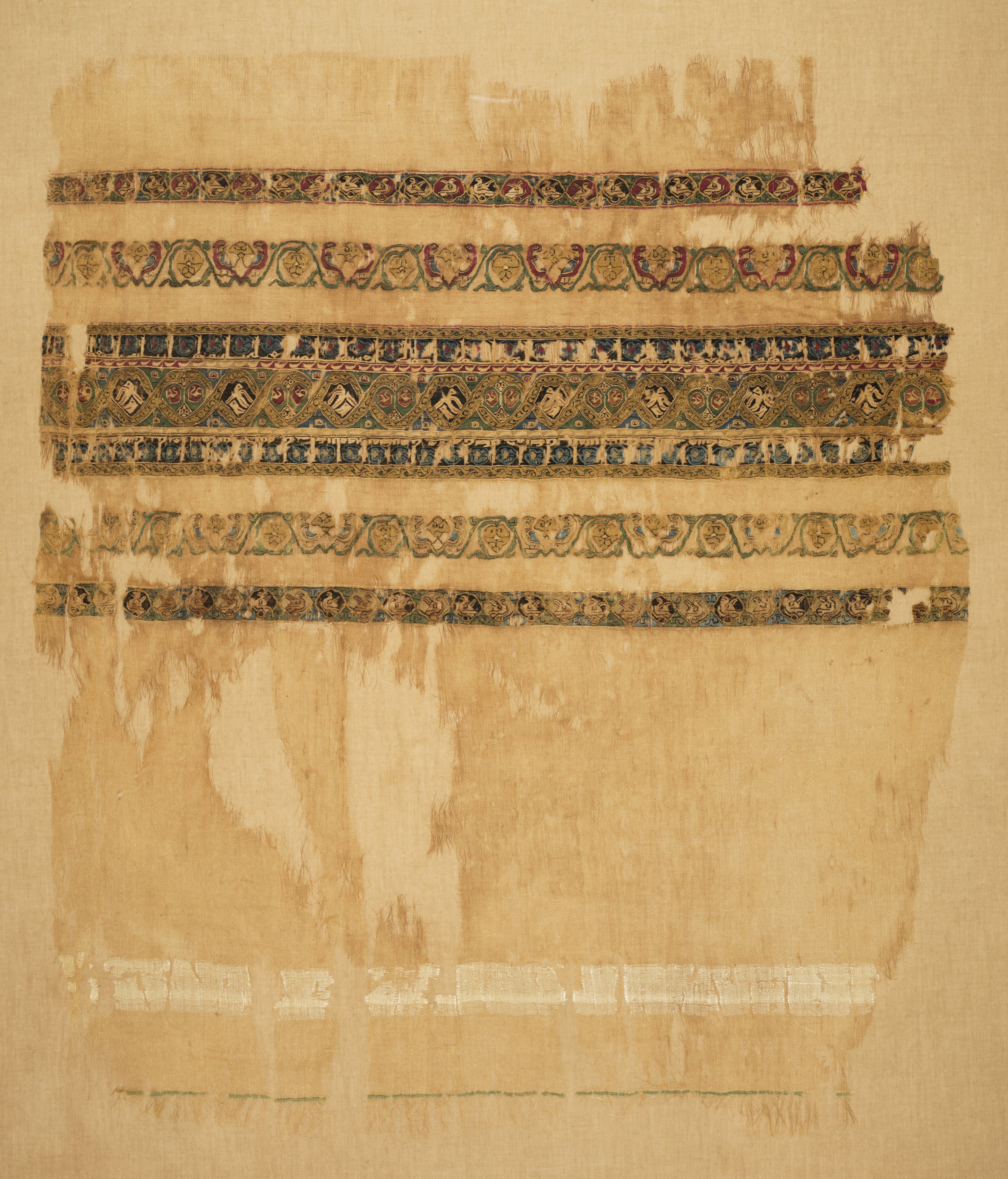
The artifact in question—a turban or shawl end from Fatimid Egypt—presents a formidable case study in the convergence of material authority and subversive craft. At its technical core, the foundation is a plain weave linen, a humble, sturdy, and cool substrate native to the Nile. This is not merely a ground but a statement of accessible luxury and practical opulence, characteristic of the Fatimid aesthetic which often blended regal display with mercantile prosperity. Upon this democratic base, the object erupts into localized zones of inwoven tapestry weave employing silk and gold filé. This is not embroidery, an additive process, but an integrative one. The silk and gold are structural, born simultaneously with the linen ground in the weft. This technique demands extraordinary precision, as the different wefts (linen for the background, silk and gold for the pattern) are inserted only where needed, creating discontinuous wefts that lock into the warp. The resulting effect is a textural and luminous dissonance: the matte, fibrous linen against the luminous, fluid silk and the hard, commanding sparkle of the gold filé.
Archive Resonance: The Tiraz as Avant-Garde Manifesto
The defining feature, the tiraz, transforms this textile from a mere accessory into a portable instrument of power and identity. Tiraz inscriptions, often bearing the ruler's name, blessings, and dates, were bureaucratic imprints on the body politic. From the reign of al-Musta‘lī, this band is a datestamp of sovereignty. For Zoey Fashion Lab, this is not historical trivia but a precursor to the modern logo, the brand tag, the designer signature. It is wearable metadata. The avant-garde parallel is direct: like a deconstructed garment that exposes its seams and labels as aesthetic features, the tiraz makes the political and productive apparatus visible. It declares its origin, its patronage, its moment of creation—it is anti-obfuscation. In an age of conscious consumption and demand for provenance, the tiraz is a radical model for transparency as decoration.
The referenced Archive Resonance, speaking of 16th-17th century cultural collisions, finds a profound echo here. The Fatimid period was itself a crucible of exchange—Coptic, Islamic, Mediterranean, Asian—with Cairo as a global nexus. The materials tell this story: Egyptian linen, Chinese or Persian silk (via trade routes), and gold currency woven into cloth. This object is a fabric of collision. The avant-garde spirit thrives on such synthesis, on creating new languages from disparate, even contradictory, vocabularies. The object does not seek a harmonious blend but a deliberate, textured juxtaposition, allowing each material to speak in its own tongue while contributing to a singular, potent statement.
Avant-Garde Reinterpretation: A Blueprint for Zoey Fashion Lab
Deconstructing this artifact for a contemporary avant-garde lexicon requires moving beyond homage into translation. We must extract its core principles—hierarchical materiality, inscribed identity, and structural ornament—and reconfigure them for a new context.
Proposed Design Interventions:
1. Material Dialectics: Replace the linen/silk/gold hierarchy with modern equivalents that carry analogous cultural and tactile weight. Imagine a base of technical recycled nylon (democratic, durable, sustainable) interrupted by inwoven patches of bioluminescent silk (organic, rare, luminous) and conductive copper or aluminum yarn (the new gold—precious, technological, conductive). The weave technique remains integral, making the luxury elements born of the structure, not applied to it.
2. The Neo-Tiraz: The inscription must evolve from caliphal blessing to contemporary data. This could be achieved via woven QR codes or NFC threads integrated into the tapestry bands, linking to digital manifests—designer interviews, sourcing maps, carbon footprint data, or even poetic fragments. The "blessing" becomes a blockchain certificate of authenticity. Alternatively, the tiraz band could be a modular strip, removable and interchangeable, allowing the wearer to customize the garment's stated "provenance" or message.
3. Form & Function Reassignment: The original object's form—a turban or shawl end—speaks to modular, transformative dressing. Avant-garde reinterpretation could explode this into a multi-system garment. It could be a deconstructed blazer with tiraz bands marking the seams; a tech-integrated hoodie with conductive gold-filé circuits tracing the hood's interior; or a hybrid scarf-harness where the inscribed bands become functional load-bearing straps. The key is that the ornament, following the Fatimid model, is never merely decorative; it is structural, informative, and identity-laden.
Philosophical Alignment
This Fatimid fragment, through an avant-garde lens, champions a fashion that is intellectually legible and materially honest. It rejects the seamless, homogenous surface in favor of a constructed, annotated, and collaborative one. It speaks to a future luxury defined not by obscurity but by radical transparency, where the story of the garment is as intricate and valuable as its drape. For Zoey Fashion Lab, this artifact is not a relic but a prototype. It demonstrates that the most forward-thinking design principles—sustainable material hierarchies, embedded storytelling, and structural authenticity—are not inventions of the 21st century, but rediscoveries. Our task is to listen to the archive's resonance and amplify it for a new era, weaving our own tiraz for the reign of the conscious avant-garde.