Deconstructing the Imperial Solidus: A Study in Materialized Power
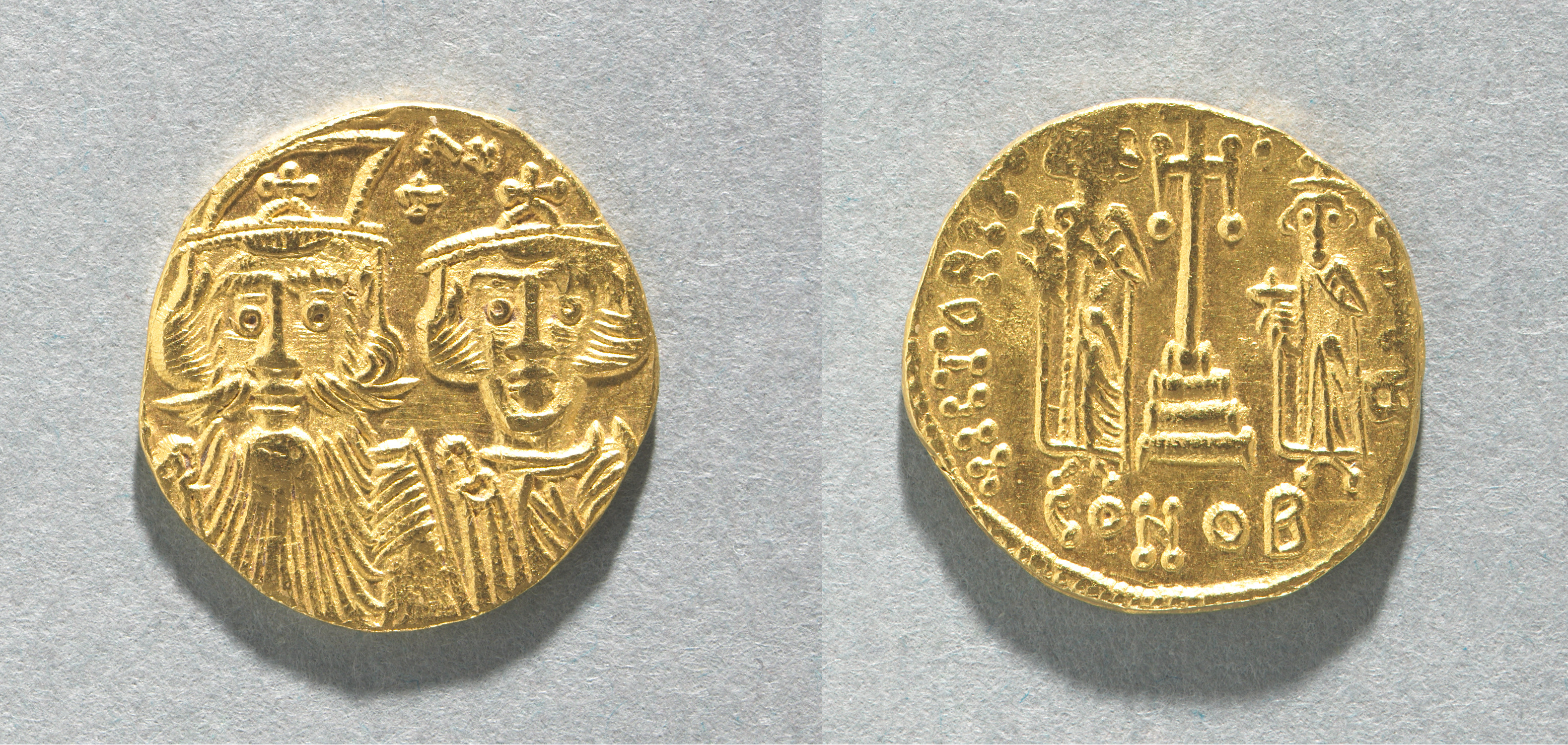
At Zoey Fashion Lab, our mandate extends beyond the drape of fabric and the cut of a silhouette. We engage with the archaeology of adornment, excavating the latent narratives embedded within historical artifacts to inform a new, avant-garde visual language. Today, our Chief Fabric Deconstructionist turns to a relic of immense political and spiritual weight: the gold solidus of Constans II and Constantine IV, struck in the crucible of 7th-century Byzantium. This coin, a palm-sized disc of nearly pure gold, is not merely currency; it is a compressed manifesto of imperial theology, dynastic anxiety, and artistic abstraction. Through the lens of our current collection—inspired by the poetic tension between a mirrored surface and a sarcophagus relief—we dissect this solidus to reveal its structural, chromatic, and conceptual resonance.
The Metallurgical Canvas: Gold as Absolute Statement
The technical choice of gold is the first, most aggressive act of deconstruction. In an era of profound geopolitical contraction—with the Arab caliphates eroding the empire’s southern and eastern flanks—the Byzantine mint’s insistence on a high-purity gold standard was a defiant act of material propaganda. Unlike the debased silver or bronze of neighboring powers, this solidus was a physical assertion of immutability. For the avant-garde designer, gold is not a color; it is a luminous density. The coin’s surface, when struck, creates micro-facets that catch light not as a smooth reflection but as a fractured, shimmering field. This aligns directly with our “Mirror with Split-Leaf” reference: the obverse is not a polished mirror but a textured one, where the emperor’s profile is a topographic map of power, raised in high relief against a field of hammered light.
Furthermore, the weight of the solidus—approximately 4.5 grams—is a lesson in tactile authority. In our fabric research, we translate this into a demand for density: a silk gazar with a metallic core, or a wool crepe so tightly woven it feels like a metallic sheet. The garment must not merely drape; it must assert. The gold is the sine qua non of the piece, a non-negotiable element that dictates the entire structural logic, just as the coin’s purity dictated its acceptance across three continents.
Obverse and Reverse: A Dialectic of Self and Succession
The iconography of the solidus presents a fascinating binary. The obverse typically features the facing busts of Constans II (the father) and Constantine IV (his son), both crowned and clad in the chlamys. The reverse, however, often isolates a single figure—a cross on steps or a Victoria figure. This is not a simple portrait gallery. It is a dynastic algorithm. The juxtaposition of the two emperors on the obverse is a radical visual statement: a co-emperorship, where the son is not a subordinate but a co-equal in the imperial projection. This is a deliberate deconstruction of the singular ruler myth, acknowledging the fragile reality of succession in a time of constant siege.
For our collection, this translates into a layered garment architecture. We deconstruct the traditional single-lineage garment—a coat, a gown—into a dual-shell system. An outer shell features the “father” pattern: rigid, geometric, almost architectural in its lapels and shoulders. Beneath it, a translucent inner layer reveals the “son” pattern: a softer, more fluid grid that echoes the younger emperor’s emerging authority. The wearer is thus a walking dialectic, presenting both a consolidated front and a visible, negotiated future. The “cold stone sarcophagus” reference from our archive finds its echo here: the obverse is the living, gilded portrait; the reverse is the eternal, carved promise of continuity.
Texture and Relief: The Grammar of the Die
Let us examine the technical execution of the strike. The die cutter’s work on this solidus is a masterclass in controlled depth. The curls of the emperors’ hair are not engraved; they are modeled in tiny, repetitive strokes that create a rhythmic, almost textile-like texture. This is the same logic we apply to our jacquard weaving. We are not printing a pattern; we are building a relief through thread tension. The coin’s legend—VICTORIA AUGU or similar—is not merely text; it is a border of barbed, angular letters that function as a protective fence around the imperial image. In our garments, we use similarly aggressive topstitching or piping in metallic thread, not as decoration but as a structural boundary, a “legend” that frames the body’s own imperial narrative.
The split-leaf motif from our reference archive—the “mirror with split-leaf” pattern—finds its direct correlate in the coin’s reverse cross on steps. The cross is not a simple symbol; it is a spatial construction, with each step representing a stratum of cosmic authority. The “split” in our mirror is the deliberate fracture in the coin’s design: the separation between the two emperors’ busts, a hairline gap that signifies the negotiation of power. We reproduce this as a seam—not a hidden seam, but an exposed, top-stitched channel running down the center back of a coat, or across the chest of a structured bodice. This seam is a visible scar, a reminder that all power is a construction, a joining of disparate parts.
From Numismatics to New Silhouette
How does this 1,300-year-old coin dictate a 21st-century avant-garde silhouette? The answer lies in the tension between the planar and the sculptural. The coin is a flat disc, yet its relief creates a sculptural illusion. Our garments must achieve this paradox. We propose a cape constructed from a rigid, gold-lamé-backed neoprene, cut in a circular form—echoing the nummus shape—but with deep, origami-like pleats that create a high-relief surface. The pleats are not random; they follow the radial logic of the coin’s legend, converging at a central point over the sternum, where a single, oversized brooch—a modern reinterpretation of the imperial fibula—anchors the entire structure.
Alternatively, consider a deconstructed tunic. The obverse’s dual busts inspire a split silhouette: the left side is tailored with severe, military precision (Constans II, the father, the warrior), while the right side flows in a softer, more fluid drape (Constantine IV, the son, the future). The fabric is a double-faced wool: one side a dull, matte black (the stone sarcophagus), the other a burnished gold (the mirror). The garment can be worn two ways, allowing the wearer to choose which narrative to project. This is not nostalgia; it is material philosophy.
Conclusion: The Coin as a Worn Doctrine
The solidus of Constans II and Constantine IV is a compact, metallic treatise on the nature of authority, succession, and artistic representation. For Zoey Fashion Lab, it is not a museum piece but a generative algorithm. It teaches us that true luxury is not about ornamentation but about material conviction. The gold is not shiny; it is heavy with meaning. The portraits are not faces; they are ideological constructs. The legend is not text; it is a boundary condition.
Our collection, therefore, does not imitate the coin. It re-enacts its structural logic. We take the flat, the circular, the metallic, and we force it into three-dimensional, wearable form. We embrace the schism between the mirrored surface and the stone relief, between the living emperor and the eternal symbol. The result is a garment that is not merely worn but witnessed—a wearable artifact that carries the weight of a civilization’s most profound anxieties and its most dazzling assertions of permanence. In the hands of our atelier, the solidus becomes not a coin but a creed, stitched, folded, and draped upon the human form.