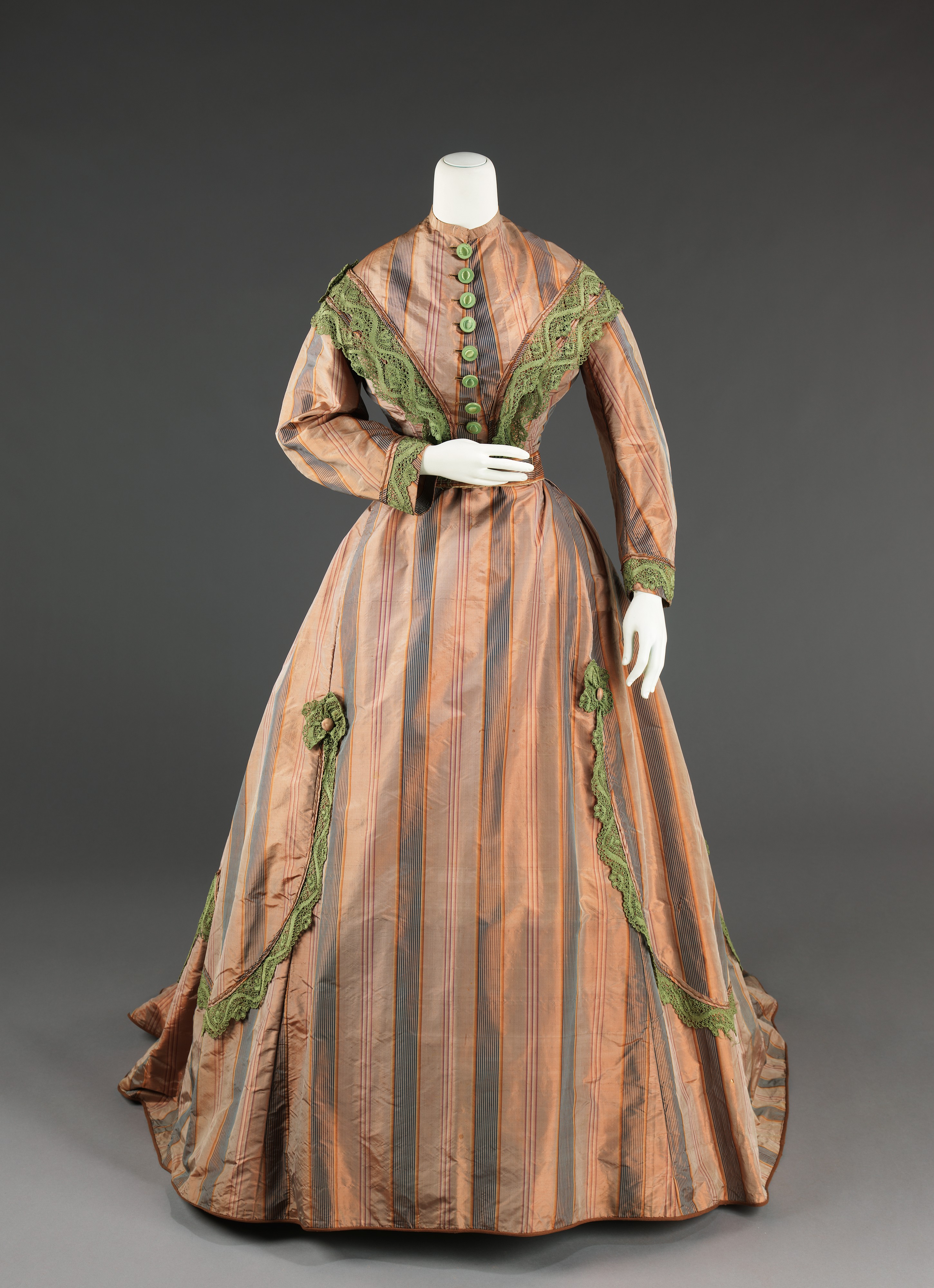
Deconstructing the Idyll: The American Afternoon Dress as Avant-Garde Armature
The American afternoon dress, historically a cipher for cultivated leisure and gendered spatial politics, presents a profound site for radical intervention. At Zoey Fashion Laboratory, we do not merely design garments; we engineer sartorial hypotheses. For SS26, our standalone study transmutes this archetype—rooted in silk and societal expectation—into a manifesto on fluidity, tension, and architectural self-determination. This analysis dissects our methodology, where silk ceases to be a mere material and becomes a medium for challenging temporal, structural, and contextual norms.
Silk as a Structural Antagonist
Conventionally synonymous with drape and docile luxury, silk is re-engineered as a structural antagonist in our SS26 study. We employ a proprietary technique of molecular silk-lamination, bonding organic silk filaments with a bio-polymer matrix at a nano-scale. This process transforms the material’s memory, enabling it to hold radical, gravity-defying shapes while retaining a paradoxical softness. The fabric no longer yields; it proposes. It constructs cantilevers and parabolic curves that extend from the body’s frame, creating a wearable exoskeleton of elegance. The traditional flow of the afternoon dress is inverted; volume is not achieved through cut or gather, but through the engineered resilience of the material itself, forming a silent dialogue between biomimicry and hard-edged futurism.
The Silhouette: Kinetics and Negative Space
The SS26 silhouette operates on the principle of kinetic obstruction. Moving beyond the static, sculptural forms of past avant-garde, we introduce elements calibrated to react to ambient atmosphere and movement. Pneumatic channels woven into the laminated silk allow subtle, breath-like expansions and contractions in response to temperature or airflow, rendering the dress a living, respiratory entity. The silhouette is not a fixed outline but a dynamic field of possibilities.
Furthermore, we exploit negative space as a constructive element. Strategic exoskeletal apertures reveal the body not for mere exposure, but to frame it within the dress’s architectural logic. The body becomes both occupant and integral structural component, a load-bearing pillar within a silk-and-air edifice. This challenges the very notion of a "dress" as an enclosing sheath, repositioning it as a collaborative framework where wearer and garment co-author form in real time.
Contextual Dissonance and the New Afternoon
The "afternoon" in our context is stripped of its pastoral and social connotations. It is redefined as a liminal chronotope—a charged, transitional space ripe for disruption. This dress is engineered for the psychological and urban landscapes of SS26 and beyond. Its standalone nature is deliberate; it does not belong to a collection narrative but exists as a singular proposition against fast-fashion cycles and thematic dilution.
Worn in the context of a digital plaza, an augmented reality garden, or a stark minimalist interior, it creates a potent contextual dissonance. The familiar codes of silk and the dress form are legible, yet their execution is wholly alien. This friction is the core of the avant-garde gesture: to make the historical present unfamiliar, and to propose a future where attire is an active interface with one’s environment, not a passive adaptation to it.
Architectural Philosophy: The Garment as Portable Habitat
Ultimately, our SS26 afternoon dress study embodies the philosophy of the garment as portable habitat. It provides not just shelter for the body, but for the intellect and aura. Its construction follows architectural principles of tensile integrity and modular thought. Sections are designed to appear as if they could be reconfigured by the wearer, suggesting a personal, evolving toolkit for identity presentation.
The American legacy of pragmatic innovation is thus subverted and elevated. We channel a spirit of invention not into problem-solving, but into problem-posing: What is the future of formal wear? How can a garment challenge spatial perception? Can cloth be a form of technology? This dress stands as Zoey Fashion Laboratory’s definitive argument that avant-garde couture is not an aesthetic niche, but a vital laboratory for re-imagining human embodiment and interaction in an accelerating world. It is a standalone study precisely because its implications are infinite.