The Cartography of Absence: Reconstructing the Border as Wearable Topology
The border, in its most reductive geopolitical reading, is a line of demarcation—a static incision upon the earth’s surface. But for the SS26 avant-garde study at Zoey Fashion Laboratory, we reject this binary cartography. We propose instead the border as a dynamic, permeable membrane, a site of negotiation where materiality, memory, and movement collide. Our medium of interrogation is not steel or concrete, but the hyper-feminine, painstakingly artisanal language of bobbin lace. This choice is deliberately provocative: we weaponize the most delicate of textile traditions to construct a thesis on structural resilience, challenging the assumption that strength is synonymous with rigidity.
This analysis dissects a singular garment—a conceptual bodice-and-train hybrid—that functions as a wearable manifesto. It is not a garment for the timid; it is an architectural proposition for the body in motion, a study in negative space and tensile strength that redefines the silhouette for a post-geographic era.
Deconstructing the Frontier: Lace as Structural Membrane
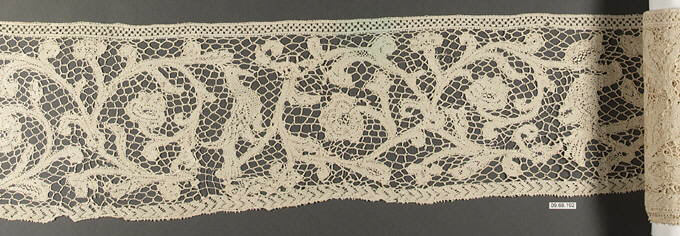
Traditional bobbin lace is a language of holes, a matrix of voids defined by the threads that cross and twist around them. In our SS26 narrative, these voids are not absences; they are territories of potential. We invert the hierarchy of fashion construction, elevating the interstitial gap to primary structural importance. The lace is not applied as a decorative overlay; it is engineered as the load-bearing exoskeleton of the garment.
The 'Global Frontier' origin is not a stylistic reference but a conceptual anchor. The garment’s silhouette is derived from the contours of contested borders—the jagged, negotiated lines of mountain passes, river deltas, and man-made checkpoints. These topographies are translated into the lace’s pattern-making, resulting in a surface that is neither purely organic nor purely geometric. The eye traces a path that is simultaneously chaotic and ordered, mirroring the paradoxical nature of the border itself: a place of both absolute control and uncontrollable flux.
From Two-Dimensional Craft to Three-Dimensional Architecture
The innovation lies in the transition from flatwork to volumetric form. We employ a technique of gradated tension, where the bobbin lace is manipulated at the loom to create varying densities of openness. Dense, almost opaque regions of thread form the structural 'bones' of the garment—the sternum plate, the scapular shield—while gossamer, semi-transparent expanses become the 'soft tissue' that drapes and moves with the wearer. This is not mere fabric manipulation; it is a study in material physics, where the same fiber can act as a rigid beam or a fluid membrane depending on its internal geometry.
The result is a silhouette that defies conventional categorization. The shoulders are extended into sharp, asymmetric cantilevers, reminiscent of a bird’s wing mid-flight, but rendered in the intricate filigree of the lace. The waist is not cinched but implied through a cascading waterfall of open loops that visually sever the torso from the hips, creating a state of suspended animation. The train, a monumental statement of 1.8 meters, is not a flat panel but a three-dimensional topography, rising and falling in peaks and valleys that mimic a satellite image of a mountain range. It is a garment that occupies space with the authority of sculpture, yet maintains the ethereal lightness of a whisper.
The Silhouette of Suspension: Challenging the Body's Perimeter
Our SS26 proposition fundamentally challenges the relationship between garment and epidermis. We are not dressing the body; we are defining a new perimeter around it. The lace, in its most radical application, is suspended away from the skin on an internal substructure of carbon-fiber-reinforced polymer, visible only through the gaps in the textile. This creates a 'breathable architecture,' a micro-climate between the wearer and the garment that is both physically and conceptually liberating.
This is a silhouette of strategic exposure. The body is not hidden or displayed in the traditional sense; it is fragmented, seen only in slivers through the intricate lattice. This fragmentation is a political statement on the surveillance of the frontier—the body becomes a site of resistance, refusing to be fully captured by the gaze. The wearer is not an object to be looked at, but a subject who controls the view, revealing and concealing at will. The movement is not fluid in a balletic sense; it is a series of deliberate, architectural shifts. Each step creates a new configuration of light and shadow through the lace, a constant redrawing of the border between the self and the world.
Material Alchemy: The Industrialization of the Artisanal
The choice of material—100% silk thread for the primary structure, with interlaced metallic filaments of nickel-titanium alloy—is a deliberate act of alchemy. The silk provides the warmth and historical resonance of the craft, while the shape-memory alloy allows the lace to 'remember' its architectural form. When the garment is crushed or folded, it returns to its sculptural state upon release, a metaphor for the resilience of borders that are tested but not broken. This fusion of the pastoral and the futuristic is the core of our design philosophy: we do not abandon tradition; we re-engineer its DNA.
Furthermore, the production process itself is a commentary on global labor. Each garment requires 600 hours of handwork by master lacemakers, a deliberate counterpoint to the speed of fast fashion. This is not nostalgia; it is a futuristic economic model that values precision and human skill over mass production. The 'Global Frontier' is thus not only a source of inspiration but a network of ateliers, each contributing a specific lace technique—from the Torchon of France to the Cluny of Belgium—to create a truly polyphonic garment. The border is not a line that separates; it is a web that connects.
Conclusion: A Manifesto for the Post-Geographic Body
The SS26 Border study is not a collection of clothes; it is a philosophical instrument. It asks us to reconsider the lines we draw, both on our bodies and on our maps. By forcing the delicate medium of bobbin lace into the role of structural titan, we demonstrate that the most fragile of materials can possess the greatest strength. The futuristic silhouette is not about technological gimmickry but about a profound shift in perception—seeing the void as a space of potential, the border as a site of exchange, and the body as a dynamic, ever-shifting frontier.
This garment is a call to action for the avant-garde. It is a blueprint for a fashion that is intellectually rigorous, materially innovative, and politically aware. It is not enough to create beautiful objects; we must create arguments in fabric. The Border is, ultimately, a testament to the power of construction to define not just how we look, but how we think about our place in a world where all frontiers are both more porous and more contested than ever before. It is fashion as a form of critical geography, stitched in silk and alloy, ready for the future.