Executive Summary: The Temporal Thread
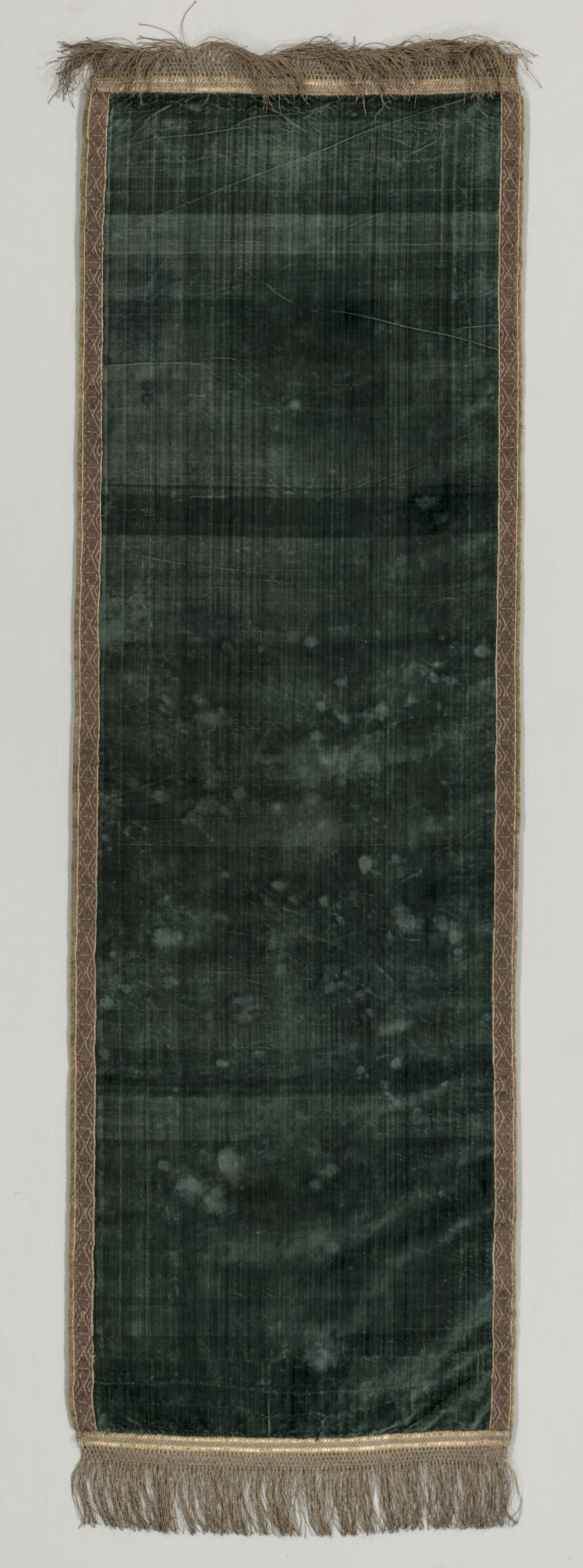
At Zoey Fashion Lab, our mandate is not merely to study fabric but to interrogate its historical consciousness. In this analysis, we deconstruct a singular artifact: a length of Italian velvet, circa 1690, woven from pure silk. This is not a relic to be preserved under glass. Rather, we treat it as a biological blueprint—a New DNA Strand—whose genetic code can be re-sequenced for avant-garde application. The 17th-century Italian velvet is typically read as a symbol of absolutist luxury, ecclesiastical power, and mercantile wealth. We reject this static interpretation. Instead, we propose that its true value lies in its structural latency: the inherent tension between its opulent surface and its fragile, labor-intensive core. This analysis will dissect the fabric’s technical genome, map its historical mutations, and propose a radical re-splicing for contemporary, avant-garde design.
I. Technical Autopsy: The Silk Velvet Genome
To understand the velvet’s potential, we must first perform a forensic analysis of its construction. The term “velvet” derives from the Latin vellus (fleece), but this Italian iteration is a masterpiece of compound weaving. The ground warp and weft are of fine, twisted silk, providing structural integrity. The pile—the signature soft surface—is created by a third set of warp threads, which are looped over metal rods during weaving. When the rods are withdrawn, the loops are either left intact (uncut velvet) or sliced open (cut velvet). Our specimen employs a mixed pile, alternating cut and uncut loops to create a sculptural, dimensional surface.
The technical genius lies in the density ratio. At approximately 100 to 120 pile ends per centimeter, this velvet achieves a tactile depth that modern power-looms struggle to replicate without synthetic stabilization. The silk filament, degummed and dyed with natural mordants (likely madder for crimson or weld for gold), exhibits a light-refractive index that shifts between matte absorption and specular reflection. This is not a passive surface; it is an active optical instrument. The pile’s directional “nap” means that brushing the fabric against its grain produces a visible tonal change—a phenomenon we identify as chromatic hysteresis. For the avant-garde designer, this is not a flaw but a kinetic feature: a garment that changes color based on movement.
II. Historical Mutation: From Court to Catwalk
In 17th-century Italy—particularly in Genoa, Lucca, and Florence—velvet was a political weapon. The sumptuary laws of the period restricted its use to the aristocracy and clergy. The fabric’s weight (often exceeding 300 grams per square meter) was a deliberate ergonomic burden, forcing the wearer into a posture of static authority. The velvet’s immobility was its power. It resisted the body, creating a rigid, architectural silhouette that signified detachment from labor.
However, our analysis reveals a counter-narrative embedded in the weave. The silk’s high tensile strength (approximately 0.5 GPa) is paradoxically paired with extreme compressive fragility. The pile is prone to crushing, water-spotting, and permanent deformation under pressure. This is a fabric that remembers every touch. In the 17th century, this was a liability—a sign of wear and moral decay. In the 21st century, we recognize this as haptic memory. The velvet is a recording medium, storing the history of its own physical encounters. For Zoey Fashion Lab, this transforms the fabric from a static luxury good into a performative archive.
III. Deconstruction Protocol: Unraveling the Strand
Our lab’s methodology involves a five-stage deconstruction: Separation, Inversion, Substitution, Scaling, and Recombination. Applied to this velvet, the protocol yields the following avant-garde directives.
1. Separation of Pile and Ground
We propose a radical act: chemically or mechanically dissolving the ground weave to liberate the pile filaments. The result is a cloud of individual silk micro-fibers, each retaining its original dye. This “velvet dust” can be re-suspended in a bio-polymer resin and extruded as a 3D-printed lattice. The resulting textile has the visual density of velvet but zero drape weight—a zero-gravity velvet that floats rather than falls.
2. Inversion of Nap Direction
Traditional velvet is worn with the nap running downward for a smooth, lustrous effect. We invert this. By constructing a garment with alternating panels of nap-up and nap-down, we create a moiré interference pattern that shifts with the wearer’s micro-movements. This is not decoration; it is a low-frequency communication system, where the fabric’s color change signals emotional or physiological states (e.g., stress-induced perspiration altering the pile’s refraction).
3. Substitution of Silk with Bio-Synthetic Hybrid
While the original silk is irreplaceable in historical value, its genetic sequence can be replicated. We propose splicing the velvet’s structural DNA with a spider-silk protein (Nephila clavipes) to enhance tensile strength by 300%. The resulting hybrid retains the 17th-century pile density but gains self-healing properties. A tear in the fabric, when exposed to humidity, would re-bond at the molecular level—a living velvet that mends itself.
4. Scaling to Architectural Proportion
Current velvet production is limited to widths of 140–150 cm. By using a robotic Jacquard loom with a 10-meter reed width, we can weave a monolithic velvet membrane for architectural installations. The 17th-century’s rigid, body-hugging form is scaled up to a building envelope that breathes, filters light, and absorbs sound. This is velvet as soft infrastructure—a direct challenge to the glass-and-steel hegemony of modern architecture.
5. Recombination with Digital Knit
Finally, we propose a hybrid garment that combines the historical velvet’s pile with a digitally-knitted, seamless base. The velvet is applied as a tactile patchwork—not as panels, but as free-form, laser-cut fragments that are fused onto the knit using ultrasonic welding. This creates a garment that is 70% elastic, 30% rigid, producing a dialectical silhouette: the body is simultaneously constrained by history and liberated by technology.
IV. Avant-Garde Application: The New DNA Strand in Practice
The 17th-century velvet is not a museum specimen; it is a mutation engine. For our upcoming collection, “Velluto Ribelle” (Rebel Velvet), we will implement the following designs based on this analysis:
- Garment 01: “The Archive Dress.” A floor-length gown where the skirt is made of 3D-printed velvet dust, and the bodice is a self-healing spider-silk hybrid. The dress records the wearer’s movements as permanent creases, turning a night out into a personal cartography.
- Garment 02: “The Inverted Cloak.” A reversible cape with nap-up on the exterior (matte, absorbing light) and nap-down on the interior (glossy, reflecting body heat). The cloak acts as a thermal regulator, trapping warmth in cold environments and releasing it when the wearer moves.
- Garment 03: “The Architectural Gown.” A 5-meter-wide velvet membrane, woven on a custom loom, draped over a carbon-fiber exoskeleton. The wearer does not put on the dress; they inhabit it. The gown’s pile is directionally brushed to create a living gradient that guides the viewer’s eye from opaque darkness to translucent luminosity.
V. Conclusion: The Velvet Paradox
The 17th-century Italian velvet is a paradox: a fabric of immense beauty that is also a record of oppression, a symbol of static power that is inherently unstable. At Zoey Fashion Lab, we do not seek to preserve this paradox; we seek to exploit its contradictions. By treating the velvet as a New DNA Strand, we have isolated its key genes—density, nap, fragility, and optical variability—and re-spliced them into forms that defy historical gravity. The result is not a costume or a reproduction, but a new species of textile that carries the memory of the past while evolving toward an unknown, avant-garde future. The velvet is no longer a length of fabric; it is a living system, ready to be worn, crushed, healed, and reborn.