Deconstructing the Mobile Envelope: A Critical Analysis of Design for Landaulet
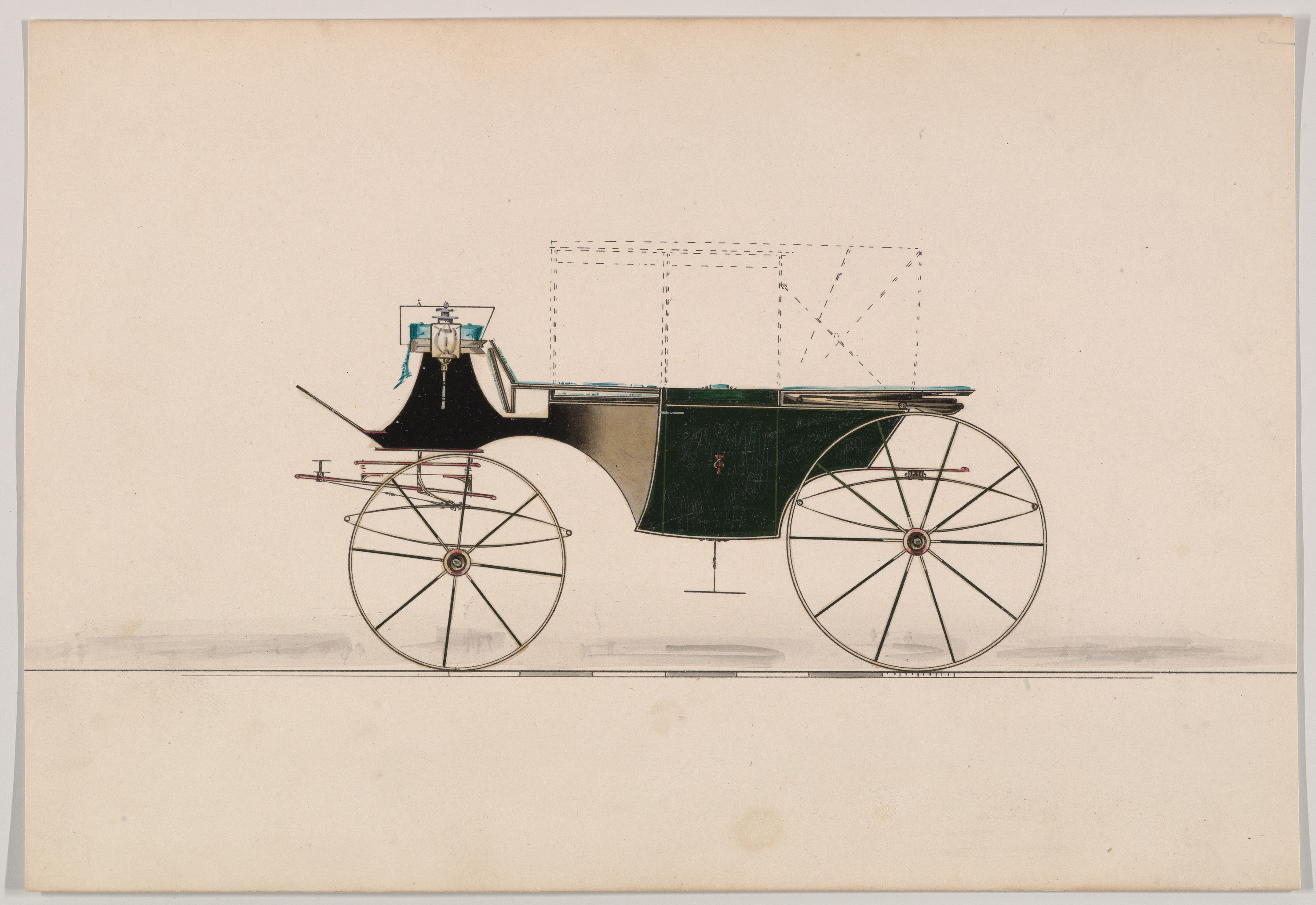
The unnumbered sketch, Design for Landaulet, arrives at Zoey Fashion Laboratory not as a garment, but as a manifesto. Executed in pen and black ink, with watercolor and gouache washes, it is a standalone avant-garde study that interrogates the very notion of the body as a fixed architectural site. Originating from the Global Frontier, this work transcends mere fashion illustration; it functions as a speculative blueprint for a post-static, kinetic wardrobe. For the Spring/Summer 2026 season, this design proposes a radical departure from the anthropocentric silhouette, offering instead a futuristic envelope that deconstructs the relationship between interior volume and exterior form.
The Landaulet Principle: From Automotive Heritage to Bodily Exoskeleton
The titular reference is deliberate and loaded. A landaulet, historically an automobile with a closed front compartment and a convertible rear, embodies a duality of protection and exposure. This design appropriates that automotive logic, transposing it onto the human form. The result is not a dress, but a mobile architectural shell that separates the wearer’s kinetic lower body from a more rigid, shielded upper structure. The ink linework is crucial here; it is not fluid or calligraphic, but rather precise, almost drafted, suggesting engineering schematics rather than artistic flights of fancy. This is the language of the Global Frontier—a place where couture converges with industrial design and speculative technology.
Silhouette as a Dialectic of Hard and Soft
The silhouette defies the conventional S-curve or A-line of contemporary fashion. Instead, it presents a bilateral asymmetry of structural logic. The upper torso is encased in a sculpted, quasi-rigid carapace, rendered in dense gouache to simulate a matte, non-reflective composite material. This is not armor in a medieval sense; it is a modern exoskeleton, perhaps 3D-printed or constructed from bio-engineered leathers. The shoulders are exaggerated, not padded, but geometrically extended, creating a cantilevered overhang that visually severs the head from the body. The black ink here is used with aggressive, graphic force, defining sharp undercuts and negative spaces that make the garment appear to float a few centimeters off the skin—a deliberate deconstruction of the intimacy of cloth.
Contrasting this rigidity, the lower half of the design erupts into a cascade of watercolor washes. These are not delicate florals; they are aggressive, chromatic bleedings of grey, steel blue, and off-white that dissolve into the paper’s edge. This lower portion suggests a soft, almost liquid architecture, perhaps a series of articulated panels or a skirt constructed from micro-chainmail that moves with a fluid, gravitational pull. The juxtaposition is jarring and intellectually stimulating: the body is simultaneously encased and released, armored and vulnerable. This is the core of the Landaulet principle—a dialectical tension between the static and the kinetic.
Material Semiotics: The Language of Ink and Wash
The choice of media is not incidental; it is a critical component of the design’s meaning. The pen and black ink provide a structural skeleton, a rigid framework of lines that map out the seams, joints, and pivots of the garment. This is the blueprint of the future, suggesting a garment that can be assembled, disassembled, and reconfigured. The watercolor and gouache, conversely, introduce an element of organic chaos. They represent the unpredictable, human element that resists total mechanization. The watercolor bleeds outside the ink lines in several places, suggesting a deliberate loss of control, a reminder that even the most futuristic couture must eventually contend with the fallibility and fluidity of the human body.
Structural Innovation for SS26: The Kinetic Joint
For SS26, the most significant innovation presented here is not the silhouette itself, but the implied articulation points. The ink lines suggest visible, engineered joints at the shoulders, elbows, and hips—reminiscent of ball-and-socket connections or robotic gimbals. This is a bold statement on the future of garment construction: clothing as a series of connected, moving parts rather than a single, continuous textile. This innovation challenges the traditional drapery and tailoring techniques that have dominated couture for centuries. The Landaulet design proposes that we might soon wear garments that respond to our movements with mechanical precision, that offer support and structure not through corsetry or heavy interfacing, but through exoskeletal frames that move in concert with the anatomy.
Furthermore, the watercolor washes hint at thermochromic or photochromic properties. The areas of dense gouache appear to shift in tone, suggesting a material that can alter its opacity or color based on environmental stimuli. This is not merely aesthetic; it is a functional evolution. The garment becomes a responsive interface, a second skin that adapts to heat, light, or even the wearer’s biometric data. In the context of the Global Frontier, where climate and social conditions are in constant flux, this is a survival mechanism as much as a fashion statement.
Conclusion: A New Typology for the Avant-Garde
Design for Landaulet is a definitive work because it refuses to be merely decorative. It is a theoretical proposition, a challenge to the industry to rethink the fundamental purpose of clothing. By merging the precision of automotive engineering with the expressive freedom of watercolor, it creates a new typology—one that is neither purely organic nor purely mechanical. It is a garment that acknowledges the future’s demand for adaptability, for armor against the unknown, while never losing sight of the body’s inherent grace and vulnerability. For SS26, this design is not a prediction of what we will wear, but a profound inquiry into how we will inhabit our clothes. It is a standalone study that will undoubtedly reverberate through the corridors of fashion theory for years to come, solidifying its place as a cornerstone of the Laboratory’s avant-garde canon. The Landaulet is not just a garment; it is a companion for the body in transit, a true testament to the power of structural innovation.