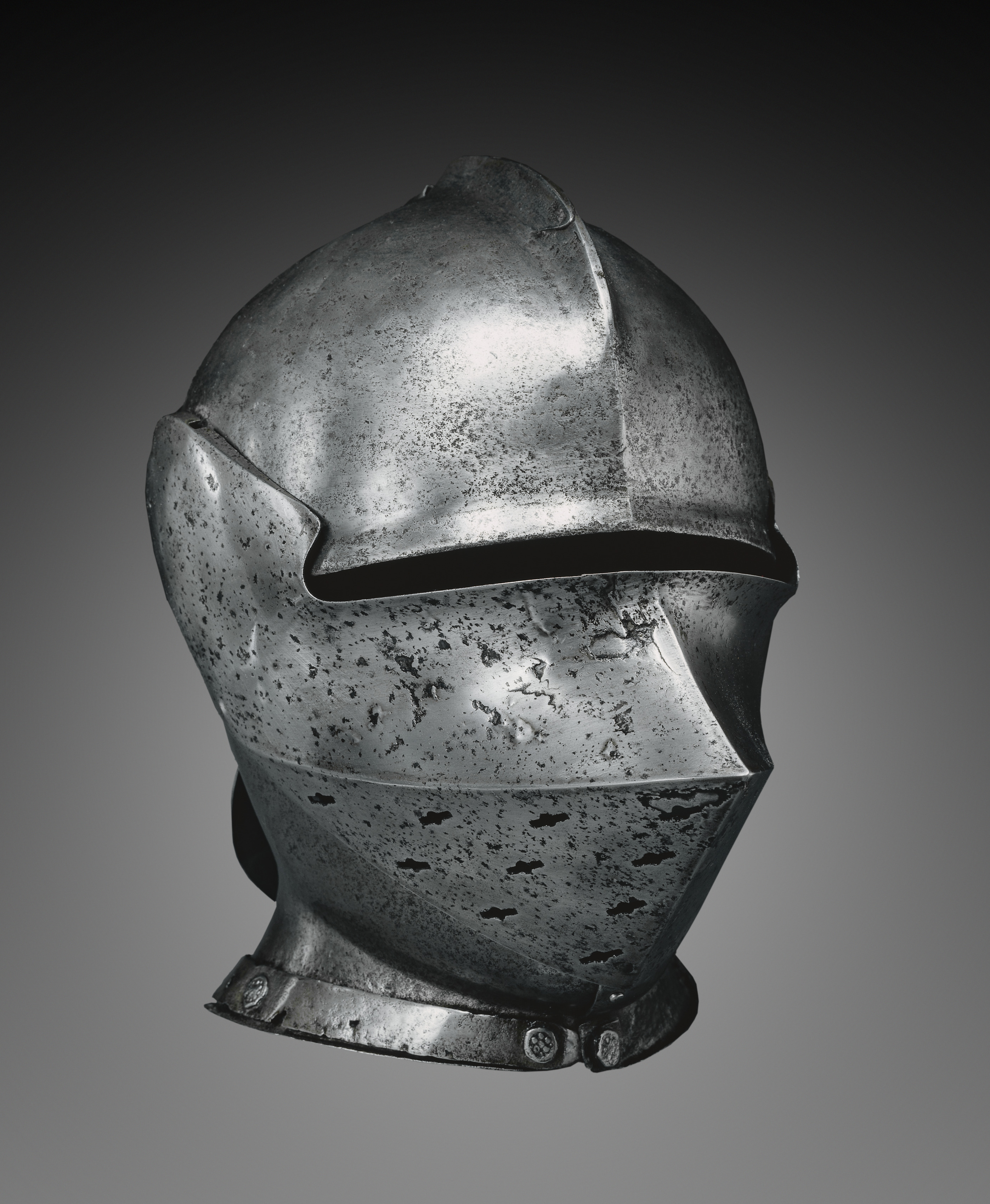
Deconstruction Protocol: Armet à Rondelle – The New DNA Strand
In the relentless pursuit of sartorial evolution, Zoey Fashion Lab does not merely analyze garments; we dissect archetypes, extract their genetic code, and re-sequence it into future-facing forms. Today’s subject—the Armet à Rondelle—presents a unique paradox. Originating from the master armorers of 15th-century Milan, this piece is a testament to functional violence and rigid social hierarchy. Yet, when viewed through the lens of our New DNA Strand reference, it transforms from a relic of war into a profound avant-garde statement on protection, identity, and the architecture of the human silhouette.
Our laboratory’s analysis focuses not on the historical context alone, but on the structural grammar embedded within this steel marvel. The Armet à Rondelle is not simply a helmet; it is a complete enclosure of the cranium, a sculptural extension of the wearer’s own body. Its Milanese origin is critical—this was the epicenter of high-performance metallurgy, where artisans treated steel with the precision of jewelers. For the contemporary designer, this piece offers a blueprint for merging absolute function with aesthetic purity, a principle that remains the holy grail of modern luxury.
Technical Deconstruction: The Steel Exoskeleton
The primary material—high-carbon steel—is our first point of investigation. In the 15th century, this was not a passive substance. It was a reactive membrane, polished to a mirror finish to deflect blows and rust-resistant through controlled heating. The Armet à Rondelle specifically features a distinctive rondel—a circular, disc-like plate attached to the back of the skull, protecting the cervical spine. This is not decorative; it is a deliberate engineering solution to a lethal vulnerability.
From a contemporary fabric perspective, we substitute the steel for rigid, high-tensile technical textiles, such as carbon-fiber-infused nylon or heat-molded thermoplastic polyurethane. The weight, however, remains a conceptual constant. The original Armet weighed approximately 3.5 to 5 kilograms. In our New DNA Strand interpretation, we transfer this weight to the psychological and visual load of the piece, not the physical. The garment must feel weightless on the body while appearing monumentally heavy in silhouette—a trick of optical density achieved through layered matte and gloss finishes.
The articulation points of the original—the hinges at the jaw, the rivets along the skull—become our seam lines. In traditional tailoring, seams are hidden. In this deconstruction, they are celebrated. We expose the mechanical joints, using gunmetal hardware and exposed zippers that mimic the turning mechanisms of the visor. The visor itself, which could be raised for communication and lowered for combat, is reimagined as a detachable face shield in smoked acrylic or brushed aluminum, offering the wearer the choice of engagement or concealment.
The Rondelle: A Center of Gravity
The defining feature—the rondelle—demands special attention. This circular protrusion is the pivot point of our design philosophy. In the original, it was a passive defense. In our avant-garde reconstruction, it becomes an active, dynamic element. We propose a series of concentric, rotating discs placed at the nape, shoulders, and even the hips. These are not static appliqués; they are kinetic components that shift with the wearer’s movement, creating a constantly changing silhouette that defies static photography.
This kinetic quality aligns with the New DNA Strand reference, which posits that fashion must be a living system, not a fixed object. The rondelle, in our hands, becomes a metaphor for the cyclical nature of identity—always turning, always revealing a new angle, yet anchored to a central core of strength. We finish these discs with a distressed patina, deliberately inducing micro-corrosion to create a topographic map of time, contrasting the sterile perfection of modern tech-wear.
Avant-Garde Styling: From Battlefield to Catwalk
To integrate this piece into a contemporary avant-garde wardrobe, we must reject literal historical costuming. We are not creating a cosplay armor set. Instead, we extract the essence of protection and re-contextualize it within a minimalist, sculptural framework. The Armet à Rondelle becomes a shoulder cape or a collar piece, worn over a deconstructed, asymmetric blazer in raw silk or bonded wool.
The color palette is monochromatic and severe: oxidized black, gunmetal grey, and bone white. This absence of color forces the eye to focus on texture and form. The steel’s original reflectivity is translated into panels of liquid metallic leather, strategically placed to catch light like a polished blade. The rest of the garment is matte, creating a chiaroscuro effect that is both dramatic and deeply sophisticated.
Our styling protocol dictates that the garment must be worn with deliberate discomfort—not physically, but aesthetically. The pieces should appear slightly too large, as if borrowed from a future warrior. Sleeves are elongated to cover the hands, terminating in articulated, fingerless gloves that echo the gauntlets of the original armor. The overall posture is one of guarded elegance—the wearer is simultaneously vulnerable and invincible, a modern knight navigating the urban battlefield.
Silhouette and Negative Space
The Armet à Rondelle excels in its use of negative space. The original helmet left the face exposed but the skull enclosed. In our reinterpretation, we invert this. We create garments that expose the torso while enclosing the shoulders and neck. This creates a visual tension between the hard, armored exterior and the soft, exposed interior—a commentary on the fragility of the human condition beneath the armor of social persona.
We employ asymmetrical draping to mimic the overlapping plates of the Milanese armor. Each layer is cut on the bias to follow the body’s natural contours, yet structured with internal boning to maintain the architectural integrity. The result is a garment that moves like liquid but stands like architecture. This duality is the core of the Zoey Fashion Lab philosophy: strength through flexibility, structure through flow.
Conclusion: A New Genetic Sequence
The Armet à Rondelle, when stripped of its historical context, reveals a timeless blueprint for protective elegance. Its Milanese craftsmanship speaks to a culture that valued precision, durability, and the seamless integration of form and function. In our New DNA Strand analysis, we have isolated the key genetic markers—the rondelle’s kinetic potential, the articulated joints, the polished steel surface—and spliced them into a contemporary avant-garde sequence.
This is not a revival; it is a mutation. We are not looking backward with nostalgia but forward with intent. The resulting garment is a wearable sculpture that questions the boundaries between armor and fashion, between the historical and the futuristic. For Zoey Fashion Lab, this project confirms that true innovation lies not in creating from nothing, but in re-reading the past with the grammar of the future. The Armet à Rondelle is no longer a helmet; it is a manifesto.