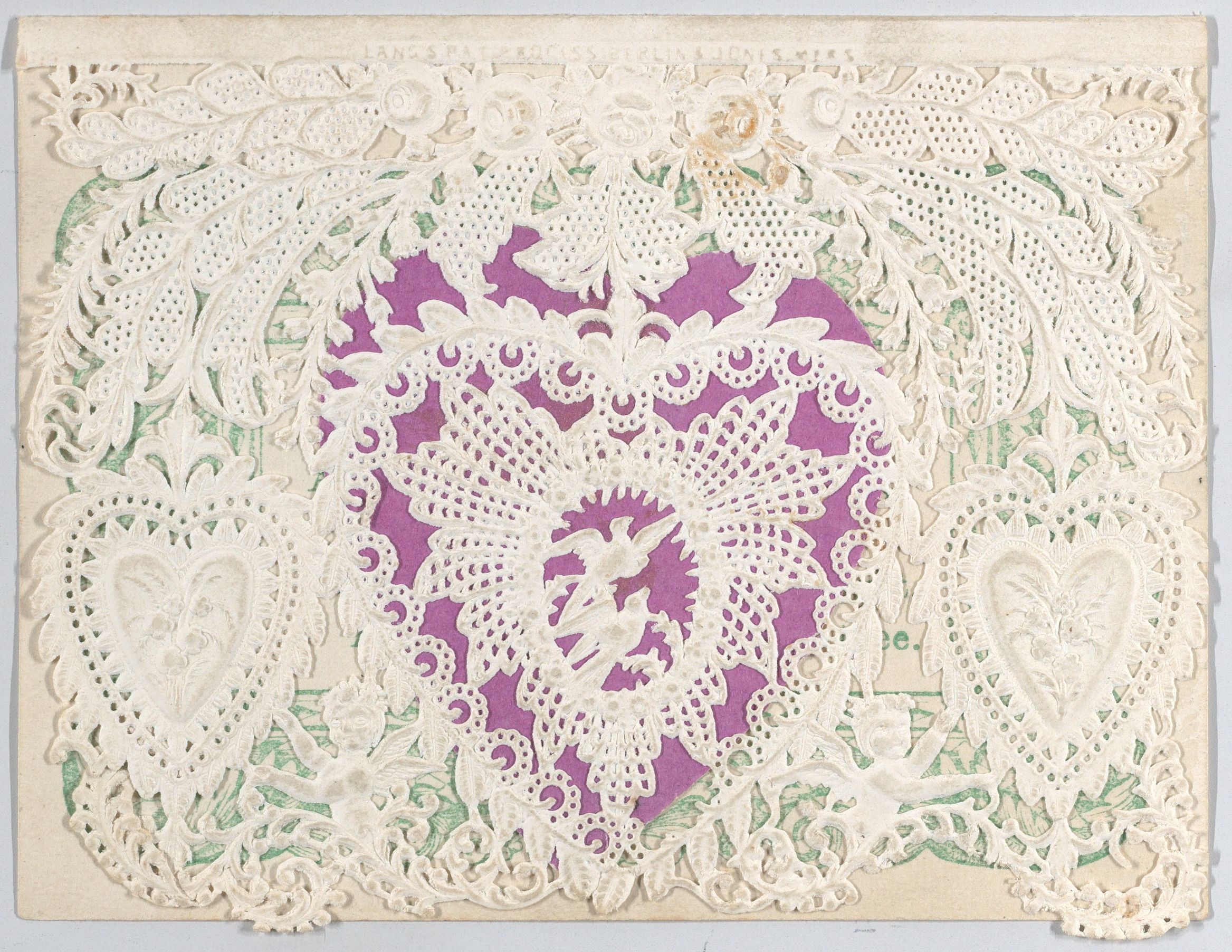
Deconstructing the Ephemeral: The Valentine Specimen for SS26
In the relentless pursuit of fashion’s next frontier, the Zoey Fashion Laboratory presents a radical departure from the saccharine tropes of romantic attire. The Valentine specimen, originating from the Global Frontier, is not merely a garment; it is a theoretical proposition. It is a study in material contradiction, where the fragility of sentiment is weaponized into structural armor. For the SS26 season, we are not designing clothing—we are engineering emotional cartography. The Valentine challenges the very lexicon of couture by utilizing a substrate traditionally reserved for archival documentation: cameo-embossed, open-work lace paper, reinforced with colored paper and fixed with green ink.
This is a standalone avant-garde analysis, dissecting the anatomical, philosophical, and futuristic implications of this unique material constellation. We are moving beyond the body as a passive mannequin; instead, the body becomes a landscape upon which this paper-thin architecture performs a delicate ballet of resistance and surrender.
Material Subversion: The Strength of Fragility
The choice of lace paper—typically the material of doilies and vintage valentines—is a deliberate act of semantic violence. In the context of haute couture, we are accustomed to the tensile strength of silk, the rigidity of boning, and the fluidity of crepe. The Valentine inverts this hierarchy. The open-work lace structure, embossed with a cameo profile, offers a geometric lattice that functions as a primitive exoskeleton. It is a nod to the architectural principles of Frei Otto, where tensile integrity is achieved not through mass, but through strategic negative space.
Here, the green ink acts as the connective tissue—a synthetic vein system that traces the contours of the silhouette. It is not merely a dye; it is a structural adhesive, a chemical binder that stiffens the paper fibers into a semi-rigid shell. This allows the garment to hold a sculptural form that defies gravity, creating a silhouette that is simultaneously corseted and weightless. The colored paper, inserted in layered strata beneath the lace, provides a chromatic depth that shifts with the viewer’s angle, producing a holographic iridescence that is entirely unnatural. This is not about mimicking nature; it is about synthesizing a new nature, one born from the recycling bin of history and the printer’s tray.
Futuristic Silhouettes: The Armored Heart
For SS26, the silhouette is defined by asymmetrical angularity. The Valentine does not drape; it facets. We observe a pronounced, exaggerated shoulder line that juts forward like a prow of a vessel, constructed from layered, pleated paper that fans out in a rigid, origami-like cascade. This is a shoulder that does not invite embrace; it commands space. It is a defensive mechanism, a carapace that protects the metaphorical heart while simultaneously exposing a skeletal cage of open-work lace across the sternum.
The waist is cinched, not by fabric, but by a sculptural belt of twisted paper cord, dyed in the same green ink, which spirals around the torso like a DNA helix. This creates a stark contrast between the voluminous, geometric upper mass and a narrow, almost impossibly tapered lower half. The skirt, if it can be called that, is a series of independent, floating panels of cameo-embossed paper, suspended from a hidden internal frame. They do not sway with the body; they hover, creating a kinetic aura that is more architectural installation than garment. This is the silhouette of the post-human—a being that does not walk through space, but rather, displaces it.
Structural Innovation: Wearable Origami and Modularity
The true innovation of the Valentine lies in its modular construction. Inspired by the principles of directional creasing found in advanced composite materials, each panel of lace paper is pre-scored and folded to create a rigid, load-bearing structure. We have abandoned traditional sewing. There are no seams, no stitches. Instead, the garment is assembled through a series of interlocking slots and tabs, reminiscent of Japanese joinery techniques applied to a micro-scale. The green ink is applied at these junction points, hardening to form a permanent, weather-resistant bond that is surprisingly durable.
This allows for a level of transformative wearability previously unseen in avant-garde circles. The wearer is not a passive recipient of the design; they are an active participant in its final form. A sleeve can be detached and reconfigured as a headpiece. The skirt panels can be rearranged to create a high-low hemline or a full, voluminous sphere. This is fashion as open-source code, where the garment is a platform for infinite permutations. The structural integrity is further enhanced by a secondary layer of colored paper, which is laminated between the lace layers, providing a damping effect against shear stress. The result is a garment that is paradoxically feather-light and fortress-strong.
The Philosophical Context: Love as a Construct
Beyond the technical mastery, the Valentine is a critical commentary on the commodification of romance. By using the material of mass-produced Valentine’s Day cards—objects of disposable sentiment—we are questioning the permanence of emotion in the digital age. The cameo, a symbol of Victorian-era mourning and remembrance, is recontextualized as a futuristic emblem. It is no longer a portrait of a lost loved one, but a generic, faceless avatar of desire.
The green ink, a color associated with envy, decay, and rebirth, further complicates the narrative. It stains the pristine white of the lace paper, suggesting that love is not pure, but rather, a messy, chemical reaction. This is not a romantic gown for a ballroom; it is a suit of armor for the psychological battlefield of modern intimacy. The open-work lace is not a veil of seduction, but a filter through which the world is perceived in fragmented, geometric shards. It is a meditation on the fact that we can never truly see another person in their entirety; we only see the negative space between the threads of their being.
In conclusion, the Valentine from the Global Frontier is a manifesto for SS26. It declares that the future of couture lies not in the opulence of silk and jewels, but in the intellectual rigor of material science and the audacity to find beauty in the discarded. It is a testament to the idea that true innovation is not about creating something new from nothing, but about seeing the latent potential in the mundane. It is fragile, yet unbreakable; sentimental, yet coldly analytical. It is, in every sense, a masterclass in deconstructive futurism.