Executive Analysis: The Wheel-Lock Mechanism as Avant-Garde DNA
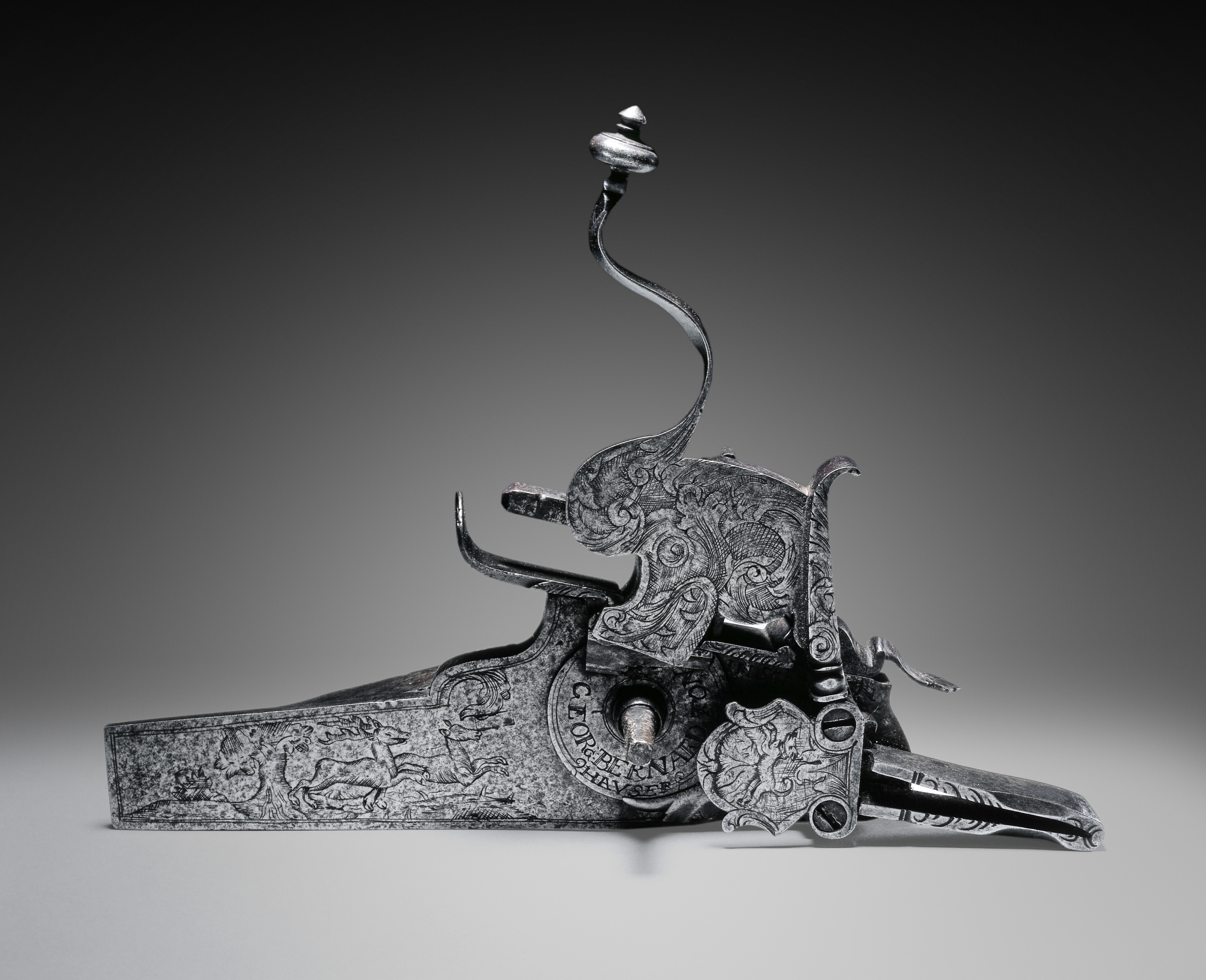
This analysis deconstructs the assigned artifact—a German wheel-lock from a hunting gun, crafted in steel and engraved—to extract its core genetic material for Zoey Fashion Lab's avant-garde lexicon. The directive to reference a "New DNA Strand" is pivotal; we are not merely replicating historical aesthetics but engaging in a molecular-level re-sequencing of its form, function, and narrative. The wheel-lock is not a relic; it is a progenitor of tension, precision, and controlled combustion. Its integration into our design philosophy promises a collection that is intellectually armored, mechanically poetic, and fundamentally disruptive.
Deconstruction of Core Genetic Material
The wheel-lock mechanism, originating in early 16th-century Germany, represents a monumental leap from the matchlock. Its operation is a masterpiece of contained chaos: a spring-loaded steel wheel, wound with a spanner (key), rotates against a piece of iron pyrite, spraying sparks into the priming pan. This is our primary DNA sequence.
Genetic Marker 1: Latent Potential & Torsion. The core of the mechanism is a tightly wound spring—a coil of stored energy. This translates to silent, internalized tension within garments. Imagine sculptural silhouettes that appear static but are structured by hidden spirals of boning or tensioned cables, creating a palpable sense of poised release. Fabrics could be engineered with memory folds, appearing calm until movement releases their kinetic form.
Genetic Marker 2: The Mechanized Spark. The interaction between the serrated steel wheel and the pyrite is a deliberate, manufactured creation of fire. This is not organic flame but industrialized ignition. For Zoey, this manifests as deliberate, strategic points of friction and luminescence. Think of closures: not simple zippers, but intricate, engraved metal fasteners that must be "wound" or aligned to secure the garment, making the act of dressing a ritual of activation. Embedded micro-LED patterns could be triggered by these closures, creating a literal spark upon completion.
Genetic Marker 3: The Engraved Surface. The German origin of this piece emphasizes the engraving—often depicting hunting scenes, foliate patterns, or mythic beasts. This is a narrative layer atop brutal function. In our context, this becomes hyper-detailed, laser-cut filigree applied to neoprene, technical leather, or molded acrylic. The contrast is key: a severe, architectural coat covered in a bio-mechanical, DNA-helix-like engraving pattern, directly referencing the "New DNA Strand" brief. The decoration is not additive; it is an integral, etched-in code.
Strand Synthesis: Building the Avant-Garde Chromosome
We now synthesize these markers into a cohesive design chromosome for the Zoey Fashion Lab collection, titled IGNITION: Sequenced.
Material & Texture Expression
Steel is our foundational textile, not as literal metal, but in its spirit: cold, hard, yet capable of refinement. We will use metallic Jacquard weaves that mimic the grain of forged steel, molded polymers with a brushed-metal finish, and liquid-like lamé that captures the glint of the wheel. Contrast this with the "pyrite" element: fabrics with a raw, crystalline, or geode-like texture—crushed velvet, heat-transformed synthetics, or beading that mimics mineral facets.
Silhouette & Construction
Silhouettes embody the wound spring. Asymmetric hems that appear torque-twisted. Coiled, spiral seaming that wraps the body. Tailoring with pronounced, architectural shoulders (the "lock plate") that taper to a sharp, tense waist (the "mainspring"). Volumes are not fluffy; they are pressurized—puffed sleeves or leg shapes that look pneumatically filled, held in a state of potential energy. Garbardine and technical canvases will be cut on the curve to enforce this torsional language.
Detail & Closure Systems
This is where the DNA is most explicitly expressed. Closure systems are the central mechanism of each garment. Imagine:
- A breastplate-like bodice that fastens via a literal, miniature replicated wheel-lock spinner, engaging a track.
- Coiled wire fasteners that must be wound through eyelets.
- Belt systems based on the spanner (key) tool, becoming wearable, functional jewelry.
- Seams left partially "open" like the priming pan, revealing flashes of luminous lining (the "spark") within.
The "New DNA Strand" Integration
The reference to a new DNA strand is our modern mutagen. We overlay the mechanical, historical code of the wheel-lock with the biological, futuristic code of genetics. This is achieved through:
- Print & Pattern: Engraving patterns morph into double-helix chains, nucleotide sequences, and protein maps, digitally printed onto our "steel" fabrics.
- Color Palette: Cool steel grays, gunmetal blues, and pyrite yellows are spliced with unexpected, bio-luminescent accents—strands of neon green, cytosine-blue, and adenine-red.
- Concept: The collection tells the story of a new hybrid species—one where industrial history and biological future fuse. Each garment is a chromosome in this new organism.
Conclusion: The Ignition Sequence
The German wheel-lock provides a profound and untapped genetic blueprint for avant-garde fashion. It moves us beyond superficial militaria or steampunk into a realm of sophisticated, internal engineering and metaphorical fire. For Zoey Fashion Lab, this artifact is a catalyst. The resulting IGNITION: Sequenced collection will not reference history—it will re-sequence it. It will produce garments that are not merely worn but armed and activated, embodying the silent tension before the spark, the beautiful precision of a mechanism, and the eternal human urge to harness power and inscribe it with meaning. The wheel is wound. The new strand is sequenced. The spark awaits.