The Peasant Fragment Reimagined: An Avant-Garde Blueprint for SS26
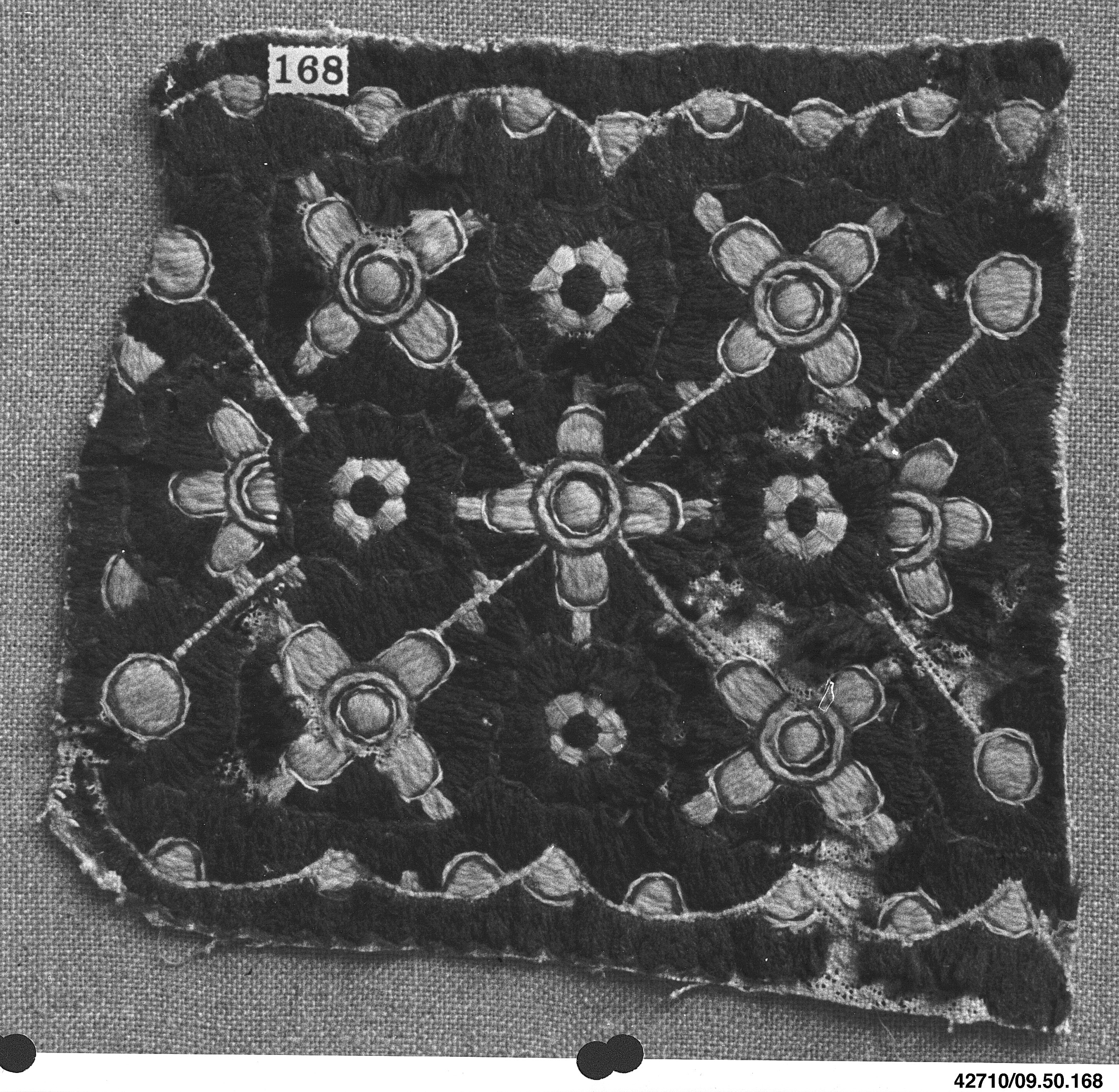
The peasant costume fragment—a relic of agrarian utility, of sun-scorched labor and hand-stitched endurance—has long been relegated to the nostalgic margins of fashion history. At Zoey Fashion Laboratory, we reject such sentimental taxonomy. We do not preserve; we deconstruct. We do not reference; we re-territorialize. This standalone study of a wool-on-canvas fragment, sourced from the Global Frontier, is not an exercise in folkloric homage. It is a speculative engineering document—a blueprint for a future where the vestiges of manual existence are reconfigured into hyper-architectural, cybernetic silhouettes. For Spring/Summer 2026, this fragment becomes the catalyst for a radical interrogation of volume, weight, and the very concept of garment-as-shelter.
I. Material Memory: The Alchemy of Wool and Canvas
The tactile reality of this fragment is its first provocation. Wool—a protein fiber of primal warmth, of shearing and spinning—meets canvas, the rigid, utilitarian weave of sails and tents. In its original context, this pairing signified protection against the elements, a humble armor of the field. But in our laboratory, we ask: What if that armor is inverted? What if the warmth becomes a thermal exoskeleton, and the canvas a structural membrane for pneumatic volume?
For SS26, we propose a bio-fabrication protocol: the wool is not merely felted but laser-sintered into geometric reliefs, creating a topographic surface that mimics satellite imagery of arid frontiers. The canvas, meanwhile, is treated with a phase-change polymer, allowing it to transition from rigid to fluid upon body heat. This is not fabric; it is a responsive skin. The fragment’s original seams—visible, imperfect, hand-stitched—are deliberately exaggerated, re-stitched with conductive thread that can transmit haptic feedback or, in a performative context, emit low-level luminescence. The peasant’s mending becomes a network of circuits; the patch, a motherboard of memory.
II. Silhouette Deconstruction: From Tunic to Biomechanical Shell
The traditional peasant silhouette—a loose, rectangular tunic, a gathered skirt, a kerchief—is predicated on concealment of the body and ease of movement. We obliterate both premises. Our SS26 silhouette is a study in negative space and cantilevered tension. The fragment’s original draping is algorithmically mapped and then exploded into three distinct architectural zones:
- The Shoulder Yoke as Thrust Vector: The fragment’s collar and shoulder seams are re-engineered into a cantilevered carapace that projects forward and upward, mimicking the prow of a vessel. This is achieved through internal boning made of recycled carbon fiber, hidden within the canvas. The effect is not one of peasant humility, but of aggressive forward momentum—a silhouette that anticipates movement before it occurs.
- The Torso as Modular Core: The tunic’s voluminous body is replaced by a suspended exoskeleton. Panels of the original wool are cut into precise, interlocking polygons, suspended from the yoke via micro-tension cables. The torso is left largely exposed, creating a void between the carapace and the lower garment. This is the futuristic silhouette of a body in transition—neither fully clothed nor unclothed, but framed by its own history.
- The Lower Hem as Kinetic Fringe: The fragment’s ragged, frayed hem is not a sign of decay. It is reinterpreted as a series of weighted, laser-cut wool tendrils, each tipped with a small, machined brass bead. As the wearer moves, these tendrils swing with a pendular precision, creating a kinetic, audio-visual rhythm. The peasant’s walk—once a shuffle of fatigue—becomes a choreographed cadence of industrial grace.
III. Structural Innovation: The Fragment as a Load-Bearing System
Beyond silhouette, the fragment’s true avant-garde potential lies in its engineering logic. A peasant costume is, fundamentally, a series of flat panels sewn together. We propose a radical inversion: the garment as a self-supporting, load-bearing structure, akin to a tensegrity bridge.
Our SS26 prototype, titled “Agri-Tecture,” utilizes the wool-on-canvas as a compression membrane, while the voids between panels are filled with inflatable silicone bladders that act as tension elements. When deflated, the garment collapses into a flat, portable disc—a nod to the peasant’s need for packability. When inflated via a small, wearable pump, the bladders expand, forcing the wool panels to buckle and flare into a sculptural, almost architectural volume. The silhouette becomes a morphing landscape, shifting from a narrow, cylindrical column to a wide, trapezoidal shield in under five seconds. This is not costume; it is wearable infrastructure.
IV. Futuristic Context: The Global Frontier as a Digital Archive
The “Global Frontier” origin is not a geographical marker but a conceptual state—the liminal space where analog labor meets digital surveillance. Our SS26 collection, therefore, treats the peasant fragment as a data carrier. The stains, the wear patterns, the irregular stitches—these are not flaws but encrypted information. We propose a process of spectral imaging that extracts these patterns and translates them into a new, generative print. The resulting fabric is not a reproduction of the original but a hyper-visual translation—a pixelated, glitch-infused rendering of agrarian life, printed on a recycled nylon mesh that is simultaneously transparent and reflective.
This is the paradox of the avant-garde: we honor the fragment by destroying its original form, only to resurrect it as a higher-order abstraction. The wool-on-canvas becomes a ghost in the machine, a whisper of manual labor amplified into a roar of technological possibility. For SS26, the peasant does not return to the field. She ascends to the orbital platform, her costume now a module for survival, a statement of autonomy, and a monument to the enduring power of structural innovation.
V. Conclusion: The Fragment as Prophecy
This standalone study is not a conclusion but a manifesto in fabric. The peasant costume fragment, stripped of its nostalgia, reveals itself as a profound repository of structural intelligence. Its seams teach us about tension; its folds, about compression; its patches, about repair. In the hands of Zoey Fashion Laboratory, these lessons are not merely aesthetic—they are functional, futuristic, and fiercely independent.
As we move toward SS26, we do not ask what the peasant wore. We ask: What would she build? The answer, as our prototype demonstrates, is a garment that does not cling to the body but creates space around it—a portable architecture of wool, canvas, and air. This is the definitive avant-garde gesture: to take the most humble of fragments and elevate it into a prophecy of form, where the past is not a memory but a launchpad. The frontier is not behind us. It is, and always will be, ahead.