Deconstructing the Linear: Needle Lace and the Architecture of Absence
The avant-garde imperative is not to decorate the body, but to interrogate it. At Zoey Fashion Laboratory, we do not follow seasons; we dissect them. For SS26, our standalone study, Strip, abandons the pastoral nostalgia typically associated with needle lace, propelling it into a stark, globalized future. This is not a revival; it is a re-engineering. We have taken a material historically bound to domesticity and fragility and subjected it to a brutalist, structuralist overhaul. The result is a collection that reads as a blueprint for a post-humanist wardrobe, where the garment is not a second skin but an independent, load-bearing architectural shell.
The Material Dialectic: From Handcraft to High-Performance Matrix
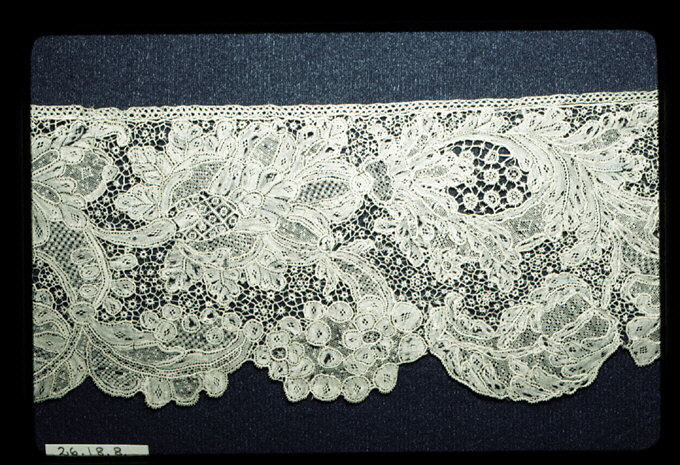
Needle lace, in its traditional form, is a slow, deliberate accumulation of loops and knots—a testament to human patience. Our intervention accelerates this logic into a new material reality. We have not merely used needle lace; we have recomputed its genetic code. The lace is treated as a continuous, pliable filament, not unlike carbon fiber in its potential for tensile strength. Through a proprietary process of resin-infusion and thermal bonding, the fragile netting is transformed into a rigid, yet surprisingly flexible, composite.
This is the core paradox of Strip: a material that whispers of heirloom delicacy now performs with the structural integrity of aerospace engineering. The openwork, traditionally a void, becomes a positive structural element. Each aperture is a stress point, each loop a load-bearing joint. The garment’s silhouette is no longer dictated by the body’s contours but by the internal logic of the lace’s own geometric lattice. We are building with negative space, creating a topography of tension that stands independent of the wearer’s form, establishing a new, autonomous figure.
Silhouette as Skeleton: The Exoskeletal Turn
The futuristic silhouette is not about adding volume; it is about redirecting mass. In Strip, we have dismantled the conventional seam and replaced it with a system of linear discontinuities. Garments are constructed from long, unspooling strips of the treated lace, which are then woven, not sewn, into three-dimensional structures. These strips act as the primary architectural members, creating sharp, angular projections that jut away from the body. Shoulders are not padded; they are cantilevered. Hems are not finished; they are frayed into fine, structural tendrils that trace the air.
Consider the signature piece: the “Fractured Column” gown. It begins as a high, mandarin collar of dense, near-opaque lace, then spirals downward in a chaotic yet mathematically precise series of strips that twist and fold over one another. The effect is not one of drapery but of controlled geological stratification. The body disappears beneath this tectonic movement, becoming a ghost within a machine. The waist is cinched not by a belt but by a corset-like exoskeleton of woven lace strips, creating a severe hourglass that is then contradicted by the aggressive, boxy projection of the hips. This is not a silhouette that flatters; it is a silhouette that commands.
Structural Innovation: The Lattice of Tomorrow
Our innovation lies in the modularity of the strip. Each garment is composed of independent, interlocking panels that can be disassembled and reconfigured. This is a direct response to a globalized, nomadic future where clothing must be adaptable. A single tunic can be detached at the shoulder to become a sculptural cape, or its lower strips can be unspooled and re-woven into a separate, free-floating skirt. The closures are not zippers or buttons but friction-fit lace locks—small, intricate knots that are as much a part of the design as the fabric itself.
This modularity extends to the surface treatment. The needle lace is often left raw, its edges unbound, creating a deliberate frayed aesthetic that mimics a digital glitch. In other instances, the lace is overlaid with a fine, iridescent film, catching the light in a way that makes the structure appear to be made of liquid metal. The color palette is stark: optic white, industrial grey, and a single, shocking note of bio-luminescent green. There is no ornamentation, no embroidery, no beading. The pattern of the lace is the only print, and its structural logic is the only decoration.
Global Frontier: A Universal Language of Form
By stripping the lace of its regional, folkloric identity, we are proposing a new, universal aesthetic. The Global Frontier is not a melting pot but a series of discrete, high-frequency signals. Our needle lace references the geometric rigor of Andean weaving, the precision of Japanese kumihimo braiding, and the delicate airiness of Venetian buratto, but it synthesizes them into a language that is entirely new. It is a post-geographic couture, designed for a citizen of the world who has no single origin, only a trajectory.
The garments are not meant to be worn in a traditional sense; they are meant to be inhabited. They hum with a quiet, aggressive energy. The wearer of Strip is not a consumer but a protagonist in a speculative narrative. They are an architect of their own presence, moving through space with the calculated precision of a machine. This is not fashion as comfort; it is fashion as a statement of intent. The labium of the lace, now rigid and unyielding, becomes a barrier between the self and the chaotic world, a portable fortress of personal style.
In conclusion, Strip is a definitive break from the soft, romantic futurism that has dominated recent runways. It is a hard, uncompromising vision that sees the garment as a piece of engineered infrastructure. It is a testament to the power of material innovation and the enduring relevance of structural thinking in haute couture. The future, we posit, is not draped; it is built. And we are its architects.